Search This Blog

Showing posts sorted by relevance for query democracy. Sort by date Show all posts

Friday, July 4, 2025

Selling Armageddon

In an age defined by manufactured crises, weaponized ignorance, and the commodification of fear, a disturbing coalition has emerged—one that profits not from progress, but from collapse. This coalition spans billionaires and bomb makers, Ivy League technocrats and evangelical foot soldiers, data miners and doomsday preachers. They aren't just predicting the end of the world. They're selling it.

The title Selling Armageddon captures a disturbing trend within American society—and particularly within the intersection of higher education, technology, and political ideology—where fear, fatalism, and anti-intellectualism have become not just cultural phenomena but profit centers.

The Profiteers of the Apocalypse

Billionaire venture capitalist Peter Thiel, a vocal critic of democracy and champion of techno-libertarianism, is emblematic of this ethos. Thiel's investments in surveillance, biotech, and defense contractors like Palantir are not just financial bets—they are ideological declarations. He has publicly said that he no longer believes freedom and democracy are compatible. Instead, Thiel supports strongmen, deregulated markets, and technological sovereignty for elites.

Thiel has also funneled money into right-wing institutions and figures that sow distrust in public institutions, especially higher education. Simultaneously, he and other members of the "techno-elite" invest in private learning incubators, surveillance infrastructure, and seasteading projects that imagine life after democracy—or after the planet.

These billionaires are preparing for Armageddon not by preventing it, but by monetizing it: funding bunkers in New Zealand, buying private islands, or investing in orbital real estate. As The Guardian once asked, “What happens when the people who make our futures no longer believe in the future?”

Enter Elon Musk, who brings to the Armageddon marketplace a particularly seductive brand of techno-messianism. Musk has built an empire not just on electric cars and space rockets, but on a narrative that humanity is doomed unless it follows his vision: Mars colonization, AI supremacy, and deregulated everything. His companies depend on government contracts, foreign labor, non-unionized workplaces, and public subsidies—all while he rails against the very institutions that enabled his rise.

Musk’s appeal lies in his ability to market collapse as innovation. Colonizing Mars is framed not as escapism for the rich, but as salvation for the species. Neuralink’s experiments on animals and humans are marketed as “progress.” Buying and gutting Twitter—now X—is portrayed as “free speech absolutism,” even as it becomes a haven for far-right propaganda and anti-intellectual conspiracy theories. Musk does not offer solutions for Earth. He sells a lifeboat for elites—and a live stream of the ship sinking for the rest.

The War on Higher Education: Enter Charlie Kirk

Charlie Kirk, founder of Turning Point USA, is one of the most visible faces of the new anti-intellectual populism. Kirk, who has no college degree himself, built a political empire by demonizing higher education and promoting a gospel of grievance. Funded in part by the same billionaire class that bankrolls tech libertarians like Thiel and lionizes Elon Musk, Kirk has launched aggressive campaigns to surveil, blacklist, and harass professors and students who challenge conservative orthodoxy.

His Turning Point “Professor Watchlist” is not just an attack on individuals—it is an assault on the very notion of critical inquiry. In Kirk’s universe, universities are not flawed institutions to be reformed but radical breeding grounds to be destroyed. He promotes a worldview in which faith is pure, facts are suspect, and feelings of persecution are monetized.

While Kirk claims to be fighting “Marxism” and “wokeness,” what he is actually selling is obedience—particularly to corporate power, Christian nationalism, and militarized borders. His audience is taught that the future is a war, and they must choose sides: us vs. them, believers vs. traitors, patriots vs. professors.

Naomi Klein and the Shock Doctrine of Now

Naomi Klein’s work, especially The Shock Doctrine, offers a crucial lens for understanding how crises—real or manufactured—are used to erode public institutions and consolidate wealth. The COVID-19 pandemic, mass shootings, climate catastrophes, and political chaos have each served as moments of opportunity for privatizers, war profiteers, and ideological extremists.

In her more recent writings, Klein explores how conspiracy culture and fascist-adjacent movements have merged with wellness grifts and anti-science ideologies to create a new reactionary consumer base. Higher education has been both target and tool in this ecosystem—either accused of being too “woke,” or silently complicit in the march toward corporate authoritarianism.

Musk, like Thiel and Kirk, has leveraged this blend of libertarianism and grievance politics—tapping into populist rage while making his wealth on the back of public resources. Together, they represent a new ruling class that doesn’t just tolerate ignorance—they capitalize on it.

“Freedom Cities”: Privatized Utopia, Public Disaster

A key component of the Armageddon economy is the “Freedom City” project—a concept championed by Elon Musk, Peter Thiel, and now embraced by Trump Republicans. On the surface, these cities promise deregulation, innovation, and technological advancement. But beneath the buzzwords is a vision of society in which public governance is replaced by corporate fiefdoms.

In Freedom Cities, there are no public universities—only credential mills optimized for employer branding. There are no town halls—only shareholder meetings. Laws are written by venture capitalists, not legislatures. These cities are not democratic experiments—they are controlled environments designed to ensure elite survival and labor discipline. Education is not about knowledge; it’s about code bootcamps, ideological training, and loyalty to corporate overlords.

Some Freedom City backers go so far as to frame these cities as escapes from the “decay” of American democracy. In this vision, the United States itself becomes disposable—its lands and labor extracted, its public institutions hollowed out, its higher education system replaced with behavioral conditioning and biometric surveillance.

Freedom Cities are the spatial manifestation of fatalistic capitalism—a place to survive the collapse that capitalism itself caused.

The Israel Factor

Nowhere is this more visible than in the militarization of university discourse around Israel and Palestine. Pro-Israel lobbying groups, sometimes in collaboration with groups like Turning Point USA and tech influencers on X, have used massive funding and public pressure to silence academic dissent, criminalize protest, and reshape curricula. Many elite universities have openly collaborated with defense contractors, some of whom profit from technologies tested on Palestinians in Gaza and the West Bank.

This is not merely about Israel—it is about the normalization of permanent war as a condition of life. It is about desensitizing the public to state violence, turning morality into a partisan debate, and monetizing surveillance and repression. These policies, developed in the name of “security,” are later imported back into the United States—on campuses, in classrooms, and across the border.

Selling the End of Knowledge

The university was once imagined as a refuge from the chaos of the world—a place to build better futures. But in this dystopian moment, education is being stripped for parts. Faculty are adjunctified and silenced. Student debt is an albatross. Basic humanities departments are being gutted, while programs in cybersecurity, defense studies, and corporate law are growing.

We are educating people to manage collapse, not prevent it.

Instead of cultivating critical thinkers, institutions churn out bureaucrats for empire and engineers for oligarchs. The architects of Armageddon do not fear higher education—they co-opt it, fund it, rebrand it, and turn it against its original purpose.

Preventing Self-Fulfilling Prophecies

To resist the forces selling Armageddon, we must reclaim higher education as a public good—one grounded in ethics, truth-seeking, and planetary survival. We must refuse the logic of fatalism and reject the grifters who profit from despair. And we must name the forces—Peter Thiel, Elon Musk, Charlie Kirk, the boosters of Freedom Cities, defense contractors, and neoliberal university presidents—that see crisis not as a call for solidarity, but as a sales pitch.

Because if we don’t, the end of the world won’t come with fire or flood.
It will come with a branded dome, a loyalty app, biometric gates—and a tuition bill.


The Higher Education Inquirer is committed to investigative journalism that challenges elite narratives and exposes structural injustices in academia and beyond.

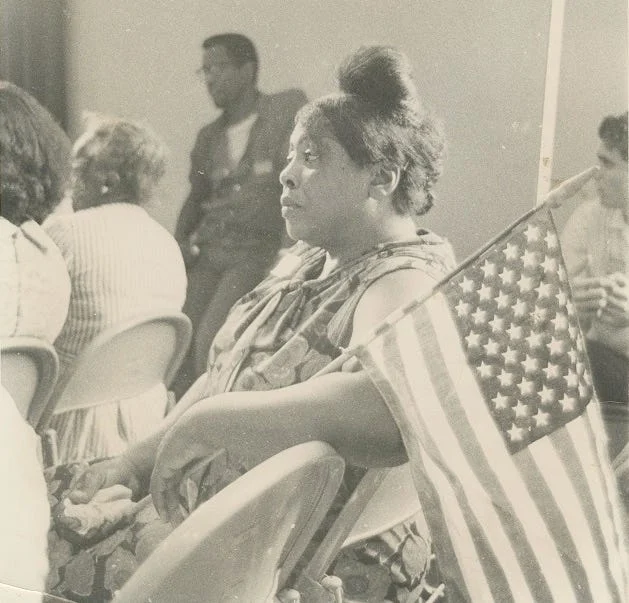
July 4th in the Face of Fascism: Moral resources for Americans who know we’ve been betrayed (William Barber & Jonathan Wilson-Hartgrove)


Civil Rights Movement and Wayside Theatre photographs, Student Nonviolent Coordinating Committee (SNCC).

On America’s 249th anniversary of declaring freedom from tyranny, a would-be king will celebrate Independence Day by signing a budget bill that Americans oppose 2 to 1.

This Big Ugly Bill that was passed by Republicans in Congress this week will make the largest cuts to healthcare and nutrition assistance in our nation’s history to pay for tax cuts for people who do not need them and an assault on our communities by masked men who are disappearing our neighbors to concentration camps. The dystopian scene is enough to make any true believer in liberty and equality question whether they can celebrate Independence Day at all. But it would be a betrayal of our moral inheritance to not remember the true champions of American freedom on this day. Indeed, to forget them would mean losing the moral resources we need to revive American democracy.

As bad as things are, we cannot forget that others faced worse with less resources than we have. We are not the first Americans to face a power-drunk minority in public office, determined to hold onto power at any cost. This was the everyday reality of Black Americans in the Mississippi Delta for nearly a century after the Klan and white conservatives carried out the Mississippi Plan in the 1870s, erasing the gains of Reconstruction and enshrining white supremacy in law.

When Ms. Fannie Lou Hamer decided to join the freedom movement in Sunflower County, Mississippi, she knew two things: the majority of people in Sunflower County despised the policies of Senator James O. Eastland and Eastland’s party had the votes to get whatever they wanted written into law. The day she dared attempt to register to vote, Ms. Hamer lost her home. When she attended a training to learn how to build a movement that could vote, she was thrown into the Winona Jail and nearly beaten to death. Still, Ms. Hamer did not bow.

Instead, she leaned into the gospel blues tradition that had grown out of the Delta, spreading the good news that God is on the side of those who do not look away from this world’s troubles but trust that a force more powerful than tyrants is on the side of the oppressed and can make a way out of no way to redeem the soul of America. “This little light of mine, I’m gonna let it shine,” she sang, and a generation of college student volunteers came to sing with her during Freedom Summer. Their mission was to register voters and teach the promises of democracy to Mississippi’s Black children in Freedom Schools.

On July 4, 1964, Ms. Hamer hosted a picnic for Black and white volunteers who’d dedicated their summer to nonviolently facing down fascism on American soil. They celebrated the promise that all are created equal even as they faced death for living as if it were true. Those same young people who were at Hamer’s July 4th picnic went on to launch the Mississippi Freedom Democratic Party and take their challenge all the way to the Democratic National Convention in Atlantic City that August. “I question America,” Ms. Hamer said in her testimony that aired on the national news during coverage of the convention. “Is this America, the land of the free and the home of the brave where we have to sleep with our telephones off of the hooks because our lives be threatened daily because we want to live as decent human beings, in America?”

Hamer and the MFDP didn’t win the seats they demanded at the 1964 convention, but Atlantic City would be the last convention to seat an all-white delegation from Mississippi. Just a year later, as part of the War on Poverty, Congress passed the Medicare and Medicaid Act, expanding access to healthcare to elderly and low-income Americans – an expansion that Trump is rolling back half a century later in an immoral betrayal of the very people he promised to champion in his fake populist appeal to poor and working people.

There’s nothing un-American about questioning a fascism that defies the will of the people to terrorize American communities and assert total control. It has been the moral responsibility of moral leaders from Frederick Douglass, who asked, “what to the slave is the 4th of July?” to those who are asking today how Americans are supposed to celebrate when their elected leaders sell them out to billionaires and send masked men to assault their communities. Ms. Hamer is a vivid reminder of the moral wisdom that grows out of the Mississippi Delta. It teaches us that those who question America when we allow fascists to rule are not un-American. They are, in fact, the people who have helped America become more of what she claims to be.

So this 4th of July, may we all gather with Fannie Lou Hamer and the moral fusion family closest to us – both the living and the dead – to recommit ourselves to a government of the people, by the people, and for the people. Yes, America’s fascists have the power today. They will throw a party at our House and desecrate the memory of so many who’ve worked to push us toward a more perfect union. But they will not own our Independence Day. As long as we remember the moral tradition that allowed Fannie Lou Hamer to host a July 4th picnic while she battled the fascism of Jim Crow, we have access to the moral resources we need to reconstruct American democracy today.

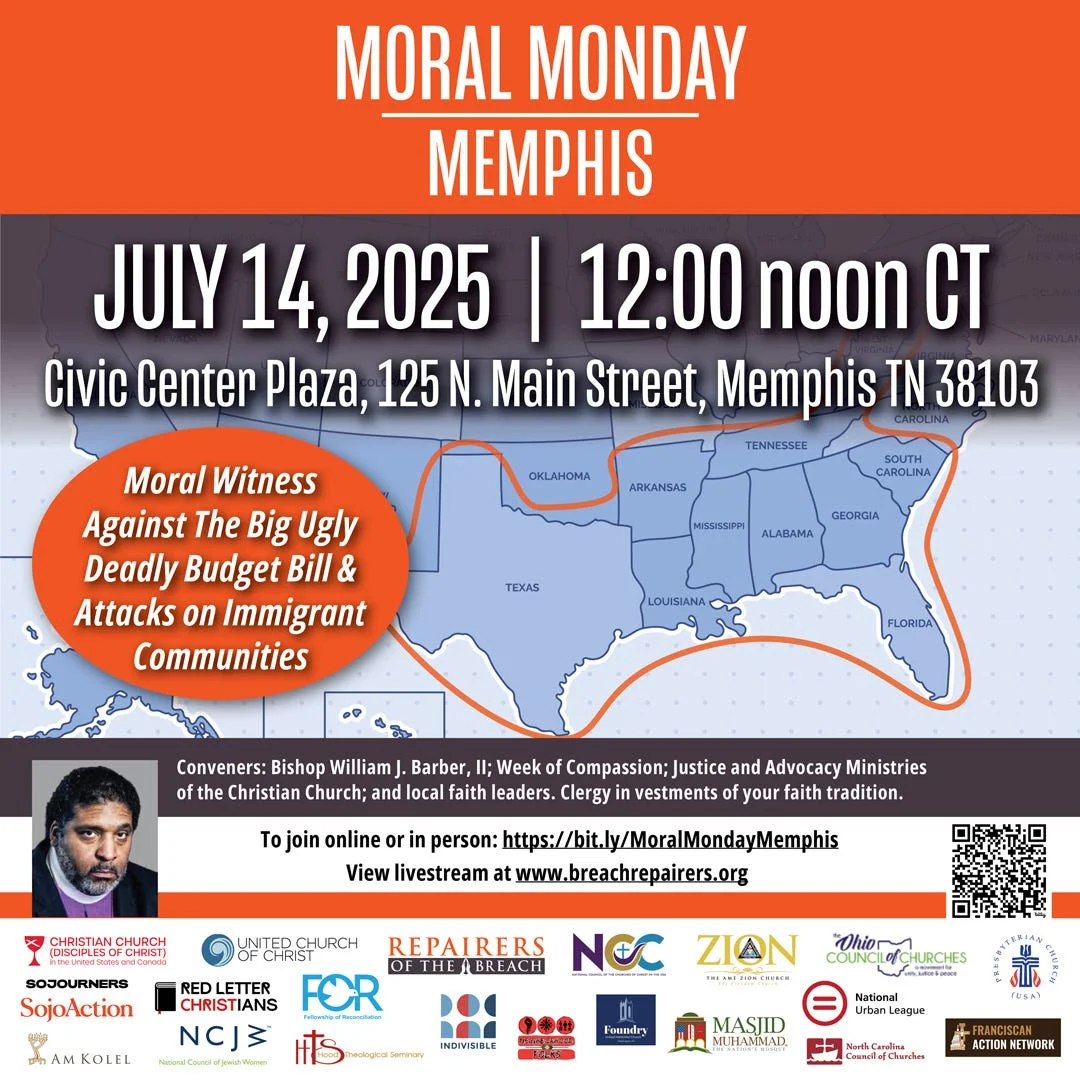
This is why today, as all American’s celebrate our nation’s declaration of liberty and equality, we are announcing that the Moral Monday campaign we’ve been organizing in Washington, DC, to challenge the policy violence of this Big Ugly Bill is going to the Delta July 14th for Moral Monday in Memphis. As we rally moral witnesses in the city of Graceland and the Delta blues – the place where Dr. King insisted in 1968 that the movement “begins and ends” – delegations of moral leaders and directly impacted people will visit Congressional offices across the South to tell the stories of the people who will be harmed by the Big, Ugly, and Deadly bill that Donald Trump is signing today.

Yes, this bill will kill. But we are determined to organize a resurrection of people from every race, religion, and region of this country who know that, when we come together in the power of our best moral traditions, we can reconstruct American democracy and become the nation we’ve never yet been.

Today’s neo-fascists have passed their Big Ugly Bill, but they have also sparked a new Freedom Summer. We will organize those this bill harms. We will mobilize a new coalition of Americans who see beyond the narrow divisions of left and right. We will lean into the wisdom of Ms. Hamer and Delta’s freedom struggle, and we will build a moral fusion movement to save America from this madness.

You’re currently a free subscriber to Our Moral Moment w/ Bishop William Barber & Jonathan Wilson-Hartgrove. Our Moral Moment is and always will be a free publication. We’re grateful to those who opt for a paid subscription to support this work.

Tuesday, March 25, 2025

FACULTY UNIONS SUE TRUMP ADMIN: NO HALTING SCIENCE RESEARCH TO SUPPRESS SPEECH (American Federation of Teachers)

The faculty and national labor unions allege that the Trump administration improperly canceled Columbia University’s federal funding to compel speech restrictions on campus, damaging both vital scientific research and academic discourse

NEW YORK– The American Association of University Professors (AAUP) and the AFT today sued the Trump administration on behalf of their members for unlawfully cutting off $400 million in federal funding for crucial public health research to force Columbia University to surrender its academic independence. While the Trump administration has been slashing funding since its first days in office, this move represents a stunning new tactic: using cuts as a cudgel to coerce a private institution to adopt restrictive speech codes and allow government control over teaching and learning.

The plaintiffs, who represent members of Columbia University faculty in both the humanities and sciences, allege that this coercive tactic not only undermines academic independence, but stops vital scientific research that contributes to the health and prosperity of all Americans. The terminated grants supported research on urgent issues, including Alzheimer’s disease prevention, fetal health in pregnant women, and cancer research.

The Trump administration’s unprecedented demands, and threats of similar actions against 60 universities, have created instability and a deep chilling effect on college campuses across the country.  Although the administration claims to be acting to combat antisemitism under its authority to prevent discrimination, it has completely disregarded the requirements of Title VI, the statute that provides it with that authority–requirements that exist to prevent the government from exercising too much unfettered control over funding recipients. According to the complaint, the cancellation of federal funds also violates the First Amendment, the separation of powers, and other constitutional provisions.

“The Trump administration’s threats and coercion at Columbia are part of a clear authoritarian playbook meant to crush academic freedom and critical research in American higher education. Faculty, students, and the American public will not stand for it. The repercussions extend far beyond the walls of the academy. Our constitutional rights, and the opportunity for our children and grandchildren to live in a democracy are on the line,” said Todd Wolfson, president of the AAUP.

“President Trump has taken a hatchet to American ingenuity, imagination and invention at Columbia to attack academic freedom and force compliance with his political views,” said AFT President Randi Weingarten. “Let’s be clear: the administration should tackle legitimate issues of discrimination. But this modern-day McCarthyism is not just an illegal attack on our nation’s deeply held free speech and due process rights, it creates a chilling effect that hinders the pursuit of knowledge—the core purpose of our colleges and universities. Today, we reject this bullying and resolve to challenge the administration’s edicts until they are rescinded.”

“We’re seeing university leadership across the country failing to take any action to counter the Trump administration’s unlawful assault on academic freedom,” said Reinhold Martin, president of Columbia-AAUP and professor of architecture. “As faculty, we don’t have the luxury of inaction. The integrity of civic discourse and the freedoms that form the basis of a democratic society are under attack. We have to stand up.”

The complaint alleges that the Trump administration’s broad punitive tactics are indicative of an attempt to consolidate power over higher education broadly. According to the complaint, the administration is simultaneously threatening other universities with similar punishment in order to chill dissent on specific topics and speech with which the administration disagrees. Trump administration officials have spoken publicly about their plans to “bankrupt these universities” if they don’t “play ball.”

Universities have historically been engines of innovation in critical fields like technology, national security, and medical treatments. Cuts to that research will ultimately harm the health, prosperity and security of all Americans.

“Columbia is the testing ground for the Trump administration’s tactic to force universities to yield to its control,” said Orion Danjuma, counsel at Protect Democracy. “We are bringing this lawsuit to protect higher education from unlawful government censorship and political repression.”

The lawsuit was filed in the Southern District of New York and names as defendants the government agencies that cut Columbia’s funding on March 7 and signed the March 13 letter to Columbia laying out the government's demands required to restore the funding, including the Department of Justice, Department of Education, Health and Human Services and General Services Administration. The plaintiffs are represented by Protect Democracy and Altshuler Berzon LLP.

The full complaint can be read here.

Saturday, June 7, 2025

MASSIVE RALLIES PLANNED IN SAN DIEGO COUNTY SUPPORTING NATIONWIDE “NO KINGS DAY” PROTESTS JUNE 14TH

San Diego, June 6, 2025 – More than 20 San Diego area organizations have come together to organize safe and peaceful marches and rallies in defense of American Democracy on “No Kings Day” June 14, 2025.

The central event will be a large march and rally between 10am and noon at Waterfront Park in downtown San Diego, building on the “Hands Off Our Rights” rally April 5th that drew more than 30-thousand participants.

This coincides with a series of events throughout the county and nationwide to draw attention away from a “Grand Military Parade” estimated to cost as much as $45 million on President Donald Trump’s birthday.

“This is the kind of vanity parade we would expect to see in Russia or North Korea, not in a democracy” said Allison Gill, award-winning podcaster, who will be speaking at the rally.

Officially the “grand parade” is said to honor the 250th anniversary of the U.S. Army. However, the massive parade of tanks, helicopters and thousands of soldiers in Washington, DC, also takes place on the President’s 79th birthday.

“No matter what the parade is called, our democracy is under attack. Donald Trump and his allies are dismantling democratic institutions to consolidate power and money at the expense of the rest of us. This is not a cause for celebration,” said Wendy Gelernter, one of the event organizers.

Specifically the rally will oppose:

An end to efforts to centralize executive power as laid out in Project 2025

Protection for democratic institutions, civil rights and the rule of law

Transparency, accountability, and truth over chaos, cruelty and corruption

Elected leadership and good governance that serves the people — not personal power, personal enrichment or spectacle.

“It is unconscionable to spend this kind of money when the veterans in our area are being stripped of their benefits to reduce government spending, and budgets are being slashed for health services, food programs for hungry children, and vital medical research at San Diego area universities,” added Misty O’Healy of Indivisible49.

Multiple San Diego County events have been organized in support of the June 14 action. On June 8th, hundreds of people will form a human “No Kings” banner in Ocean Beach. On June 14th, a news conference is scheduled with local Congressional and civic leaders in Waterfront Park at 9:15 ahead of the march there. And more rallies and protests will take place in about a dozen communities throughout the county including Escondido, Chula Vista and Oceanside/Carlsbad. (A complete list can be found at NoKings.org.). “While Donald Trump may be remembered as the most divisive President in American history, he has done a unique and extraordinary job of unifying Americans across San Diego and the Nation who reject his wanna-be authoritarian approach to governance,” said Frances Yasmeen Motiwalla, of Activist San Diego.

Allison Gill concluded ”We overthrew a monarch 250 years ago. And we are not going back!”

More information and a full list of participating organizations can be found at https://takeactionsandiego.org/hub/partners.html

To coordinate media activities day-of, please contact: Mark Sauer, marksauer2@gmail.com, (619) 643-1024

Friday, March 28, 2025

Yale Professor Jason Stanley Leaves for Canada in Protest of U.S. Political Climate

Yale University philosophy professor Jason Stanley, a leading academic in social and political philosophy, has made the bold decision to leave his esteemed position at the Ivy League institution and relocate to Toronto, Canada. His move comes amidst growing concerns about the state of higher education in the U.S. under the Trump administration, a time marked by increased political tension and the administration’s aggressive stance against academic institutions.

In a mid-interview conversation with CNN while walking across the Yale campus, Stanley addressed a group of concerned students who had gathered around him. When asked if he was really leaving, Stanley reassured them, saying, “I love Yale. But Marci, Tim, and I, we’re gonna go defend democracy somewhere else.”

Stanley, who has taught at Yale for 12 years, was clearly frustrated with the direction the United States is heading under the current administration. Known for his scholarly work, including his books How Fascism Works: The Politics of Us and Them and Erasing History: How Fascists Rewrite the Past to Control the Future, Stanley has built a career focusing on the dangers of fascism, epistemology, and social philosophy. His decision to leave the U.S. reflects the increasing anxiety within the academic community regarding the restrictions placed on freedom of expression, especially for those not holding U.S. citizenship.

“Suddenly if you’re not a citizen of the United States, you can’t comment on politics if you’re a professor? That’s crazy,” Stanley told CNN. “That’s not a free society.”

Stanley’s departure has struck a nerve within the academic world, especially after recent events that have heightened concerns about the Trump administration’s policies toward higher education. His decision follows the controversial stance taken by Columbia University, which found itself in the midst of a funding crisis after President Trump threatened to withdraw federal support over allegations that the institution failed to adequately address antisemitic behavior on campus during the Israel-Hamas conflict.

The ongoing threats from the Trump administration against university funding and academic freedom, such as the executive order targeting antisemitism and the recent suspension of federal funds at multiple universities, have exacerbated tensions. Columbia responded by implementing policy changes, including restrictions on face coverings during protests and reviewing its curriculum in response to the administration’s demands.

The situation has also raised alarm about the broader implications for academic institutions. Yale’s academic freedom has not yet been directly challenged by the Trump administration, but the unfolding struggles at other prestigious universities have highlighted the precariousness of academia in the current political climate. The potential for funding cuts and the fear of administrative capitulation are pressing issues for educators, particularly in the humanities and social sciences.

Alongside Stanley, Yale history professors Marci Shore and Timothy Snyder are also moving to the University of Toronto. Both Shore, a specialist in modern European intellectual history, and Snyder, an expert in history and global affairs, have voiced similar concerns about the erosion of academic independence under the current U.S. administration. Snyder remarked that their decision was solidified after the 2024 presidential election, citing a growing fear that university administrations would increasingly bow to political pressure in order to secure federal funding.

“It’s not that I think everyone has put their head down and gotten in line,” Shore explained. “But I think a lot of people have, and I fear that university administrations will, because institutions naturally have an incentive to act in the interest of self-preservation.”

Keith Whittington, a Yale professor and cofounder of the Academic Freedom Alliance, expressed concern over the broader ramifications of these departures. “If you lose your best people who decide to go to other countries, that’s going to have long-term consequences,” Whittington warned, emphasizing the risks to U.S. leadership in scientific research and higher education.

Despite the challenges, Stanley remains resolute in his decision, insisting that it is not a matter of fear but of standing up for democratic values. “I’ll be in a much better position to fight bullies,” Stanley said, signaling his commitment to advocating for democracy and academic freedom from abroad.

In response to Stanley’s departure, Yale University issued a statement acknowledging that while the institution respects the decisions of its faculty members, it remains committed to supporting its academic community. “Yale is proud of its global faculty community,” the university said, “which includes faculty who may no longer work at the institution, or whose contributions to academia may continue at a different home institution.”

For Stanley and his colleagues, the move to Toronto represents not just a change of location, but a deep commitment to continuing the fight for democracy and academic freedom outside the increasingly polarized and politically charged atmosphere of the United States.

Saturday, June 28, 2025

Harvard, Russia, and the Quiet Complicity of American Higher Education

In the fog of elite diplomacy and global finance, some of the United States' most prestigious universities—chief among them, Harvard—have long had entangled and often opaque relationships with authoritarian regimes. While recent headlines focus on China’s influence in higher education, far less attention has been paid to the role elite U.S. institutions have played in legitimizing, enabling, and profiting from post-Soviet Russia’s slide into oligarchy and repression.

The Harvard-Russia Nexus

Harvard University, through its now-infamous Harvard Institute for International Development (HIID), was a key player in Russia's economic transition following the collapse of the Soviet Union. During the 1990s, HIID, backed by millions of dollars in U.S. government aid through the U.S. Agency for International Development (USAID), provided advice on privatization and market reforms in Russia. This effort, touted as a cornerstone of democracy promotion, instead helped consolidate power among a small class of oligarchs, fueling the economic inequality and corruption that ultimately laid the foundation for Vladimir Putin's authoritarian rule.

Harvard’s involvement reached scandalous proportions. In 2001, the U.S. Department of Justice sued Harvard, economist Andrei Shleifer (a professor in Harvard's Economics Department), and others for self-dealing and conflict of interest. Shleifer and his associates were found to have used their insider access to enrich themselves and their families through Russian investments, all while supposedly advising the Russian government on behalf of the American taxpayer. Harvard eventually paid $26.5 million to settle the case.

Though the scandal damaged HIID's reputation and led to its closure, the broader complicity of the academic and financial elite in exploiting Russia’s vulnerability during the 1990s has received little sustained scrutiny.

Lawrence Summers and the Russian Connection

At the center of this story sits Lawrence Summers—a former Harvard president, U.S. Treasury Secretary, and one of the most powerful figures in the transatlantic economic order. Summers was both mentor and close associate of Andrei Shleifer. During the critical years of Russian privatization, Summers served as Undersecretary and later Secretary of the Treasury under President Clinton, while Shleifer operated HIID’s Russia project.

Despite the blatant conflict of interest, Summers never publicly disavowed Shleifer's actions. After returning to Harvard, he brought Shleifer back into the university’s good graces, protecting his tenured position and helping him avoid serious institutional consequences. This protection underscored the tight-knit nature of elite networks where accountability is rare and reputations are guarded like intellectual property.

Summers himself has invested in Russia through various vehicles over the years, and has held lucrative advisory roles with financial firms deeply enmeshed in post-Soviet economies. He also played an advisory role for Russian tech giant Yandex and has appeared at events sponsored by firms with deep Russian connections. While Summers has since criticized the Putin regime, his earlier role in enabling the very conditions that empowered it is seldom discussed in polite academic company.

A Broader Pattern of Complicity

Harvard is not alone. Institutions like Stanford, Yale, Georgetown, and the University of Chicago have produced scholars, consultants, and think tanks that helped construct the framework of neoliberal transition in Russia and Eastern Europe. These universities not only trained many of the Russian technocrats who later served in Putin’s government, but also quietly benefited from international partnerships, fellowships, and endowments tied to post-Soviet wealth.

Endowments at elite institutions remain shrouded in secrecy, and it is not always possible to trace the sources of foreign gifts or investments. But it’s clear that Russian oligarchs—many of whom owe their fortunes to the very privatization schemes U.S. economists championed—have made donations to elite Western universities or served on their advisory boards. Some sponsored academic centers and fellowships designed to burnish their reputations or reframe narratives about Russia’s transformation.

The Death of a Dissident

The failure of Western academic institutions to reckon with their role in Russia’s descent into authoritarianism became all the more glaring with the death of Alexei Navalny in February 2024. Navalny, a fierce critic of corruption and Putin’s regime, was imprisoned and ultimately killed for challenging the very system that U.S. advisers like those from Harvard helped engineer. While universities issued public statements condemning his death, few acknowledged the deeper complicity of their faculty, programs, and funders in building the oligarchic structures Navalny spent his life trying to dismantle.

Navalny repeatedly exposed how Russian wealth was funneled into offshore accounts and Western real estate, often aided by a global network of enablers—including lawyers, bankers, and academics in the West. His death is not just a symbol of Putin’s brutality—it is also a damning indictment of the institutions, both in Russia and abroad, that failed to stop it and, in many cases, profited along the way.

Where is the Accountability?

Despite the Shleifer scandal and Russia’s authoritarian consolidation, there has been no independent reckoning from Harvard or its peer institutions about their role in the failures of the 1990s or the long-term consequences of their economic evangelism. The neoliberal ideology that fueled these efforts—steeped in faith in free markets, minimal regulation, and elite technocracy—remains dominant in elite policy circles, even as it faces growing critique from both left and right.

Meanwhile, institutions like Harvard continue to influence global policy through their academic prestige, think tanks, and alumni networks. They remain powerful arbiters of truth—shaping how the public understands foreign policy, democracy, and capitalism—while rarely acknowledging their own entanglement in the darker chapters of globalization.

Elite Academia and Oligarchy

The story of Harvard and Russia is not just a tale of one institution’s failure; it is emblematic of the broader failure of elite American academia to confront its own role in the spread of oligarchy, inequality, and authoritarianism under the banner of liberal democracy. In an age when higher education is under increased scrutiny for its political and financial entanglements, the need for critical journalism and public accountability has never been greater.

The Higher Education Inquirer will continue to investigate these complex relationships—and demand transparency from the institutions that claim to serve the public good, while operating behind a veil of privilege and power. Navalny’s sacrifice deserves more than hollow statements. It requires a full accounting of how the system he died fighting was built—with help from the most powerful university in the world.

Friday, July 18, 2025

Trump Administration Freezes Education Funds to 23 States, Legal Challenges Follow

In a move that has sparked legal action from nearly half the country, the Trump administration has frozen more than $6 billion in education funds to 23 states and the District of Columbia. The decision, issued by the U.S. Department of Education in late June 2025, follows a broader pattern of halted federal support for state and local programs, many of which were previously protected by court rulings.

The funding pause is linked to the Trump administration's January 2025 memorandum from the Office of Management and Budget (OMB Memo M-25-13), which directed federal agencies to withhold disbursements from thousands of grant and aid programs. The stated purpose was to align spending with the administration’s priorities, though the policy has been challenged as lacking legal authority. The memo was later rescinded, but its effects have continued through new administrative directives.

In this latest instance, the Department of Education cited a need to review Title II and Title IV programs under the Elementary and Secondary Education Act (ESEA), including programs for teacher development, after-school enrichment, and English language learners. 

The decision disproportionately affected Democratic-led states, with California alone facing the loss of $939 million. 

States impacted include Arizona, California, Colorado, Connecticut, Delaware, Hawaii, Illinois, Maine, Maryland, Massachusetts, Michigan, Minnesota, Nevada, New Jersey, New Mexico, New York, North Carolina, Oregon, Rhode Island, Vermont, Washington, Wisconsin, and the District of Columbia.

On June 30, attorneys general from those jurisdictions filed suit in Rhode Island, arguing that the Education Department lacks the authority to unilaterally withhold funds that Congress has already appropriated. They assert that the freeze violates both statutory obligations and constitutional principles, including the separation of powers. The lawsuit follows earlier court rulings from January and February in which judges issued temporary restraining orders and preliminary injunctions to stop the administration from freezing other categories of grants. Those cases were largely brought by Democracy Forward, a legal advocacy organization that has played a leading role in contesting the OMB memo.

Although the administration has defended the funding freeze as a necessary review of federal spending, courts have questioned the legality of such actions. In March, a federal court criticized the lack of statutory basis for the freezes, and Democracy Forward issued a detailed brief outlining the harm to nonprofit programs, environmental projects, and public services. That brief emphasized the breadth of affected programs and the legal overreach involved.

The broader legal battle continues. While some funding has been restored through court action, the Education Department’s freeze represents a new front in ongoing disputes between the Trump administration and state governments. Plaintiffs argue that withholding these funds sets a precedent that undermines established appropriations and legislative intent. More lawsuits are expected.

The Trump administration’s freeze on education funding to 23 states opens several legal and political paths, each with different implications depending on how courts and federal agencies proceed. Below are the most likely possibilities based on current legal precedent, federal authority, and political conditions:

Courts Overturn the Freeze, Funding Restored

The most immediate and probable outcome is that courts will order the Education Department to restore the frozen funds, as they did earlier this year with other parts of the federal grant freeze. Courts have already found that the administration lacked statutory authority to suspend programs that Congress explicitly funded. If this logic holds, the education freeze will likely be ruled unlawful and states will receive the funds—possibly with retroactive reimbursement for missed payments.

Partial Restoration, Continued Legal Conflict

The administration may attempt to restore only some of the funding—especially those programs that have garnered the most public or bipartisan support—while continuing to block others. In this scenario, the courts could issue narrow rulings or temporary injunctions that apply to specific funding streams. This would prolong litigation and administrative uncertainty, potentially pushing the issue into 2026 or the next presidential term.

Supreme Court Intervention

If the lower courts issue conflicting rulings or the Trump administration loses significant cases, the Justice Department may seek Supreme Court review. The Court could use this as an opportunity to clarify executive authority over grant disbursement. Depending on the composition of the Court and its interpretation of separation of powers, this could either curtail future executive control over federal spending—or affirm broader authority to “review” or condition funding.

Legislative Response

Congress, particularly if Democrats control at least one chamber in 2025-2026, could pass legislation to prohibit similar funding freezes in the future or require automatic disbursement of appropriated funds. However, any such legislation would likely face veto threats or require a veto-proof majority, making this a longer-term fix rather than a short-term remedy.

Further Administrative Retaliation or Expansion

If courts delay action or issue narrow rulings, the Trump administration could expand the use of funding freezes to other agencies or sectors, testing the limits of executive control. The precedent set by OMB Memo M-25-13 could be repurposed in other contexts—such as public health, housing, or infrastructure—creating broader instability in federal-state relations.

Political Mobilization and Fallout

States may respond by increasing pressure on Congress and federal courts while using the issue as a rallying point in the 2026 midterm elections. Public schools, educators, and parents may amplify the issue if it leads to job losses, school closures, or reduced services. The freeze could become a political liability for the Trump administration, especially in battleground states that rely heavily on federal education support.

In sum, the most likely near-term result is court-mandated restoration of the withheld funds. But depending on how aggressively the administration continues to test the boundaries of federal authority, the dispute could escalate into a broader constitutional and political conflict over the power to allocate and control federal funds.

Sources
Democracy Forward, “Initial Policy Memo on Federal Grant Freezes,” March 12, 2025.
CBS News, “Democratic states sue Trump administration over halted education funds,” July 1, 2025.
Reuters, “Trump asks US court to end judicial overreach, allow funding freezes,” February 11, 2025.
Wikipedia, “2025 United States federal government grant pause.”
The Daily Beast, “GOP Lawmakers Blast Trump Chief Russell Vought for Freezing Education Money,” July 2025.
The Guardian, “Nothing like this in American history: the crisis of Trump's assault on the rule of law,” March 9, 2025.

Saturday, January 2, 2021

DEBT STRIKE!


Student debt forgiveness is no longer a fringe issue.  In June 2020, 60 groups, including the NAACP, the American Federation of Teachers, and the National Consumer Law Center supported debt relief. By November 2020, more than 230 groups called for Joe Biden to cancel the debt (see list below). However, Biden is reluctant to do an executive order. 

Here are links to some US student debt groups and associated links:

AOC tells progressives to ‘push Biden hard’ on canceling student loan debt (Fox Business)NAACP And 60 Other Groups Call On Congress To Cancel Student Deb (Forbes)Student Loan Justice
ITT Tech Warriors

Student Debt Crisis


Groups Supporting Debt Forgiveness

Asset Funders Network
Action Center on Race and the Economy (ACRE)
Advocates for Youth
Agroecology Research-Action Collective
Alliance for Strong Families and Communities
Alliance for Youth Action
American Academy of Social Work & Social Welfare (AASWSW)
American Association of Colleges for Teacher Education
American Association of University Women (AAUW)
American Economic Liberties Project
American Federation of Teachers
American Medical Student Association
American Psychological Association
Americans for Democratic Action (ADA)
Americans for Financial Reform
Asian Pacific American Labor Alliance, AFL-CIO
Augustus F. Hawkins Foundation
Bayard Rustin Liberation Initiative
Bend the Arc: Jewish Action
Campaign for America’s Future
Center for Justice & Democracy
Center for Law and Social Policy (CLASP)
Center for LGBTQ Economic Advancement & Research
Center for Popular Democracy Action
Center for Responsible Lending
CFPB Union NTEU 335
Children’s Defense Fund
Clearinghouse on Women’s Issues
Coalition on Human Needs
Community Organizing and Family Issues
Community Oriented Correctional Health Services (COCHS)
Consumer Federation of America
Consumer Reports
Council on Social Work Education
Demand Progress
Demos
Disability Rights Education & Defense Fund (DREDF)
Economic Justice Ministries, United Church of Christ
Emgage Foundation Inc
EMPath: Economic Mobility Pathways
Franciscan Action Network
Friends of the Earth U.S.
Generation Progress
Girls Inc.
Greenpeace
Hispanic Federation
In Our Own Voice: National Black Women’s Reproductive Justice Agenda
Indivisible
Insight Center for Community Economic Development
Invest in Women Entrepreneurs
Japanese American Citizens League
Jobs With Justice
Labor Council For Latin American Advancement
League of United Latin American Citizens (LULAC)
Media Voices for Children
Minority Veterans of America
MomsRising
MoveOn
MyPath
NAACP
NACBHDD – National Association of County Behavioral Health and Developmental Disability Directors
NARMH – National Association for Rural Mental Health
National Advocacy Center of the Sisters of the Good Shepherd
National Alliance for Partnerships in Equity (NAPE)
National Association for College Admission Counseling
National Association for Latino Community Asset Builders
National Association of Consumer Advocates
National Association of Consumer Bankruptcy Attorneys (NACBA)
National Association of Social Workers (NASW)
National Center for Law and Economic Justice
National Children’s Campaign
National Community Reinvestment Coalition (NCRC)
National Consumer Law Center (on behalf of its low-income clients)
National Domestic Violence Hotline
National Education Association
National Employment Law Project
National Equality Action Team (NEAT)
National Latino Farmers & Ranchers Trade Association
National Partnership for Women & Families
National Partnership for Women and Families
National Urban League
National WIC Association
National Women’s Law Center
National Young Farmers Coalition
OCA – Asian Pacific American Advocates
Organic Consumers Association
Parents Organized to Win, Educate and Renew – Policy Action Council
People For the American Way
People’s Action
People’s Parity Project
Progressive Change Campaign Committee (BoldProgressives.org)
Progressive Leadership Initiative
Project on Predatory Student Lending
Protect All Children’s Environment
Public Advocacy for Kids (PAK)
Public Citizen
Public Counsel
Public Good Law Center
Rachel Carson Council
Restaurant Opportunities Centers United
Revolving Door Project
School Social Work Association of America
Service Employees International Union (SEIU)
Sikh American Legal Defense and Education Fund (SALDEF)
Social Security Works
Southeast Asia Resource Action Center (SEARAC)
Southern Rural Black Women’s Initiative for Economic and Social Justice
Student Action
Student Borrower Protection Center
Student Debt Crisis
Student Defense
Student Voice
Sunrise Movement
Swipe Out Hunger
Take on Wall Street
Tax March
The Climate Mobilization
The Congress of Essential Workers
The Debt Collective
The Education Trust
Towards Justice
U.S. Federation of Worker Cooperatives
UE, United Electrical, Radio and Machine Workers of America
UnidosUS
United for a Fair Economy
United for Respect
United Parents And Students
United State of Women
United States Student Association
UnKoch My Campus
URGE: Unite for Reproductive & Gender Equity
Voices for Progress
Working Families Party
Young Invincibles

State Groups:

ACTION Tulsa
AFGE Local 3354 (AFL-CIO)
AFGE Local 704
AKPIRG
Arkansas Community Organizations
Bucks County Womens Advocacy Coalition
California LULAC
Cash Campaign of Maryland
Center for Economic Integrity
Center for Popular Democracy
Charlotte Center for Legal Advocacy
Chicago United for Equity
Chicago Urban League
Children’s Defense Fund Southern Regional Office
Children’s Defense Fund-CA
Civil Service Bar Association
Community Legal Services, Inc. of Philadelphia
Community Service Society of New York
Comprehensive Youth Services Inc.
Consumer Federation of California
Convencion Bautista Hispana de Texas
Debt-Free MD, INC.
Delaware Community Reinvestment Action Council, Inc.
Denver Area Labor Federation, AFL-CIO
East Bay Community Law Center
Education Minnesota
Empire Justice Center
Equality North Carolina
Fayetteville Police Accountability Community Taskforce
Friendship of Women, Inc.
Generation Hope
Georgia Watch
Grassroots Action NY
Greenlining Institute
Hildreth Institute
Housing and Economic Rights Advocates
Indivisible San Diego
Inversant
Jacksonville Area Legal Aid, Inc.
Just-A-Start Corporation
Kanawha Valley National Organization for Women
Kentucky Center for Economic Policy
Legal Aid Society of Milwaukee
Legal Services Staff Association, NOLSW/UAW 2320
Long Beach Alliance for Clean Energy
Los Amigos of Orange County
Louisiana Budget Project
LSCNY, Inc.
LULAC of Simi Valley
MAHA
Maine Center for Economic Policy
Maryland Consumer Rights Coalition
Massachusetts Affordable Housing Alliance
Massachusetts Budget and Policy Center
Massachusetts Jobs with Justice
Miami Valley Fair Housing Center, Inc.
Michigan Poverty Law Program
Mission Possible Community Services, Inc.
Mississippi Center for Justice
Mobilization for Justice
Montana Fair Housing
Morgantown Pastoral Counseling Center, Inc.
MS Black Women’s Roundtable and MS Women’s Economic Security Initiative
National Council on Alcoholism and Drug Dependence-Maryland Chapter
NC Climate Justice Collective
New Economics for Women
New Economy Project
New Era Colorado
New Georgia Project
New Jersey Association of Mental Health and Addiction Agencies, Inc.
New Jersey Citizen Action
NextGen California
Ohio Student Association
Olive Hill Community Economic Development Corporation, Inc
Pennsylvania Council of Churches
Piedmont Alliance for the Prevention of Substance Abuse (PAPSA)
Premier Women’s Council
Public Higher Education Network of Massachusetts (PHENOM)
Public Justice Center
Public Law Center
Reinvestment Partners
S.C. Appleseed Legal Justice Center
Save Us Now Inc
SEIU Local 509
Southern Echo Inc.
Southern Maryland Community Network
The Freedom BLOC
The Health, Education and Legal assistance Project: A Medical-Legal Partnership at Widener University Delaware Law School (HELP: MLP)
THE ONE LESS FOUNDATION
The Recovery Council
Triangle Community Foundation
Tzedek DC
United Vision for Idaho
Unity Fellowship of Christ Church NYC
Virginia Organizing
VOCAL-NY
VOICE – OKC
West Virginia Center on Budget and Policy
Wisconsin Faith Voices for Justice
Women Employed
Women’s Rights and Empowerment Network
Women’s Foundation of Arkansas
Women’s Foundation of Minnesota
Women’s Fund of Rhode Island
WV Citizen Action Education Fund
Zero Debt Massachusetts


Wednesday, October 22, 2025

"Nobody's Girl": Virginia Giuffre's Memoir Details Sex Abuse by Epstein, Maxwell, Prince Andrew (Democracy Now!)


Virginia Roberts Giuffre's posthumous memoir has just been released, detailing how she was groomed by Jeffrey Epstein and his co-conspirator Ghislaine Maxwell, whom she met at Donald Trump's Mar-A-Lago resort. In Nobody's Girl: A Memoir of Surviving Abuse and Fighting for Justice, she writes that she was forced to have sex with Prince Andrew three times, beginning when she was 17, and was beaten and raped by a "well-known prime minister." Virginia Giuffre died by suicide earlier this year in Australia at age 41. 

Democracy Now! speaks with Amy Wallace, Giuffre's ghostwriter, who says Giuffre experienced the "depths of hell" with Maxwell and Epstein. "It's not just a catalog of horrors. It's a woman who is terribly abused as a child, escapes from that terrible abuse … and then becomes an advocate," says Wallace.

Wednesday, October 30, 2024

A Trump v Harris Decision

The US has never been a true democracy. Since its inception, it has systematically disenfranchised entire groups of people because of their race, class, gender, and national origin. Some of those undemocratic levers have been reduced over time as more folks have become enfranchised through waves of legislation, at the state and federal level. By the mid-1960s, with the Voting Rights Act, progressives believed that a more perfect union was possible. But those times seem so long ago.

In 2000, the Supreme Court, in Bush v Gore, decided for George Bush despite irregularities in Florida.  And the rest is recent history. 9-11 and the Great Recession followed. Mass surveillance is now taken for granted.  And bank bailouts are considered the antidote to economic crises. 

In 2016, Donald Trump was elected with millions fewer votes than Hillary Clinton, because Trump received more Electoral College votes. During Trump's term, hundreds of thousands of people died from the poorly managed Covid pandemic. And unemployment reached Depression level numbers before massive bailouts were enacted. Bailouts that put a huge hole in the federal government debt. 

Democracy in America has not been a straightforward path. Dred Scott (1857) and Plessy v Ferguson (1896) were Supreme Court decisions that took America backward. The Hayes/Tilden compromise (1877) brought the end to the Reconstruction Era, and the US took several steps back in racial equality. 

In the weeks ahead, the US Supreme Court may be tasked with deciding the election in what cannot be called democratic. A body of twelve men and women, all with elite degrees, interpreting the Constitution and the law as they see it. And their decision could affect not just the 330 million folks living in the US, but the entire human world. Will this august body make the decision in good faith and with due respect to the People? Let us pray, and organize peacefully, so that if the case comes to the Supreme Court, the justices make the right decision. 

Monday, September 22, 2025

Shaping the Future: The Next System Teach-Ins and Their Role in Higher Education

In a time when higher education grapples with systemic challenges—rising tuition, debt burdens, underfunding, and institutional inertia—the Next System Teach-Ins emerge as a powerful catalyst for critical dialogue, community engagement, and transformative thinking.


A Legacy of Teach-Ins: From Vietnam to System Change

Teach-ins have long functioned as dynamic forums that transcend mere lecturing, incorporating participatory dialogue and strategic action. The concept originated in March 1965 at the University of Michigan in direct protest of the Vietnam War; faculty and students stayed up all night, creating an intellectual and activist space that sparked over 100 similar events in that year alone.

This model evolved through the decades—fueling the environmental, civil rights, and anti-apartheid movements of the 1970s and 1980s, followed by the Democracy Teach-Ins of the 1990s which challenged corporate influence in universities and energized anti-sweatshop activism. Later waves during Occupy Wall Street and Black Lives Matter sustained teach-ins as a tool for inclusive dialogue and resistance.


The Next System Teach-Ins: Vision, Scope, and Impact

Vision and Purpose
Launched in Spring 2016, the Next System Teach-Ins aimed to broaden public awareness of systemic alternatives to capitalism—ranging from worker cooperatives and community land trusts to decentralized energy systems and democratic public banking.

These teach-ins were designed not just as academic discussion forums but as launching pads for community-led action, connecting participants with toolkits, facilitation guides, ready-made curricula, and resources to design their own events.

Highlights of the Inaugural Wave
In early 2016, notable teach-ins took place across the U.S.—from Madison and New York City to Seattle and beyond. Participants explored pressing questions such as, “What comes after capitalism?” and “How can communities co-design alternatives that are just, sustainable, and democratic?”

These gatherings showcased a blend of plenaries, interactive workshops, radio segments, and “wall-to-wall” organizing strategies—mobilizing participants beyond attendee numbers into collective engagement.

Resources and Capacity Building
Organizers were provided with a wealth of support materials including modular curriculum, templates for publicity and RFPs, event agendas, speaker lists, and online infrastructure to manage RSVPs and share media.

The goal was dual: ignite a nationwide conversation on alternative systemic models, and encourage each teach-in host to aim for a specific local outcome—whether that be a campus campaign, curriculum integration, or forming ongoing community groups.


2025: Renewed Momentum

The Next System initiative has evolved. According to a May 2025 update from George Mason University’s Next System Studies, a new wave of Next System Teach-Ins is scheduled for November 1–16, 2025.

This iteration amplifies the original mission: confronting interconnected social, ecological, political, and economic crises by gathering diverse communities—on campuses, in union halls, or public spaces—to rethink, redesign, and rebuild toward a more equitable and sustainable future.


Why This Matters for Higher Education (HEI’s Perspective)

Teach-ins revitalize civic engagement on campus by reasserting higher education’s role as an engine of critical thought and imagination.

They integrate scholarship and practice, uniting theory with actionable strategies—from economic democracy to ecological regeneration—and enrich academic purpose with real-world relevance.

They also mobilize institutional infrastructure, offering student-led exploration of systemic change without requiring prohibitive resources.

By linking the global and the local, teach-ins equip universities to address both planetary crises and campus-specific challenges.

Most importantly, they trigger systemic dialogue, pushing past complacency and fostering a new generation of system-thinking leaders.


Looking Ahead: Institutional Opportunities

  • Host a Teach-In – Whether a focused film screening, interdisciplinary workshop, or full-scale weekend event, universities can leverage Next System resources to design context-sensitive, action-oriented programs.

  • Embed in Curriculum – The modular material—especially case studies on democratic economics, energy justice, or communal models—can integrate into courses in sociology, environmental studies, governance, and beyond.

  • Forge Community Partnerships – By extending beyond campus (to community centers, labor unions, public libraries), teach-ins expand access and deepen impact.

  • Contribute to a National Movement – University participation in the November 2025 wave positions institutions as active contributors to a growing ecosystem of systemic transformation.


A Bold Experiment

The Next System Teach-Ins represent a bold experiment in higher education’s engagement with systemic change. Combining rich traditions of activism with pragmatic tools for contemporary challenges, these initiatives offer HEI a blueprint for meaningful civic education, collaborative inquiry, and institutional transformation.

As the 2025 wave approaches, universities have a timely opportunity to be centers of both reflection and action in building the next system we all need.


Sources