Search This Blog

Showing posts sorted by relevance for query value. Sort by date Show all posts

Monday, January 27, 2025

Essays in the Transformation of Higher Education (Dan Morris and Harry Targ)


From Upton Sinclair's 'Goose Step' to the Neoliberal University (lulu.com)

Table of Contents
Introduction
Chapter One: Macro and Micro Analyses of Higher Education
Chapter Two: Discourses On Ideology
Chapter Three: Branding
Chapter Four: What Do Universities Do?
Chapter Five: Universities and War:
Conclusion
Appendix

Introduction

In the following pages, you are going to find a lot of specific information about what is happening at one major public research university, but we believe what is happening at Purdue is analogous to a canary in a coal mine. We believe that Purdue under Mitch Daniels, a former George Walker Bush administrator and Governor of Indiana, is becoming a high profile and influential spokesperson for the transformation of public higher education in the 21st century in directions that we find dangerous and that go against how we value higher education. We realize that, while we address extensively institutional changes and policies at Purdue, Indiana’s Land Grant University, our interest is in using this case study to illustrate larger patterns and issues that should be of concern to readers who care about the future of higher education in a broader sense.

Harry Targ's pieces do tend towards a wider-angle perspective than do those by Dan Morris, although both of us rely on our "boots on the ground" level understanding of Purdue to counteract and contest official media versions of what is happening at Purdue. We write at a moment when there is something of a "media desert" in terms of local news coverage of higher education in small markets such as Lafayette, Indiana. We have both tried to work to rectify the "media desert" landscape in our community by contributing to the Lafayette Independent, an electronic newsletter. We appreciate efforts by local journalists such as Dave Bangert and the student staff of the Purdue Exponent to offer coverage of the university in ways that are more substantial, and, often, more critical, than what one finds in the area's only mainstream newspaper, the Journal and Courier, and main local TV news source, and the Purdue NPR radio station, whose ownership in the last year has been mysteriously transferred to an Indianapolis corporation. Paradoxically the richest data for many of the essays below come from the official daily public relations newsletter from Purdue called Purdue Today. This public relations source celebrates Purdue’s latest connections with multinational corporations, the military, and state politics, and provides links to editorials published by Purdue’s President and other officials in the national press. Ironically, oftentimes what Purdue celebrates becomes the data for our more analytical and discursive writings.

Like alternative media sources, we see this book as another intervention in offering an alternative view of what is happening at our campus, but we also write with the hope that readers can apply the readings we bring to Purdue to begin conversations about the promise and problems of contemporary higher education on campuses. The authors wish to praise and encourage further research and activism around the transformations of higher education in general. We identify with what some scholars have referred to as Critical University Studies (CUS). The essays below, we believe, are part of this emerging tradition of critical and self-reflective scholarship.

The authors also wish to identify at least three major elements of the transformation of higher education. First, Purdue, like many other universities, is once again pursuing research contracts with huge corporations, and perhaps most importantly, the Department of Defense. As essays below suggest, Purdue research is increasingly justified as serving the interests of United States “national security.” Often this is conceptualized as helping the United States respond to “the Chinese threat,” rarely identifying what exactly is the threat, or considering the possibility that contributing to a new arms race with a perceived adversary may increase, rather than reduce, the possibility for conflict between nations.

Second, the work below and other writings in CUS, highlight the purposive transformation of the content of higher education. Universities are moving resources away from the liberal arts, creating new programs in “artificial intelligence” and “data science,” and in response to political pressures are diminishing programs that emphasize interdisciplinarity, intersectionality, and the structural problems of race, class, gender, and sexual preference in history and contemporary society. Essays below on “civics literacy” suggest that leading administrators at Purdue, while refusing to defend its universally praised Writing Lab after it was ridiculed on Fox News for its recommendation that student writers select gender-neutral terms such as postal worker when writing about occupations, seek to avoid the controversaries around Critical Race Theory by requiring all students to study in some fashion “civics literacy.” President Daniels has made it clear that the study of civics literacy will illustrate the “vitality” of US political institutions (as opposed to over-emphasizing the slaughter of the original inhabitants of the North American continent or the history of slavery and white supremacy).

Third, the essays below do not dwell enough on the transformation of the university as a workplace. While there have been attacks for years on the tenure system, a system of job security which was initially designed to protect faculty from external political pressures, recent additions to the transformations of the university as a work site should be noted.

Adjunctification is a term that refers to the qualitative increase in the hiring of various forms of part time instructors: full-time instructors for a set time period, instructors to teach less than a full complement of courses, and instructors with various arrangements that limit their work life, their ability to do research and prepare for their class time, and their time to serve the many needs of students. The fundamental trend in higher education is to “cheapen” and make insecure instructors, ultimately to destroy the job security that comes with academic tenure. In many cases this impacts negatively on the quality of the educational experience. (In colleges and universities in general about 70 percent of classes now are taught by instructors who are not tenure-line faculty).

And finally, every effort is made by universities to limit and derail the workplace concerns of non-teaching staff, particularly opposing their right to form unions.

One positive development from all of this-destroying the tenure system and job security, adjunctification, increased exploitation of graduate students, and finally restricting the rights and the wages and benefits of staff has been the rise of labor militancy. The American Association of University Professors (AAUP), the American Federation of Teachers (AFT), and various unions such as the United Auto Workers (UAW) and the United Electrical Workers (UE) with a history of militancy have been organizing graduate students and staff.

Finally, the authors acknowledge that in the months after we completed our manuscript, Purdue administrators and trustees have announced a series of initiatives without an appropriate level of input from university stakeholders and the wider Lafayette area community:

1. Purdue is building a housing complex near the Discovery Park part of campus to attract higher income earning technologists to relocate in West Lafayette. To encourage new high-income residents, the West Lafayette city government has authorized $5,000 cash incentives for any purchasers of these new housing units adjacent to Purdue. Such offers are not available to lower income earners or students.

2. To deal with record enrollments, Purdue has purchased a privately constructed apartment complex across from campus at a price well more than the cost of its construction.

3. Purdue officials have expanded partnerships with Saab, Rolls Royce, the Raytheon Corporation, one of the world’s five largest military contractors, and undertaken a controversial business mission with the Indiana governor to Taiwan to pursue research and production of semi-conductors, in part to respond to what Purdue officials have described as a ”Chinese threat” to national security in the United States.

4.The College of Liberal Arts has announced it will be partnering with the College of Science to develop a new interdisciplinary degree program in artificial intelligence. CLA calls its “new field” of interest, “sociogenomics.”

5. Purdue received an award recognizing its “excellence in counterintelligence,” one of only four such award recipients in 2022. Purdue joins those few universities which protect “sensitive national information from foreign adversaries.” The award announced in Purdue Today, August 24, 2022, noted that the university continues to work with the Defense Counterintelligence and Security Agency (DCSA) and the FBI.

In short, the transformation of Indiana’s Land Grant university continues at a rapid pace. And while the essays below concentrate on the developments and forces leading to these changes, the broader point of this collection of essays is to suggest that higher education in the twenty-first century is changing in a rapid and largely deleterious way. The appended essay by Carl Davidson reflects a similar critique of the university during the height of the Cold War. What we are witnessing today is a revitalization of that trend.

For those who value the university as a site for informing students about the world and debating the value of changes occurring in it, the developments highlighted in these essays are a warning. And for faculty and students alike the antidote to the militarization of the university, the transformation of the curricula, and the disempowering of those who work in universities is organizing against those elements of change that are antithetical to the educational process.

And More:

“The Krach Institute for Tech Diplomacy at Purdue has created a category of its own. As part of the nation’s leading national security university, it is rapidly becoming the world’s premier institution focused on Tech Statecraft, a new model of diplomacy bridging the gap between technology experts, government officials and policymakers, and business leaders to ensure tomorrow’s tech secures our freedoms,” said (Daniel) Kurtenbach. ‘I’m excited to contribute to the Krach Institute’s already-impressive momentum by enhancing and building its innovative partnerships and relationships to achieve our shared vision of a future that prizes individual freedom through trusted technology.’ ”

https://www.citybiz.co/article/378157/krach-institute-for-tech-diplomacy-at-purdue-names-daniel-kurtenbach-as-chief-growth-officer/

Homepage - Tech Statecraft (techdiplomacy.org)

Saturday, January 25, 2025

How University of Arizona Global Campus’ Online Recruitment Ads Drain Its Finances (Jeremy Bauer-Wolf)

In 2020, the University of Arizona acquired Ashford University, an online for-profit college that a California court later found guilty of having deceived students about job prospects, transfer opportunities, and degree costs.

Feeling pressured to better compete in the online education market — especially as Arizona State University broadened its virtual options — University of Arizona leaders recast Ashford as the University of Arizona Global Campus, or UAGC.

Administrators pledged to rehabilitate UAGC and abandon the exploitation that landed the former Ashford in legal hot water. UAGC, as its president said in 2022, is “well-positioned to provide adult learners with affordable college credentials that can better prepare them for careers in a rapidly evolving global economy.”

But beneath the rebranding efforts, problems remain. The University of Arizona has spent massively on marketing UAGC, as an audit that consultancy EY conducted last year revealed, a hallmark tactic of predatory for-profit institutions that dress up their junk degrees as prestigious offerings.

UAGC runs extensive and expensive ad campaigns on Google and Facebook, yet fewer than 1% of those reached enroll. This amounts to the university paying $11,521 for every student enrolled from those campaigns, the audit shows.

For context, this is almost as much as the University of Arizona’s in-state tuition and fees per student in the 2023-24 academic year, which federal data estimates to be about $13,000.

And one higher ed consultancy, RNL, found that in 2022, the median cost of recruiting an undergraduate student, minus personnel expenses, was only $1,652 for a four-year private college and $282 at a four-year public institution (though proponents of online education argue this is comparing apples to oranges).

But ultimately, UAGC’s investment has not improved enrollment. It continues to bleed, as it did in Ashford’s later days, dropping from about 107,000 students in fiscal year 2015 to 51,000 in fiscal year 2023.

Criticism from some of the University of Arizona’s faculty has also erupted. In the waning days of 2024, Nolan Cabrera, a professor at the university’s Center for the Study of Higher Education, wrote a public warning to students, urging them not to enroll in UAGC.

Cabrera told New America in a later interview he went public with his criticisms to protect students — and the University of Arizona’s reputation. UAGC, he said, is only hurting students with poor-quality programs, draining resources and sullying its standing as a top-class, R1 institution.

Blake Naughton, UAGC’s vice provost for academic affairs, teaching, and learning for online initiatives said in an emailed statement that “accreditors, government agencies, and other external reviewers” recognize “UAGC’s commitment to the quality of its degree programs.”

“UAGC has developed an innovative model that is validated through reaffirmations of quality by UAGC’s institutional and programmatic accreditors, which includes Quality Matters certification representing the gold standard in online courses, and enthusiastic partnerships with businesses and military employers,” Naughton said. “Further, UAGC faculty are leaders in the scholarship of online teaching and learning, regularly publishing and presenting on the efficacy of its ‘quality at scale’ model.”

The Creation of UAGC

Those inside and out of University of Arizona — state officials, faculty, college students and their advocates — were immediately skeptical of UAGC’s potential quality and value when the university acquired Ashford in 2020. The deal was a complex one that involved the University of Arizona creating a new nonprofit entity, which bought Ashford for $1. In return, UAGC would provide almost 20% of annual tuition revenue to Ashford’s former parent company, Zovio, though that arrangement later fell apart in 2022.

Before the acquisition, Ashford followed the blueprint of one of the most notorious for-profit colleges in American history: the University of Phoenix. Andrew S. Clark — an executive who contributed to the University of Phoenix’s rise — and the company he later worked for, Bridgepoint, replicated deceptive practices around credit transfers, financial aid, and recruitment at Ashford.

In 2017, California’s attorney general alleged Ashford misled prospective students about their chances of securing financial aid, the cost of attendance, the transferability of credits, and how well its programs prepared them for certain careers. The attorney general also accused it of deceiving investors and the public by exaggerating the percentage of working alumni who said their degree helped them in their current jobs.

This complaint was still unresolved by the time University of Arizona acquired it in 2020.

In 2022, the court ruled against Ashford and Zovio. The judge in the case was persuaded by estimates that Zovio made roughly 1.2 million misleading calls to potential students from March 2009 to April 2020.

The University of Arizona painstakingly crafted a public relations campaign to try to cleave UAGC’s reputation from Ashford’s. This was despite widespread concerns among its faculty and staff about Ashford, Cabrera said in an interview.

The administration never truly responded to those fears that Ashford was still peddling poor-quality education, he said. In fact, negotiations surrounding Ashford were so secretive that University of Arizona representatives who were involved with them signed non-disclosure agreements, obfuscating details of the deal, Cabrera argued. (The University of Arizona has said because Zovio was a publicly traded company, the institution “was required to undertake its work on a confidential and ‘need to know’ basis.”)

“You know the old adage, ‘you get what you pay for’?,” Cabrera said, referring to the $1 price tag of the acquisition. “That should tell you everything you need to know.”

UAGC has maintained an anemic graduation rate, only reaching 15% to 20% after the University of Arizona’s acquisition, according to the audit. The University of Arizona’s graduation rate stands between 60% to 70%. The retention rate of full-time students has also only improved modestly, from 24% in 2019 to 30% in 2022, according to federal data.

Mitch Zak, a University of Arizona spokesperson, said in a statement that it and UAGC have different academic models, thus their graduation rates aren’t comparable.

“The majority of UAGC students are working adults and military service members with varying priorities and responsibilities, which results in their taking fewer courses per year than traditional U of A students,” Zak said. “Non-traditional online students nationwide are not expected to graduate in the same timeframe as traditional university undergraduates.”

Recent news reports have also detailed how, like Ashford’s graduates, some UAGC students have said they can’t find sound jobs after leaving and alleged that the institution misled them about the value and cost of their degrees.

Cabrera said the University of Arizona’s leaders have not prioritized improving student outcomes, but rather an online education arms race and particularly beating out Arizona State, reflecting the longstanding rivalry between the two most prominent public universities in the state.

Cabrera said the two institutions are in constant competition — in public college rankings, like U.S. News & World Report’s, in enrolling more students, and other peripheral aspects of their academics, such as who employs more Nobel Prize laureates.

But if the University of Arizona’s leadership was so worried about its reputation, it shouldn’t have scooped up Ashford, Cabrera argued. Its association with Ashford and its shoddy education demeans the value of a University of Arizona degree, too, he said.

Zak pushed back against Cabrera’s allegation, saying that “priority is to ensure that UAGC is meeting the needs of its students, most of whom could not access traditional higher education.”

He also separately in his statement criticized Cabrera, saying the professor is not an expert in online education and did not reach out to UAGC leaders or faculty “to learn more about the differences between the U of A and UAGC as well as the complexities associated with providing access to higher education to working professionals.”

Major Marketing Costs

Amid this firestorm, UAGC’s enrollments continue to slip.

Zak argued this decline “was expected and planned for during the transitional period” as the institution works to integrate the former Ashford into the University of Arizona. He said UAGC is trying to lift enrollment, including through programs that help stopped out students return to college.

Still, the enrollment downturn raises questions in particular about the efficiency of its marketing efforts.

While the analysis doesn’t reveal the full extent of UAGC’s marketing splurge, it likely devotes hundreds of millions of dollars to it, based on figures in the EY audit. A similar institution to UAGC, the University of Maryland Global Campus, also dropped $500 million on just two six-year advertising contracts, according to a separate audit.

UAGC is investing significantly in lead generation, a strategy colleges have tried for more than a decade. They pay for advertisements to appear on webpages, particularly social media platforms, that typically summarize a program and also try to entice prospective students to click a new link for more information.

That ad takes prospects to a separate webpage, where they can fill in their name and other information, becoming a “lead” that a college can try to convince them to enroll.

Yet UAGC’s use of lead generation has been astonishingly fruitless, the audit shows.

Fewer than 1% of students reached through UAGC’s top five paid marketing sources, including Google and Facebook, actually enroll. The numbers concerning Facebook are particularly bleak — only 0.5% of prospective students end up enrolling at UAGC after clicking an advertisement on the platform. The auditor said this means it effectively costs the university more than $34,000 in marketing dollars just for one person to enroll from Facebook.

Even UAGC’s most successful lead generation source — Google search ads — converted just 3% of prospects, with each enrollment costing more than $7,500.

These figures are even more staggering considering UAGC pays to find 85% of its prospects, according to the audit. By contrast, Arizona Online — the university’s self-created online program, which still operates, in parallel to UAGC — buys just 50% of its student leads.

Zak said that UAGC has since “refined” its marketing to “prioritize efficiency and effectiveness,” but did not go into greater detail.

“UAGC has implemented a targeted approach in alignment with its mission of serving non-traditional learners,” Zak said. “UAGC is focused on retention and success and focuses on students who are most likely to benefit from a flexible and supportive learning environment. UAGC leverages data analytics, audience segmentation, and advanced tracking mechanisms to help improve conversion rates and reduce marketing costs.”

He later said that UAGC serves nontraditional students like working adults, military members and first-generation college attendees.

“Reaching those students in a competitive marketplace requires a different approach than traditional four-year universities,” Zak said.

The University of Arizona has faced budget problems broadly and last year said it had a $177 million budget deficit, which it has since reduced significantly.

But for all the university’s publicity efforts around UAGC, prospective students recognize Arizona Online as part of the institution’s brand, more so than UAGC, the audit said. Maintaining both platforms has actually spurred “market confusion,” according to the audit.

To remedy this, the University of Arizona has angled to integrate UAGC and Arizona Online, and Zak pointed to a university statement last year that said the audit findings validate this merger.

Still, this “confusion” underscores broader marketing challenges, like relying heavily on lead generation, a strategy UAGC has leaned into despite the fact that experts have said it’s inefficient to boost enrollment.

In part, that’s because institutions don’t recognize that students won’t make life-altering choices, like where to attend college, based on what’s essentially a pop-up ad, two marketing experts wrote in a 2022 essay.

“Prospective students prudently take their time researching your programs’ offerings in addition to many others,’” they wrote. “They are not naïve, impatient or easily persuaded by glitzy ads and copy. They spend many months researching and deliberating.”

Worse, lead generation can be used for nefarious or even predatory recruitment efforts. Some lead generation companies, for instance, have caught consequences from the Federal Trade Commission, particularly those that target current and former military members.

What To Do Now?


Thus far, the University of Arizona Global Campus is a failed experiment, Cabrera said. He was inspired to publish his concerns about UAGC publicly after students enrolled in its programs began to reach out to him.

Students were distressed. They told him in emails and direct messages on social media that UAGC faculty in education programs couldn’t guide them properly. He said he lost count of how many students contacted him — he estimated more than 20 over an 18-month period.

“For all the political bickering, real students are getting hurt, real students getting harmed here,” Cabrera said. “They’re making a bet, but students are getting hurt in the process.”

The University of Arizona declined to comment on the UAGC students who contacted Cabrera. UAGC faculty later wrote a public rebuttal to Cabrera, arguing his piece was based on his “rather than on facts and thus lacked the academic rigor of factual data from credible sources.”

But the UAGC faculty piece did not refute specifically any data Cabrera cited, including numbers from the EY audit.

In Zak’s emailed statement, he said UAGC students “have access to academic support teams, career services, student access and wellness support teams, and a combination of tools, technology, and guidance to help them progress.”

Cabrera remains unconvinced.

He said the University of Arizona’s leaders have not fulfilled their promise to purge the educational sins of Ashford. The reality is that enrollment continues to plummet, while UAGC’s exorbitant spending on lead generation, with little return, highlights a systemic issue: UAGC, Cabrera said, has seemingly prioritized its push for new students over reforming Ashford’s remnants, which is still making headlines.

This month, the U.S. Department of Education announced it would cancel $4.5 billion in loans for 261,000 students who attended Ashford. And last year, the Education Department discharged $72 million in loan obligations for more than 2,300 former Ashford students.

In light of some of the continued problems, the University of Arizona should reassess its fundamentals of online education. It should prioritize meeting the core principles of academic quality and comprehensive student support over marketing its new venture. A stronger focus on student needs would drive more meaningful outcomes and enhance the university’s reputation in the online education space.

As Cabrera suggested, without a realignment of priorities, UAGC risks being an expensive endeavor with little impact. Its reliance on extensive marketing campaigns, like flashy Facebook ads, may eventually draw attention but will struggle to make up for the gaps in delivering long-term value to students.

[Editor's note: This article originally appeared on Republic Report.] 

Tuesday, August 30, 2022

US Department of Education Projects Increasing Higher Ed Enrollment From 2024-2030. Really? (Dahn Shaulis and Glen McGhee)

The US Department of Education (ED) continues to paint rosy projections about higher education enrollment despite harsh economic and demographic realities--and increasing skepticism about the value of college degrees.  

Image from Digest of Education Statistics (2022) 

Since 2011, higher education enrollment has declined every year--a more than decade long trend. The Covid pandemic of 2020 to 2022 made matters worse with domestic and foreign enrollment-- (temporarily) ameliorated by government bailouts and untested online education.  Foreign enrollment continues to languish. And the enrollment cliff of 2026, a ripple effect of the 2008 Great Recession, is now just around the corner. 

ED is projecting enrollment losses in 2022 and 2023, but why is it projecting enrollment gains from 2024 to 2030?  Apparently, one of the problems is with old and faulty Census projections made during the Trump era that were not corrected.

Based on these Census numbers and other factors, the Department of Education's National Center for Education Statistics (NCES) projects increases in high school graduation numbers.  The Western Interstate Commission for Higher (WICHE), in contrast, projects declines in high school graduates starting about 2025. (see graph below). 


For ED, relying on overly optimistic projections for high school graduates creates a statistical train wreck that's made even worse by what's not in their formula.  

Popular opinion about college has been declining for years, and there is no indication that attitudes will improve.  A growing number of younger folks have joined the "educated underclass," becoming disaffected by underemployment and oppressive student loan debt.  While progressive policies could change attitudes, deep skepticism about the value of education is an important statistical wildcard.

This is not the first time that the Higher Education Inquirer has questioned overly optimistic US Department of Education projections. While NCES has updated projections from time to time, it seems to have relied too much on the past and been too slow to change.  

Related link:  Millennials are the first generation to prove a college degree may not be worth it, and Gen Z may be next (Chloe Berger, Forbes/Yahoo Finance)

Related link: America’s Colleges & Universities Awarded $12.5 Billion In Coronavirus Bailout – Who Can Get It And How Much (Adam Andrzejewski, Forbes)

Related link: Online Postsecondary Education and Labor Productivity (Caroline Hoxby)

Related link: U.S. Universities Face Headwinds In Recruiting International Students (Michael T. Nietzel, Forbes)

Related link: Demographics and the Demand for Higher Education (Nathan Grawe)

Related link Why U.S. Population Growth Is Collapsing (Derek Thompson, The Atlantic)

Related link: Economic Well-Being of U.S. Households in 2021 (Federal Reserve)

Related link: Many US States Have Seen Enrollment Drops of More Than 20 Percent (Glen McGhee and Dahn Shaulis) 

Related link: Community Colleges at the Heart of the College Meltdown

Related link: Projections of Education Statistics to 2028 (NCES)

Related link: US Department of Education Fails to Recognize College Meltdown (2017)

Wednesday, April 19, 2023

Enrollment cliff? What enrollment cliff?

US higher education enrollment has been declining slowly and consistently since 2011.  The downturn has been significant but small enough for the media and many people outside of higher education to miss this phenomenon. 

Enrollment is down about 5 million students a year from its peak.  
Source: US Department of Education, National Center for Education Statistics

In 2017, the Higher Education Inquirer began reporting on enrollment declines and potential problems related to the US Department of Education's optimistic projections.  We reported on declining numbers of high school graduates and reduced higher education funding in a number of states, including New York, Illinois, Michigan, Pennsylvania, and Virginia.  And we were also particularly concerned about the plummet in community college enrollment. 

In 2022 we reported that at least 18 US states had experienced enrollment drops greater than 20 percent--and five more were close to that threshold.  Losses at regional public universities were also troubling. 

In 2026 and 2027 we expect a more precipitous drop: a result of declining fertility rates during the 2008-2009 recession.   

So where does US higher education enrollment go after 2026?  And will more people notice? 

Overall, it doesn't look good if we take a look at state-by-state projections for high school graduates from the Western Interstate Commission for Higher Education (WICHE).  Florida, Nevada, Idaho, DC, Maryland, Texas, South Dakota, South Carolina, and Utah may see few if any future declines. But 20 states are expected to have additional enrollment loses of 10 percent or more.  Here's a list of the states that may be hardest hit in coming years.  

Source: WICHE

These enrollment declines are in addition to the enrollment declines of 2011-2023 that all of those states experienced.  

Enrollment declines after 2038 may also appear, a ripple effect of the Covid pandemic.  Other future headwinds include climate change, internal and external conflicts, and economic disruption.  Skepticism about the value of higher education has been growing for years.  Crushing student loan debt has also fueled this skepticism. 

With a few notable exceptions, enrollment losses have been restricted to community colleges, for-profit colleges, small private universities and regional public universities.  At the moment, it appears that more elite schools will not be affected, and may actually profit from the decline of other schools.  And as competition for good jobs increases, graduating from elite universities may carry more prestige value--at almost any price.  


*The Higher Education Inquirer would like to thank Nathan Grawe for his assistance in this article. 

Related links:

Many US States Have Seen Enrollment Drops of More Than 20 Percent (Glen McGhee and Dahn Shaulis)

US Department of Education Projects Increasing Higher Ed Enrollment From 2024-2030. Really? (Dahn Shaulis and Glen McGhee)

Projections Data from the 10th Edition of Knocking at the College Door (WICHE)

State Universities and the College Meltdown

Alaska is Leading the College Meltdown. Who's Next? 

College Meltdown: NY, IL, MI, PA, VA hardest hit 

Community Colleges at the Heart of College Meltdown

US Department of Education Fails to Recognize College Meltdown 


Friday, September 5, 2025

Google, Your Data, and the Debt You Didn’t Know You Owed (Glen McGhee)

Google is everywhere. Search, Maps, YouTube—they make life convenient and seem “free.” But convenience comes at a price: your behavioral data. Every click, pause, search, or location check generates a digital footprint that Google collects, analyzes, and sells.

This isn’t just data collection—it’s what Shoshana Zuboff calls behavioral surplus: data that goes beyond what’s needed to provide the service itself. Google doesn’t just need to know what you search; it wants your location patterns, click habits, watch time, and every little action that can predict what you might do next. That surplus becomes a commodity, sold to advertisers and used to train AI systems that keep you engaged—and profitable—without your permission or compensation.

What “Data Debt” Means for You

Think of it like this: every time you interact with Google, you’re contributing to a kind of informational debt. Unlike a normal loan, this debt is infinite and unpayable. You can’t erase your search history, reclaim your behavioral profile, or get paid for the value you generate.

Here’s how it affects you:

  1. You’re Paying With More Than Money
    Your data is the real currency. That “free” Google Maps route? Paid for with your personal information, every time you move, click, or linger on a page.

  2. You Can’t Opt Out
    Google and similar platforms are now essential infrastructure. Avoiding them often means social or professional exclusion. You’re effectively forced into the system to live a connected life.

  3. More Companies Have Access to Your Data
    Recent antitrust rulings require Google to share some data with competitors. Instead of reducing extraction, this spreads your data around, giving multiple companies the ability to profit from your behavior.

  4. You Get No Ownership or Share of Profits
    Unlike college athletes who can monetize their Name, Image, and Likeness (NIL), most of us generate value for Google with no control, no claim, and no legal recourse. You’re a perpetual unpaid shareholder in a company that never pays dividends.

  5. Privacy Is Your Job
    The system shifts responsibility onto you. You have to manage settings, use privacy tools, and track policies—all while the structural extraction continues.

Why This Matters

This is not just about annoying ads or targeted videos. It’s about power. Google, and other platforms like it, are essentially operating as all-powerful debtors. They take your data, turn it into profit, and owe you nothing. Meanwhile, the system is structured so that you can’t negotiate, limit, or reclaim what’s taken.

The rare exceptions—like NIL rights for college athletes—show how unusual it is for people to profit from their own data. For the rest of us, extraction without reciprocity is the rule, not the exception.

What You Can Do

  • Be conscious of your digital footprint: Every app, click, and interaction is part of your behavioral surplus.

  • Use privacy tools: VPNs, ad blockers, and encrypted services can limit some collection.

  • Advocate for structural change: Laws and regulations that return ownership or compensation for data are the only way to address the systemic imbalance.

  • Support alternatives: Platforms that share revenue with users or operate without surveillance models are small but growing options.

The key takeaway: your data is valuable, and right now, you’re the unpaid creditor. Understanding the stakes is the first step toward regaining some control—or at least knowing what you’re giving away.


Sources

  • Shoshana Zuboff, The Age of Surveillance Capitalism, PublicAffairs, 2019.

  • Maurizio Lazzarato, The Making of the Indebted Man, Semiotext(e), 2012.

  • Cory Doctorow, “Unpunishing Process,” Pluralistic.net, September 3, 2025. https://pluralistic.net/2025/09/03/unpunishing-process/

  • U.S. District Court for the District of Columbia, United States v. Google LLC, antitrust ruling, 2025.

  • NPR, “What NIL Rights Mean for College Athletes,” 2023.

Thursday, May 15, 2025

Chinese College Meltdown: Credential Inflation and the Crisis in Higher Education Employment

China's higher education system is facing a profound crisis, marked by rampant credential inflation, a saturated academic job market, and growing inequality between domestic and international degree holders. A recent study published in Humanities and Social Sciences Communications provides empirical evidence of these trends, drawing from an extensive dataset of nearly 160,000 faculty resumes across 802 Chinese universities.

The Rise of Credential Inflation

Credential inflation refers to the escalating academic qualifications required for positions that previously demanded less. In China, this phenomenon is particularly pronounced in elite institutions, especially those under the "Project 211" initiative. The study reveals that new faculty hires increasingly possess higher degrees and more publications than their predecessors, a trend driven by intensified competition and institutional prestige.

This inflationary pressure disproportionately affects domestically educated candidates. Despite holding advanced degrees, many find themselves overshadowed by peers with international qualifications, who are often favored for positions at top-tier universities. This preference underscores a systemic devaluation of domestic academic credentials.

Favoring International Degrees

The study highlights a growing bias towards candidates with overseas education. These individuals are not only more likely to secure positions at prestigious institutions but also benefit from a perception of superior academic training. This trend exacerbates existing inequalities and places additional pressure on domestic scholars to seek international credentials, often at significant personal and financial cost.

Broader Economic and Social Implications

The implications of credential inflation extend beyond academia. China's youth unemployment rate has soared above 20%, leaving many graduates underemployed or reliant on parental support . This disconnect between educational attainment and employment opportunities fuels social discontent and challenges the narrative of higher education as a pathway to upward mobility.

Furthermore, the emphasis on international degrees may contribute to a brain drain, as talented individuals seek education and employment opportunities abroad. This trend could undermine China's efforts to cultivate a robust domestic academic and research environment.

Navigating the Crisis

Addressing this multifaceted crisis requires systemic reforms. Policymakers and educational institutions must reevaluate hiring practices, placing greater value on diverse academic experiences and competencies. Investments in domestic graduate programs, coupled with initiatives to enhance the global competitiveness of Chinese degrees, are essential.

Moreover, aligning higher education outcomes with labor market needs can help mitigate unemployment and underemployment among graduates. By fostering partnerships between academia and industry, China can ensure that its educational system produces graduates equipped with relevant skills and experiences.

The phenomenon of credential inflation in Chinese higher education reflects deeper structural challenges within the country's academic and employment landscapes. Without targeted interventions, these trends threaten to erode the value of domestic education, exacerbate social inequalities, and hinder China's aspirations for global academic leadership.

For a comprehensive understanding of this issue, refer to the full study: "Credential inflation and employment of university faculty in China"

Friday, July 11, 2025

From Promise to Predicament: The Fed’s View of Higher Education Fifteen years of data, warnings, and contradictions about America’s student debt crisis.

Over the past fifteen years, the Federal Reserve System has quietly amassed one of the most extensive and consistent bodies of research on student loan debt in the United States. Across its twelve regional banks and the Board of Governors in Washington, the Fed has produced a series of studies that track not just the growth of borrowing, but its unequal burden across race, class, institution type, and geography. The findings confirm what many borrowers already know: the promise of higher education increasingly comes with financial risk, social inequality, and personal hardship.

The Fed's research consistently shows that student loan debt limits economic mobility. It lowers homeownership rates, delays marriage and family formation, and contributes to intergenerational poverty—especially among first-generation college students, borrowers of color, and those who attended for-profit or low-value institutions. While college graduates generally earn more over a lifetime than non-graduates, the costs of attendance—and the debt needed to finance it—often erode that advantage.

The New York Fed was among the first to quantify the scale of the crisis. A 2014 staff report revealed the steep growth in borrowing and the rising rates of delinquency. Follow-up research found that students who failed to complete degrees were the most likely to default. Even among those who did graduate, the risks varied widely depending on the school attended. For-profit college students, in particular, had disproportionately poor outcomes—higher debt levels, higher unemployment, and lower earnings.

In New England, the Boston Fed found that despite the region’s high tuition costs, default rates were relatively low. Researchers attributed this to a strong labor market and high levels of family support. But the same studies also showed that borrowers from disadvantaged backgrounds were still more likely to struggle with repayment, even in affluent states.

More recent work from the Federal Reserve Board's Survey of Household Economics and Decisionmaking (SHED) adds further evidence that the student loan crisis is uneven. Black and Latino borrowers were more likely to attend institutions with poor outcomes and were more likely to fall behind on payments after the federal pause ended in 2023. Older Americans, including many Parent PLUS borrowers and returning students, also experienced sharp declines in credit scores when payments resumed.

Other Fed branches have asked deeper structural questions. The Richmond Fed in 2022 examined whether increases in federal loan limits contributed to tuition inflation. Their findings were nuanced: while tuition sometimes rose in tandem with expanded loan access, the relationship was inconsistent and depended heavily on institutional behavior. Meanwhile, the Chicago Fed found that families who lost wealth during the Great Recession relied more heavily on student loans, underscoring that borrowing is often a symptom of broader economic vulnerability, not just tuition hikes.

There are tensions among these findings. Some studies emphasize the long-term value of a college degree, arguing that despite the debt, graduates still fare better than non-graduates. Others focus on the risks—especially for those who never finish or who attend predatory institutions. Some research supports targeted loan forgiveness for the most vulnerable; others point to the need for broader systemic reforms to financing, accountability, and access.

What is clear across all these studies is that the federal student loan system, once designed to expand opportunity, now plays a major role in reproducing inequality. Without deeper changes to how higher education is funded and delivered, student loan debt will continue to act as a drag on economic growth and a burden on the middle and working classes.


Chart: Median Student Loan Balances by Degree Status and Institution Type
(Based on data from the Federal Reserve Board’s SHED, 2024)

Degree Completed | Institution Type | Median Balance ---------------------|----------------------|----------------- No Degree | For-Profit College | $15,700 Associate’s Degree | Community College | $12,400 Bachelor’s Degree | Public University | $20,200 Bachelor’s Degree | Private Nonprofit | $26,000 Graduate Degree | Public University | $35,000 Graduate Degree | Private Nonprofit | $49,000

This chart highlights how both degree completion and institution type shape borrowing outcomes. Borrowers with no degree, particularly those who attended for-profit colleges, face high risk with lower earning potential. In contrast, graduate students from private institutions carry the highest debt loads, but typically with greater long-term income.


Sources:

  • Federal Reserve Board, Survey of Household Economics and Decisionmaking (2014–2024)

  • New York Federal Reserve, Student Loan Borrowing and Repayment Behavior (2014, 2019)

  • Boston Federal Reserve, Student Loan Debt and Economic Outcomes in New England (2014, 2016)

  • Richmond Federal Reserve, Do Federal Student Loans Drive Tuition? (2022)

  • Chicago Federal Reserve, The Shadow of the Great Recession and Student Loan Burden (2024)

  • St. Louis Federal Reserve, Students Are Borrowing Too Much—or Too Little (2019)

Thursday, February 3, 2022

"20-20": Many US States Have Seen Enrollment Drops of More Than 20 Percent (Glen McGhee and Dahn Shaulis)

In 2013, Futurist Bryan Alexander aptly talked about peak college enrollment in the United States.  And over the last decade or so, higher education enrollment has declined in almost every state. Now at least 18 US states have experienced enrollment drops greater than 20 percent--and five more are close to that threshold.  

People can watch the College Meltdown in real time at thelayoff.com. 

Enrollment declines are the result of several interrelated economic and demographic shifts.  Reduced populations of college age people, economic distress, growing inequality, and migration are some of the interacting factors. College is expensive and time consuming for working folks.  

While programs like College Promise can help with shoring up community college enrollment, they cannot make up for deep social and economic problems. Online learning has made school more convenient, but the quality and value of several of America's robocolleges (colleges largely free of full-time instructors) is often substandard.  

For many working-class families, college is no longer perceived as the golden ticket to upward social mobility. And a growing educated underclass, based on their own personal experiences with underemployment and student loan debt, are skeptical about the value of higher education for their children--if they choose to have children. Many are not.  

Without significant change, we estimate that the 2026-27 enrollment cliff is likely to put almost every US state above a 25 percent decline over the last 15 years.  With another economic meltdown, the numbers could get worse without major reform--smart social reform--not reform that lines the pockets of the rich and powerful.  

Though consumer demand for college has declined significantly, college costs have not.  Increasing federal funding, though, especially to subprime robocolleges like Purdue University Global, Liberty University, University of Phoenix, and University of Arizona Global Campus may not lead to lower college prices, better quality curriculum, or better jobs at the end of the pipeline.   


*major colleges' data missing from the chart

(Source: National Student Clearinghouse) 


Wednesday, February 21, 2024

Trump 2024 and the Student Loan Portfolio

The US Department of Education (ED) handles the student loans of about 40 million US citizens, holding on to about $1.6 Trillion in debt--which is considered an asset to the US government.  And ED-FSA (Federal Student Aid) hires tens of thousands of workers, mostly contractors, to service the debt. But that could change in a few years. If Donald Trump is elected President.  

Under President Trump, debtors might expect that their loans to be transferred over to large corporations--at some point--with the sale being used to reduce the federal deficit, and to cut labor at ED. This would aid in the effort to eliminate the US Department of Education, as Trump has promised on the campaign trail.

Selling off the student loan debt portfolio may or may not require approval from anyone outside of the President. At least one study, by McKinsey & Company, has already been conducted regarding this possibility. 

In 2019, the Trump administration hired McKinsey to analyze the $1.5 trillion federal student loan portfolio. This analysis was part of a broader effort to explore options for managing the portfolio, including potentially selling off some of the debt. Results were never published. The analysis was conducted alongside a study by FI Consulting, which focused on the economic value of the portfolio, noting that the valuation could vary depending on future default rates, prepayment rates, and economic conditions.

The new owners of the sold off debt would most likely be big banks and other large companies, both domestic and foreign, that find value in the debt. There would be political and social resistance.  And many questions would need to be answered, in detail.

Would large banks or other large corporations be better stewards of the debt?

Would the bidding be transparent?  

Would consumers be able to challenge loan repayments or ask for forgiveness?  

What would happen to the contracts of the existing debt servicers?  

Will this expand the existing Student Loan Asset-Backed Securities market? 


Related link:

The Student Loan Mess Updated: Debt as a Form of Social Control and Political Action

Friday, December 13, 2024

On the 8th Anniversary of the College Meltdown

We started this blog eight years ago, in 2016, to highlight rampant greed and corruption in US higher education, and to raise awareness of this system to students-consumers-workers and their families.  Before that, we spent years in the ruthless higher ed business: seeing folks like ourselves struggling with underemployment, and juggling jobs, family obligations, and student loan debt.  

 
On December 12, 2016, the College Meltdown blog (now known as the Higher Education Inquirer) was born. Our first article was "When college choice is a fraud." That article presented the argument that higher education for the working class was often a choice between predatory for-profit colleges and community colleges that were indifferent to their students. 

While some things have changed on the higher education terrain, like the closing of some predatory for-profit schools, there is still a large degree of truth to the original premise. And much of the public has caught on: working class folks increasingly see college choice as a fraud. To worsen matters, college is increasingly considered a fraud by the middle-class, who see themselves and others underemployed and laden with debt. While a college mania for elite schools still exists, skepticism has turned to cynicism, with higher education in general.   

Bright Spots

One positive change has been for the growth of College Promise programs. These programs, available in many states, have made community college more affordable by providing tuition free or at a low cost. College Promise programs have shored up community college enrollment.  Community college enrollment began declining in 2010, but has shown some resilience as it also enrolls high school students for dual-enrollment.  

More Cynicism Ahead

The rest of US higher education for the working class and much of the middle-class, is less promising. For-profit colleges faced increased scrutiny, and some closed down, but others morphed into state-owned robocolleges that were still of questionable value. Remaining for-profit colleges also rebounded as they closed physical campuses and became exclusively online. 

While many state flagship universities continue to thrive, lesser know state universities have seen dramatic enrollment losses, even as they develop an online presence.

Online Program Managers, third-party vendors for universities, gained scrutiny in the 2020s, but ultimately there was little oversight. Even without oversight, OPMs began to fold because they were not offering the value they promised, even with degrees and certificates from elite universities like Harvard, Yale, and MIT.  

Student loan debt has continued to rise, despite public outcries. But Republicans have blocked efforts for debt forgiveness in court, making college choice increasingly seen, and now known, as a bad bet by tens of millions of Americans. 

In 2021, we changed our name to the Higher Education Inquirer to reflect a more objective stance. But the College Meltdown, as a social phenomenon, continues. 

Wednesday, December 18, 2024

Pending FOIAs Regarding the University of Phoenix

The Higher Education Inquirer is awaiting five Freedom of Information Act (FOIA) responses from the US Department of Education (ED) regarding the University of Phoenix. All of these pending requests were made in 2023. 

ED has already provided important and substantial information, including an estimate of $21.6B in student loan debt by more than 900,000 University of Phoenix debtors and tens of thousands of Borrower Defense fraud claims, many that have already been settled in favor of the student debtors in Sweet et al. v Cardona. 

To any organization considering an acquisition of the school, we suggest that they read this information as part of their due diligence. 

Copies of this article have been sent to University of Idaho President C. Scott Green and Idaho Governor Brad Little. 


23-02053F
R
The Higher Education Inquirer is requesting a digital copy of the most recent Program Participation Agreement between the University of Phoenix and the US Department of Education.  This request is being made for transparency and accountability related to a proposed sale of the University of Phoenix by Apollo Global Management and Vistria Partners.  The most current potential buyer is the University of Idaho, which will create a new organization that will issue bonds.   (Date Range for Record Search: From 06/22/2016 To 06/22/2023)

23-02283-F

The Higher Education Inquirer is requesting the Fiscal Year 2022 equity value of the University of Phoenix.  The number may be rounded to the nearest ten million dollars. We would also like restricted and unrestricted cash numbers for the school if they are available.  IPEDS has the equity value numbers up to FY 2021.   (Date Range for Record Search: From 06/01/2022 To 07/16/2023)


23-02345-F

The Higher Education Inquirer is requesting a copy of the completed Pre-Acquisition Review application the University of Idaho has submitted for the acquisition of University of Phoenix.  The review was mentioned in the Idaho Statesman, by Jodi Walker, a University of Idaho spokesperson.   (Date Range for Record Search: From 05/01/2023 To 07/23/2023)

23-02537-F

The Higher Education Inquirer is requesting any and all correspondence between the US Department of Education and the University of Idaho, 43 Education, or NewU regarding a proposed purchase of the University of Phoenix. This includes any and all information about a Pre-Acquisition Review. The University of Idaho created NewU and 43 Education as an intermediary organization to shield itself from liability.   (Date Range for Record Search: From 05/11/2023 To 08/11/2023)

23-02548-F

The Higher Education Inquirer is requesting an estimate of the total number of cases and the total dollar amount of Borrower Defense to Repayment claims against the University of Phoenix that were approved in the Sweet v Cardona settlement.   (Date Range for Record Search: From 01/01/2023 To 08/14/2023)

Monday, April 10, 2023

EdTech Meltdown

The Silicon Valley tech downturn has been creating reverberations in other parts of the economy and in other areas of the US.

Edtech, a small subset of the tech industry that overlaps with higher education, is facing major headwinds as skepticism about higher education and the economy grows.  Even two industry insiders, Noodle CEO John Katzman and Kaplan executive Brandon Busteed have been critical of the short-term thinking and questionable outcomes of edtech. Katzman has called some companies in the space "more adtech than edtech," implying that some do little more than marketing and advertising for colleges and universities.     

Ultimately, it's US consumers who are feeling the greatest pain as participants in online education--a mode of instruction that for millions of people may have more risks than benefits--within an increasingly dysfunctional economy that produces expensive education and fewer good jobs.   

Significant problems that were observed in large subprime colleges like University of Phoenix, Corinthian Colleges, ITT Tech, DeVry University, Colorado Tech, and the Art Institutes more than a dozen years ago have resurfaced in edtech.  And other problems unique to edtech have emerged. 

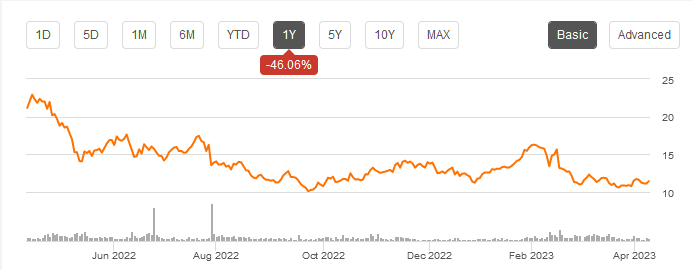
Chegg is an edtech company based in Santa Clara, California, and provides homework help, online tutoring, and other student services.  The company's value grew more than 300 percent in 2020, during the Covid pandemic, but has faced headwinds for the last two years. This includes allegations that  Chegg enables students to cheat on homework and other assignments. Derek Newton has chronicled this problem in the substack The Cheat Sheet.

[Chegg shares grew in 2020 during the Covid pandemic. Source: Seeking Alpha] 

 
Coursera is a publicly traded MOOC based in Mountain View California.  Shares started trading in April 2021.  The company has under-performed as a profit making enterprise. Massive Open Online Courses were once seen as a wave of the future in adult education but their popularity has waned. 

[Coursera has underperformed since its IPO in April 2021.  Source: Seeking Alpha]

2U (based in Lanham, MD) and Guild Education (based in Denver) and are two edtech companies based outside of Silicon Valley. 

2U is a publicly traded Online Program Manager (OPM).  The company services major universities such as the University of Southern California and University of North Carolina with support for some of their online degree programs. 2U has received an enormous amount of funding from Cathie Wood, a major Silicon Valley investor, and has continued to receive support despite a long record of financial losses.  

Some 2U investors have grown tired of persistent losses--and it has shown in the declining share price. The company also faces increased scrutiny in DC for recruiting consumers unable to recoup the cost of education for high-priced masters degrees in areas such as social work.  2U acquired edX, the Harvard-MIT MOOC in 2021 and its profitability remains to be seen.  

In 2023, 2U sued the US Department of Education for attempting to require more transparency between OPMs and their clients.  This strategy is similar to the defensive strategy that subprime colleges have used to stop gainful employment regulations, and more recently, borrower defense to repayment rules.  


 [2U shares have dropped more than 90 percent over the last 5 years. Source: Seeking Alpha]

Guild Education is a privately held corporation that grew to an estimated $4.4B evaluation in a few years. Guild serves businesses by administering online education benefits for large corporations such as Walmart, Target, and Macy's.  While its work may help companies with their bottom line, they appear to do little for their workers. 

At least ten of Guild's investors are based in Silicon Valley, including Silicon Valley Bank and venture capital firms in San Francisco, Palo Alto, and Menlo Park, California. Valuations.fyi reports Guild's estimated value at $1.3B, a 70 percent drop from its peak in June 2022. 

 
[Image above: Guild's valuation in Billions from valuations.fyi]
 
The Higher Education Inquirer will continue to observe changes in edtech as the College Meltdown advances.  


A ‘rigged’ economy and skepticism about college (Paul Fain, Open Campus)

How University of Phoenix Failed. It's a Long Story. But It's Important for the Future of Higher Education. 

The Cheat Sheet (Derek Newton)

2U Virus Expands College Meltdown to Elite Universities 

Erica Gallagher Speaks Out About 2U's Shady Practices at Department of Education Virtual Listening Meeting

Borrower Defense Claims Surpass 750,000. Consumers Empowered. Subprime Colleges and Programs Threatened.

Guild Education: Enablers of Anti-Union Corporations and Subprime College Programs 

College Meltdown 2.0 

The Growth of "RoboColleges" and "Robostudents"

The American Dream is Over (Gary Roth)