Search This Blog

Showing posts sorted by relevance for query addiction. Sort by date Show all posts

Monday, July 21, 2025

Digital Dope: How Internet Addiction Mirrors the Great Crises of Gin, Opium, Meth, and Fentanyl

In the 18th century, gin swept through the working-class neighborhoods of London, offering brief euphoria and long-term devastation. In the 19th century, opium dulled the pain of colonialism and industrial collapse. The 20th century brought methamphetamine and its promise of energy and escape, followed by fentanyl—cheap, potent, and deadly.

Now, in the 21st century, we face a new form of mass addiction: not chemical but digital. The most addictive substances of our time are not smoked, snorted, or injected—they are streamed, swiped, and scrolled.

The internet, once hailed as a revolution in knowledge and communication, has been weaponized into an empire of distraction and dependency. Social media, pornography, and online gambling—backed by surveillance capitalism and unchecked corporate power—are engineered for compulsive use. And like the addictive epidemics of the past, they are eroding individual agency, family life, and the very foundations of civic society.

The Gin Craze and the Algorithmic Binge

In 18th-century Britain, the Gin Craze turned city streets into open-air taverns. Cheap, potent alcohol flooded the market, leading to widespread addiction, crime, and social decay. The state profited from taxes while the poor drowned in despair.

Today’s equivalent is the infinite scroll. Social media platforms like TikTok, Instagram, and Facebook—like gin—are engineered to be consumed endlessly. The user is reduced to a set of engagement metrics. Like the gin drinker numbing pain, the social media user seeks validation, escape, or identity in a flood of curated images and outrage. Depression, anxiety, and loneliness have exploded, especially among teens and young adults. Suicides, particularly among girls, have surged in tandem with social media usage.

Opium Dens and the Porn Empire

The opium den offered oblivion. It soothed pain but eroded will. Victorian elites warned of its moral decay while quietly indulging themselves.

Today, online pornography is the new opium—widely available, hyper-stimulating, and often degrading. Once confined to private spaces, it is now accessible to children, monetized by multi-billion-dollar platforms, and normalized by mainstream culture. The effects—especially on young people—include desensitization, unrealistic expectations, isolation, and difficulty forming real-life relationships.

Research has shown that excessive porn consumption alters brain chemistry similarly to addictive drugs. It hijacks the reward system, rewires sexual expectations, and in many cases, contributes to erectile dysfunction, compulsive behavior, and emotional detachment.

Meth, Fentanyl, and the Speed of the Feed

Meth promised productivity; fentanyl promises relief. Both deliver destruction.

Digital addiction today mimics the frenetic highs of meth and the numbing power of fentanyl. The constant rush of notifications, likes, and headlines overstimulates the brain and crushes attention spans. Apps and games are engineered like slot machines, delivering intermittent reinforcement that keeps users hooked. The average smartphone user touches their phone over 2,500 times a day.

University students struggle to read long texts or concentrate for extended periods. Professors battle declining classroom attention and rising rates of anxiety and burnout. Like meth, the digital feed gives the illusion of efficiency while grinding the mind into dust.

Online Gambling: Casino in Your Pocket

The rise of online sports betting and casino apps has brought Vegas to every dorm room and bedroom. Targeted ads on Instagram and YouTube lure young people into betting with "free" money. Many students—especially young men—develop compulsive behaviors, losing thousands before they graduate. Some turn to credit cards, payday loans, or family bailouts.

States, like governments in the gin and opium eras, have embraced online gambling for its tax revenues. Universities, meanwhile, remain largely silent—even as students destroy their finances and futures through legalized digital addiction.

Higher Education: From Ivory Tower to Digital Trap

Colleges were once sanctuaries of thought and reflection. Today, they are nodes in the digital economy—where learning management systems monitor clicks, and students are nudged toward screens at every turn. Social interaction is filtered through group chats and Reddit threads. Pornography, gambling, and endless scrolling are a click away on the same device used to write term papers and attend virtual lectures.

Even counseling services are digitized. The solution to tech addiction, students are told, is often more tech—apps that monitor screen time, AI chatbots for mental health, or video therapy that feels detached and impersonal.

The Profiteers and the Pushers

In every addiction crisis, there are profiteers: distillers, opium traders, pharmaceutical companies, and cartels. Today, Big Tech plays the same role. Meta, TikTok, YouTube, Pornhub, DraftKings, FanDuel, and hundreds of smaller apps compete for attention with algorithms that exploit human weakness.

Their business model depends on addiction. They study neuroscience, behavioral psychology, and micro-targeted advertising with military-grade precision. Like the drug lords of the past, they deny responsibility while reaping billions.

And just as the poor suffered most in the gin and opioid crises, it is the working class, the unemployed, the chronically ill, and the disconnected who fall hardest into the digital pit.

The Need for Radical Intervention

Digital addiction is not a moral failing—it’s a public health emergency. Like past addiction epidemics, the solution requires:

  • Public awareness campaigns

  • Stricter age and content regulation

  • Taxation on digital vice industries

  • Digital literacy education at all levels

  • Offline spaces and activities that foster real connection and attention

Higher education must lead. Not by digitizing every service, but by teaching students to reclaim their minds, their time, and their agency. Faculty must model mindful engagement and challenge the corporatization of the university by tech companies. Administrators must reconsider their reliance on LMS systems, data harvesting, and digital surveillance.

Will We Wake Up in Time?

In the past, addiction crises forced society to reflect on what was lost: family cohesion, civic virtue, mental clarity, and freedom itself. We stand again at such a crossroads. The digital drug is in every hand, and the overdose is slow—but devastating.

Like gin, opium, meth, and fentanyl, the internet addiction crisis is about more than chemicals—it’s about despair, disconnection, and exploitation. And like those earlier epidemics, it is not an individual failing, but a systemic one. The good news? As with past crises, awareness is the first step toward recovery. The question is: Will we act before another generation is lost?


The Higher Education Inquirer continues to investigate the intersection of capitalism, addiction, and the commodification of human attention. Reach out if you have a story to share.

Saturday, August 23, 2025

Throwing the Flag for the Fourth Time: U.S. College Students Are Still Gambling with Student Aid

In this fourth installment of our continuing investigation into student gambling, one issue looms larger than ever: the misuse of student financial aid to fund risky betting behavior. This is not an isolated anomaly or a cautionary footnote. It is a widespread and worsening crisis that reveals the vulnerabilities in a higher education system increasingly entangled with digital addiction and financial exploitation.

An estimated one in five U.S. college students has used student aid—whether federal loans, Pell Grants, or other education funds—to place bets, often through mobile sports betting platforms. These findings, confirmed in recent surveys by Intelligent.com and state gambling councils, expose a troubling truth: higher education is not just failing to prevent this behavior; it may be silently enabling it.

Since the 2018 Supreme Court decision that overturned the federal ban on sports betting, online gambling has exploded in popularity. Students can now place bets with a few taps on their phones, often encouraged by targeted promotions, social media ads, and campus culture. A 2023 NCAA survey showed that nearly 60 percent of 18- to 22-year-olds had engaged in sports betting, with as many as 41 percent betting on their own school’s teams. What was once considered deviant is now normalized.

Financial aid, originally intended to help students pay for tuition, housing, and books, has become a silent reservoir for gambling losses. Students who misuse these funds often do so quietly, making it easy for the behavior to go undetected until academic or financial disaster strikes. This is not only a matter of personal irresponsibility but of systemic neglect. With little oversight of how aid money is spent after disbursement, students can easily divert those funds toward high-risk activities without triggering institutional red flags.

The consequences are severe. Students who gamble with loan money frequently fall behind on rent and tuition. Some accumulate additional credit card debt. Many report heightened levels of anxiety, depression, and academic disengagement. A subset drops out entirely—often with thousands of dollars in nondischargeable debt and no degree to show for it. What we’re witnessing is the transformation of long-term educational debt into a form of speculative entertainment, with young people bearing the cost and the state underwriting the risk.

Colleges and universities, for the most part, have done little to stop this. Fewer than a quarter have any formal gambling policy in place. Counseling centers are often underfunded and untrained in gambling-specific treatment. Awareness campaigns are limited and usually reactive. Meanwhile, the gambling industry continues to rake in profits and expand its reach on college campuses, sometimes through sponsorship deals or targeted advertisements that blur the lines between athletics, student identity, and wagering.

The NFL Foundation’s $600,000 commitment to gambling awareness may be well-intentioned, but it’s woefully insufficient when compared to the scale of the problem and the profits at stake. While a handful of schools have taken steps to limit advertising or incorporate gambling risk into financial literacy programs, these measures remain the exception rather than the rule.

This is not a moral panic. It is a public health crisis driven by the same factors that have fueled other digital addictions: rapid technological change, corporate lobbying, student precarity, and institutional inaction. It is part of a broader shift toward what we’ve described in previous articles as “digital dope”—a system in which tech companies engineer compulsive behaviors for profit, and colleges quietly adjust to a reality where student attention, money, and mental health are fair game.

The normalization of gambling, especially among male students, mirrors other troubling trends we’ve reported: rising alcohol abuse, declining classroom engagement, and growing alienation from educational institutions. Many of these students are not just gambling because it’s fun—they are using it to escape a deeper sense of disconnection, uncertainty, and despair.

To meaningfully address this crisis, institutions must confront the uncomfortable truth that financial aid is being used to subsidize digital addiction. That means enforcing clear restrictions on gambling app promotions, integrating gambling screening into student health protocols, rethinking how aid is distributed and monitored, and establishing formal policies that treat gambling risk with the same urgency as alcohol or drug abuse.

In publishing our fourth report on student gambling, The Higher Education Inquirer again asks: how many warnings are needed before the problem is acknowledged at scale? How many more students must drop out, spiral into debt, or fall into addiction before administrators, lawmakers, and the Department of Education take this seriously?

The answers are not hard to find. What’s missing is the will to act.

Sources:
Intelligent.com (2022, 2023), College Student Gambling Surveys
NCAA (2023), Sports Betting Participation Data
Nevada Council on Problem Gambling (2024)
Florida Council on Compulsive Gambling (2023)
CollegeGambling.org
Time Magazine (2024), “An Explosion in Sports Betting Is Driving Gambling Addiction Among College Students”
Kindbridge (2025), “Is America in the Middle of a College Student Gambling Addiction Crisis?”
Addiction.Rutgers.edu (2024), “The Rise of Sports Betting Among College Students”
HigherEducationInquirer.org (2025), “Student Aid and Student Gambling: Risky Connection”

Friday, December 6, 2024

Get Wise, Guys: The Perils of the Sports Betting Culture

The NCAA Calls it a Nightmare 

It's easy to get caught up in the excitement of betting on college sports, the potential for quick money, and the social aspect of it all. But let's peel back the curtain and examine the real dangers that lurk beneath the surface of the sports betting culture.  

The Illusion of Easy Money
While it may seem like a simple way to make extra cash, the reality is much more complex. The odds are stacked against you, and the house always has an edge. Chasing losses can lead to a dangerous cycle of debt and despair.

The Mental Toll
The emotional rollercoaster of sports betting can take a significant toll on your mental health. The highs of winning can be fleeting, while the lows of losing can be devastating. The constant stress, anxiety, and disappointment can lead to serious mental health issues.

The Social Impact
Gambling addiction can strain relationships with friends and family. It can lead to isolation, secrecy, and a breakdown of trust. Your academic performance may suffer as you prioritize betting over your studies.

Get Wise, Stay Wise
While it's tempting to indulge in the thrill of sports betting, it's important to approach it with a level head. If you are underage, don't do it.  If you are over 25 and don't have an addiction, stick to a few small bets and a small budget, and know when to walk away. Don't drink or do drugs before, during, or after wagering. If you find yourself struggling with a gambling addiction, seek help immediately.  And if someone notices problems before you do, consider them an ally, and listen. 

Remember, the true joy of sports lies in the game itself, not in the financial outcome.


The National Problem Gambling Helpline (1-800-GAMBLER) is operated by the National Council on Problem Gambling. The helpline serves as a one-stop hub connecting people looking for assistance with a gambling problem to local resources. This network includes 28 contact centers which cover all 50 states and the U.S. territories. The National Problem Gambling Helpline offers call, text and chat services 24/7/365.

Friday, April 25, 2025

Madness on Campus: The Unseen Struggles of College Students

College campuses are often portrayed as vibrant places of learning, personal growth, and social exploration. For many, these years are full of excitement, new experiences, and the thrill of shaping one’s future. However, beneath the surface of campus life, a darker reality lurks—a reality that is rarely discussed but increasingly hard to ignore. The mental health struggles of college students have reached a crisis point, and the pressure to succeed academically, socially, and professionally is often pushing students to their breaking point. The “madness” on campus isn’t just about late-night study sessions or the intensity of competitive sports—it’s about the unseen battles many students are facing every day.

The Pressure Cooker of College Life

For today’s college students, the pressure to succeed is more intense than ever. In addition to excelling academically, students are expected to balance internships, extracurriculars, social lives, and the looming uncertainty of their futures. The fear of not measuring up, of failing to secure a job after graduation, or of not living up to parental expectations can be overwhelming. These pressures are compounded by financial burdens, the weight of student loans, and in many cases, the struggle to make ends meet while navigating the high cost of living.

While the modern college experience has evolved to include more support systems than in past generations, the demands placed on students have also grown exponentially. Many students find themselves caught in a cycle of stress and exhaustion, trying to juggle the high expectations placed upon them. Unfortunately, these expectations can be detrimental to their mental health, leading to feelings of inadequacy, anxiety, and depression.

The Silent Epidemic: Mental Health on Campus

According to recent surveys, mental health issues among college students have skyrocketed in the past decade. Anxiety, depression, and stress are at all-time highs, with more students reporting feeling overwhelmed and mentally exhausted. A 2023 study from the American College Health Association found that 60% of students felt “overwhelming” anxiety at some point during the previous year, and 40% reported feeling so depressed that it was difficult to function. Despite this, only a small percentage of students are receiving the mental health support they need.

The stigma surrounding mental health remains one of the biggest obstacles to seeking help. Students often feel they must appear “perfect” in order to meet academic and social expectations, and admitting to mental health struggles can feel like an admission of failure. As a result, many students suffer in silence, exacerbating their problems and making it harder to find a way out.

Campus resources, while they exist, are often overwhelmed. Counselors and therapists on many campuses are stretched thin, with waitlists sometimes extending for weeks. This leaves many students without the help they so desperately need. Additionally, the counseling services offered on many campuses are often seen as temporary fixes—band-aid solutions to much deeper, systemic issues that go unaddressed.

The Tragic Consequences of Ignored Struggles

The mental health crisis among college students is not just a matter of academic performance or emotional distress—it has life-and-death consequences. A growing number of tragic stories are emerging from campuses across the nation, with young people taking their own lives in response to their struggles. Suicide is now one of the leading causes of death among college-aged individuals, with an alarming number of students feeling they have no other option.

One heartbreaking example is Riley O’Neill, a talented swimmer at the University of Texas, whose death in 2020 shocked the college community. O’Neill, who had been struggling with depression and the overwhelming pressures of college life, took his own life after feeling isolated and unable to cope with his struggles. His death, like many others, brought attention to the unseen mental health crises occurring on campuses and underscored the urgent need for better mental health resources and support systems for students.

Stories like O’Neill’s are tragic reminders of the real, human toll of mental health struggles on campus. They should serve as a wake-up call for universities to reevaluate how they support their students and to prioritize mental health just as much as academic performance or career success.

Sexual Assault on Campus: An Overlooked Crisis

Another critical issue that often goes unaddressed is sexual assault on college campuses. According to the National Sexual Violence Resource Center (NSVRC), 1 in 5 women and 1 in 16 men experience sexual assault while in college. This staggering statistic highlights the reality that sexual violence is an endemic problem on many campuses across the country. Yet, many victims of assault feel isolated, shamed, or even responsible for the violence they’ve experienced. The trauma of sexual assault can have severe, long-lasting effects on mental health, including depression, anxiety, post-traumatic stress disorder (PTSD), and suicidal thoughts.

Part of the reason sexual assault continues to be a pervasive issue on campuses is the culture of silence that surrounds it. Victims often feel afraid to come forward, either due to the fear of not being believed, the social stigma, or the complicated legal and institutional processes that often seem to favor the accused rather than the survivor. This fear can lead to underreporting, with many victims choosing to keep their trauma hidden. Additionally, some students may feel the pressure to remain silent due to concerns about their academic and social standing on campus.

It’s crucial that campuses provide safe, supportive environments for students who have experienced sexual assault. Universities must have clear policies and resources in place to support survivors—ranging from accessible counseling services to campus security that is trained to handle these cases with sensitivity and professionalism. Survivors of sexual violence deserve to feel heard, validated, and safe while navigating the aftermath of their experiences.

The Role of Alcohol and Drug Abuse in Campus Struggles

In addition to mental health challenges and sexual assault, substance abuse is another issue that is deeply intertwined with the campus experience. Alcohol and drug use are unfortunately common among college students, and for many, partying or experimenting with substances is viewed as an integral part of social life. However, for some, these substances become a coping mechanism for the stress, anxiety, and depression that they are grappling with.

The National Institute on Alcohol Abuse and Alcoholism (NIAAA) reports that about 60% of full-time college students between the ages of 18 and 22 drink alcohol, with 40% engaging in binge drinking. Excessive alcohol consumption is often linked to risky behaviors, including unsafe sexual activity, physical injuries, and academic struggles. For students already dealing with mental health issues, alcohol can exacerbate feelings of depression and anxiety, creating a dangerous cycle of dependence and emotional turmoil.

Drugs, including prescription medication misuse, marijuana, and party drugs, are also prevalent on campuses. These substances may be used to self-medicate for anxiety or depression, or they may be part of a social trend. The consequences of substance abuse are severe, ranging from academic failure and legal issues to addiction and overdose. For students in crisis, turning to drugs and alcohol may feel like an escape, but it ultimately only deepens their problems.

Campuses need to take substance abuse seriously by offering programs that promote responsible drinking, early intervention for at-risk students, and support for those struggling with addiction. Universities must also be proactive in educating students about the dangers of alcohol and drug abuse, providing resources for students who may need help overcoming addiction, and ensuring that they have a clear path to recovery.

The Months After Graduation: A New Set of Pressures

For many students, the madness doesn’t end when they graduate. In fact, some may argue that it intensifies. The months following graduation bring a new set of challenges and anxieties. While some students quickly find jobs, others face the harsh reality of a competitive job market, uncertainty, and the pressure to establish themselves as successful adults.

Recent graduates often struggle with the transition from the structured environment of college to the ambiguity of the professional world. Many face the disappointment of job rejections or the discouragement of landing positions that don’t align with their degree or career aspirations. The search for meaningful work, combined with the financial strain of student loans, can lead to feelings of failure, depression, and isolation.

This period is especially challenging for students who may have expected to step into a job immediately after graduation or who lack a clear career path. The societal pressure to “have it all figured out” within the first few months of post-graduation life can exacerbate anxiety and self-doubt. Graduates are expected to succeed quickly, to climb the career ladder, and to live independently—yet many are struggling with the emotional fallout from the relentless pressure of college life and the overwhelming uncertainty of the future.

Moreover, the feeling of isolation can be particularly pronounced during this time. Students leave behind the community of friends and professors that supported them through college, and in the midst of job applications, networking, and interviews, they often find themselves feeling disconnected. The support systems that existed in college become harder to access, and many graduates feel like they’re navigating their post-college life alone.

A Call for Compassion and Understanding

The madness on campus isn’t just about the chaos of late-night cramming sessions or the excitement of sports games. It’s about the unseen mental health struggles that affect so many students every day. It’s about creating a system that values students as whole individuals, not just as future professionals or academic performers.

In the face of this crisis, it is imperative that colleges and universities act now. By prioritizing mental health, fostering a culture of compassion, and offering the resources and support that students need, we can ensure that the madness on campus transforms from a chaotic burden to an environment of healing, growth, and well-being. The future of higher education must be one where students are supported in every sense—academically, socially, and emotionally. Only then will we be able to protect our students from the madness that too often consumes them.

Resources for Students Struggling with Mental Health, Sexual Assault, and Substance Abuse:

If you or someone you know is struggling with any of the following issues, here are some resources to reach out to:

  • National Suicide Prevention Lifeline: 1-800-273-TALK (1-800-273-8255) – Available 24/7 for confidential support.

  • Crisis Text Line: Text HOME to 741741 – Free, 24/7 text support for those in crisis.

  • National Sexual Violence Resource Center (NSVRC): www.nsvrc.org – Offers resources and support for sexual assault survivors.

  • RAINN (Rape, Abuse & Incest National Network): 1-800-656-HOPE (4673) – National sexual assault hotline offering confidential support and resources.

  • Alcoholics Anonymous (AA): www.aa.org – Provides support for individuals struggling with alcohol addiction.

  • National Institute on Drug Abuse (NIDA): www.drugabuse.gov – Provides resources for students dealing with substance abuse issues.

These resources are here to help students navigate the challenges of mental health, sexual violence, and substance abuse during and after their college years. Don’t be afraid to ask for help—it’s a critical step in finding support and healing.

Monday, July 21, 2025

The Disillusioned Young Man and Higher Ed in the US

Across the United States, growing numbers of young men are dropping out—of college, of the labor market, and of public life. They are disillusioned, disappointed, and increasingly detached from the institutions that once promised stability and purpose. Higher education is at the center of this unraveling. For many young men, it has become a symbol of a broken social contract—offering neither clear direction nor tangible reward.

Enrollment numbers reflect this retreat. Women now account for nearly 60 percent of U.S. college students. Men, particularly working-class men, have been withdrawing steadily for years. They are not disappearing from education simply out of disinterest—they are being priced out, pushed out, and in some cases replaced.

College has become a high-risk gamble for those without economic security. Some students take out tens of thousands of dollars in loans and find themselves dropping out or graduating into dead-end jobs. Others gamble in a more literal sense. The explosion of online sports betting and gambling apps has created a public health crisis that is largely invisible. Research shows that college students, particularly men, are significantly more likely to develop gambling problems than the general population. Some have even used federal student aid to fund their gambling. The financial and psychological toll is severe.

Alcohol remains another outlet for despair. While binge drinking has long been part of campus life, it is now more frequently a form of self-medication than social bonding. The stresses of debt, job insecurity, isolation, and untreated mental illness have led many young men to drink excessively. The consequences—academic failure, expulsion, addiction, violence—are often invisible until they are catastrophic.

The education system offers few lifelines. Counseling services are understaffed. Mentorship is scarce. For-profit colleges and nonselective public institutions offer quick credentials but little career mobility. Internships are often unpaid. Adjunct professors, who now make up the majority of the college teaching workforce, are overworked and underpaid, with little time for student engagement. The result is an environment where young men are left to fend for themselves, often without guidance, community, or hope.

Into this vacuum step political influencers who promise meaning and belonging—but offer grievance and distraction instead. Charlie Kirk, founder of Turning Point USA, has become one of the most recognizable figures appealing to disaffected young men. His message is simple: college is a scam, the system is rigged against you, and the left is to blame. But Kirk’s rhetoric does little to address real economic suffering. Instead of empowering young men with tools for analysis, organizing, or resilience, he offers them a worldview of resentment and victimhood. It's ideology without substance—an escape route that leads nowhere.

Compounding the crisis is the transformation of the U.S. labor market. Union jobs that once offered working-class men decent wages and stability have been gutted by automation, offshoring, deregulation, and union-busting campaigns. The pathways that allowed previous generations to thrive without a college degree have largely disappeared. Retail and service jobs dominate the landscape, with low pay, high turnover, and little dignity.

Meanwhile, higher education institutions have increasingly turned to international students to fill seats and boost tuition revenue. Many universities, especially at the graduate level, rely on international students—who often pay full price—to subsidize their operations. These students frequently gain access to internships, research positions, and jobs in STEM fields, sometimes edging out U.S. students with less financial or academic capital. While international students contribute intellectually and economically to American higher ed, their presence also reflects a system more concerned with revenue than with serving local and regional populations.

This mix of economic decline, addiction, alienation, and displacement has left many young men feeling irrelevant. Some turn to substances. Some drop out entirely. Others embrace simplistic ideologies that frame their loss as cultural rather than structural. But the deeper truth is this: they are caught between institutions that extract from them and influencers who exploit them.

The American higher education system has failed to adapt to the reality of millions of young men who no longer see it as a path forward. Until colleges address the psychological, social, and economic pain these men are facing—until they offer real support, purpose, and value—the disillusionment will deepen. Until labor policy creates viable alternatives through union jobs, apprenticeships, and living wages, higher education will continue to function not as a ladder of mobility but as a mirage.

Sources:
National Student Clearinghouse Research Center, Current Term Enrollment Estimates
University at Buffalo, Clinical and Research Institute on Addictions
International Center for Responsible Gaming
Centers for Disease Control and Prevention, Youth Risk Behavior Surveillance
Turning Point USA public statements and financial filings
U.S. Department of Labor, Bureau of Labor Statistics: Union Membership Data
Institute of International Education, Open Doors Report on International Educational Exchange
The Higher Education Inquirer archives on student debt, labor displacement, and campus disinformation campaigns

Wednesday, January 1, 2025

Higher Education – Nowhere to Go (Gary Roth)

 “All we want are the facts, ma’am.” Jack Webb, from the television series, Dragnet (1951-1959)

If it were a matter of the facts alone, the right-wing attack on higher education would be unintelligible. From the attacks, one might think that the college scene is hugely skewed in favor of the underrepresented students towards whom diversity, equity, and inclusion (DEI) initiatives are directed. Yet, a quick glance at census data (Chart 1) shows that collegiate admissions fairly accurately reflect the diversity that marks the population as a whole.

DEI initiatives are focused on the racial and ethnic differentials that have characterized the admission, retention, and graduation of college students, as defined by the broad demographic categories used in government publications and legislation. While initial enrollment rates have narrowed, they are still considerable gaps between groups, especially when the performance of Asian students are part of the comparison. Whites, Blacks (African Americans), and Hispanics (Latinx) lag some 20-25 percent behind. Larger disparities also define retention and graduation rates, over which colleges and universities seemingly have greater impact.[1] DEI initiatives are aimed at these interlocking factors.

Noteworthy in the data about higher education is the dramatic falloff in White participation. Whites are the only demographic group whose participation in higher education is less than their proportion in the general population, while every other group has either held their own or increased their collegiate participation beyond their presence within the general population.

The situation facing Whites has been interpreted in two broad and seemingly contradictory manners. In one, Whites, especially from the working class, are mired in a deep crisis that manifests in a decline in longevity, catastrophic rates of drug (fentanyl) and alcohol addiction, a paranoid perception of reality that leads to high rates of gun ownership, and a propensity to adopt outlandish theories regarding political behavior.

The other interpretation views Whites as a group that can heavily rely on kinship and friendship networks, neighborhood contacts, and their identity as Whites as means to procure jobs, thus obviating the need for a collegiate education as a pathway to employment. It is also possible that these two interpretations are flipsides of the same phenomenon, of a working class that is both relatively favored (privileged) vis-à-vis underrepresented minorities and deeply depressed regarding its present and future possibilities.

In hindsight, the fault of DEI programs is not their attention to African American and Latinx students, but their failure to include White students in their initiatives. Nonetheless, this limitation does not affirm the right-wing criticisms. Genuine concern would call not for the dismantling of DEI initiates, but for extra funding and a broadened scope. Instead, for the right, it is the group with the lowest rate of participation in higher education that becomes the vantage point for viewing the achievements of everyone else.

CHART 1 – RACIAL & ETHNICITY DIVERSITY[2]

(in percents)

Higher Education

US Population

Asian

8

6

Black (African American)

13

13

Hispanic (Latinx)

22

19

White

52

59

Two or More Races (Multiracial)

4

2


The right-wing has focused on state universities because of their use of government funds. Less obvious is the attention paid to the privately-governed and privately-endowed top-tier schools such as Harvard, Yale, and Princeton (HYP). In 2022, Harvard, Yale, and Princeton each limited their admissions to 2, 3, and 6 percent of their respective applicant pools, a level of selectivity found among other top-tier institutions as well. Considering that one-quarter of 4-year baccalaureate institutions abide by ‘open admissions’ policies, through which any applicant who satisfies the minimum entrance requirements and can afford the tuition and fees is admitted, and that only 10 percent of institutions accept less than half of their applicants, this indeed is a rarified situation.[3]

Each of these three institutions is characterized by a similar student demographic profile:

CHART 2 – RACE AND ETHNICITY AT TOP-TIER INSTITUTIONS[4]

(in percents)

Harvard

Yale

Princeton

Asian

21

22

24

Black

9

8

8

Hispanic

12

15

10

White

35

35

38

Non-Resident Alien (International)

13

10

12

Two or More Races

7

7

7

Of upmost importance in terms of diversity is that no single group at any of the three institutions dominates demographically, a circumstance true at other top-tier institutions as well. When on campus, everyone belongs to a minority. Top-tier institutions now mirror the situation that developed at urban public institutions a quarter of a century ago. While whites remain the largest group, they no longer form the majority of the student population.

The top-tier colleges have embarked on a huge endeavor to integrate and diversify the top tiers of American society, insofar as their graduates are destined for lofty careers in business, government, the professions, academe, and in the non-profit sector. But despite the diversity at these institutions, traditionally underrepresented groups—specifically, Blacks and Hispanics—remain underrepresented. Diversity has not benefitted them in such a fashion that they attend top-tier colleges in numbers that reflect their overall participation in higher education or their presence in the population at large (Charts 1 and 2).

Alongside the underrepresentation of Blacks and Hispanics comes the underrepresentation of Whites. The group with the highest rates of college enrollment are Asians, yet they have not been a essential component of DEI efforts. Rather, it has been the stagnating middle that has been its focus.

Socioeconomic diversity is another area to which top-tier institutions have turned their attention, a development that began in earnest around the start of this century. In higher education, socioeconomic diversity is typically measured by the percent of students who receive Pell grants, the federally-funded awards that are based on a student’s family income. Complicated formulas determine who is eligible and the size of the award, but roughly, a family of three whose total income is less than $50,000 qualifies for the maximum.

Regardless of the details, the percent of a student body that receives Pell grants gives some measure of its socioeconomic diversity, that is, the degree to which an institution recruits its students from the bottom income tiers of society. In rough terms, it is a measure of an institution’s appeal to applicants from working- and lower-middle class backgrounds, groups for whom access to top-tier institutions has been extremely limited.

At HYP, nearly one in five students are drawn from these two strata. This remarkable transformation has been made possible by the extensive endowments (in the billions of dollars) at each of the institutions:

CHART 3 – SOCIOECONOMIC DIVERSITY AT TOP-TIER INSTITUTIONS[5]

(in percents)

Harvard

Yale

Princeton

Socioeconomic Diversity

16

19

20

In terms of class, race, and ethnicity as a composite, these institutions have achieved a level of diversity that few other institutions of higher education in the US have been able to match. In this broad sense, the top-tier institutions are the model for DEI initiatives across higher education and also the target for criticisms of those initiatives.

It is cheaper for all students, except for the wealthiest, to attend schools such as Harvard, Yale, and Princeton than to attend nearby publicly-funded flagship institutions. For a family with an annual income under $30,000, the out-of-pocket contribution (costs minus grants) calculates to $5,900. Were that same student to attend the flagship public university in Massachusetts, UMass-Amherst, the out-of-pocket contribution would be $10,858. Analogous calculations are possible for all income groups except for the very highest. Only top-earning families face a situation where it is cheaper to attend a public flagship than a private top-tier institution:

CHART 4 - ANNUAL NET COST OF ATTENDANCE[6]

(family income)

Harvard

UMass-Amherst

Less than $30,000

  $5,900

$10,858

$30,001 - $48,000

  $3,002

$11,824

$48,001 - $75,000

  $4,180

$15,768

$75,001 - $110,000

$17,037

$22,651

Over $110,001

$54,634

$29,809

Similar juxtapositions are possible for Yale and the University of Connecticut-Storrs, Princeton and nearby Rutgers-New Brunswick, and all other top-tier institutions in comparison to the flagship public universities in their respective states.

Yet, as diverse as the top-tier institutions are, they still lag higher education in general, where nearly one in three (30 percent) receive an income-based federal (Pell) grant. As with elsewhere in higher education, the ability-to-pay remains a primary consideration of the admissions process.

The next developments within higher education are far from clear, if only because the global situation in which it is embedded is undergoing a rapid and thoroughgoing transformation. It is hard to imagine that colleges and universities will be able to move beyond the levels of diversity they have achieved so far. Not even the wealthiest of collegiate institutions have been able to assemble student bodies that faithfully reflect the diversity of the population.

Collegiate enrollments have stagnated for over a decade already, and all collegiate enterprises—except for the wealthy, top-tier institutions—are scrambling to shore up their financing. Government largesse, during an era in which any large increase in public spending threatens to re-inflate the economy, is not to be expected, no matter who is in control.

The liberal agenda is stalled and in any case aims to maintain the status quo of the recent past, no matter how inadequate it has been. The right-wing agenda is focused on budget cuts as a means to reduce taxes, primarily for people who already squander their money in speculative investments and junkets into outer space. Perhaps the right-wing attack on higher education is best understood in this light, not according to the facts but as an off-kilter means to cut government spending and also undermine any commitment to social goals that might get in the way. Neither liberal society nor its right-wing corollary has a vision of a better future.

[1] Jennifer Ma and Matea Pender, “Education Pays 2023: The Benefits of Higher Education for Individuals and Society,” College Board, Education Pays 2023, Figures 1.1B, 1.6A; A. Gardner, A., “Persistence and Retention: Fall 2020 Beginning Postsecondary Student Cohort,” June 2022, National Student Clearinghouse Research Center, PersistenceRetention2022.pdf, Figure 2a.

[2] National Center for Education Statistics. Digest of Education Statistics 2023, Digest of Education Statistics-Most Current Digest Tables, Tables 101.20, 306.10.

[3] National Center for Education Statistics. “Characteristics of Degree-Granting Postsecondary Institutions,” August 2023, Characteristics of Degree-Granting Postsecondary Institutions.

[4] US Department of Education, 10 October 2024, College Scorecard. For each institution, see the listings under Campus Diversity, Race/Ethnicity.

[5] US Department of Education, 10 October 2024, College Scorecard. For each institution, see the listings under Campus Diversity, Socio-Economic Diversity.

[6] US Department of Education, 10 October 2024, College Scorecard. For each institution, see the listings under Cost, Average Annual Cost.

Saturday, July 19, 2025

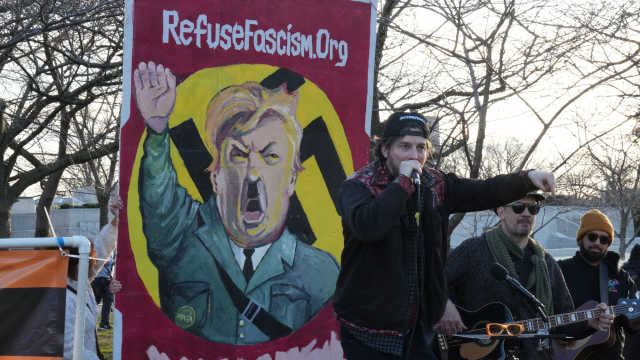
Language in the Age of Fascist Politics (Henry Giroux)

In the age of expanding fascism, the power of language is not only fragile but increasingly threatened. As Toni Morrison has noted, “language is not only an instrument through which power is exercised,” it also shapes agency and functions as an act with consequences. These consequences ripple through the very fabric of our existence. For in the words we speak, meaning, truth, and our collective future are at risk. Each syllable, phrase, and sentence becomes a battleground where truth and power collide, where silence breeds complicity, and where justice hangs in the balance.

In response, we find ourselves in desperate need of a new vocabulary, one capable of naming the fascist tide and militarized language now engulfing the United States. This is not a matter of style or rhetorical flourish; it is a matter of survival. The language required to confront and resist this unfolding catastrophe will not come from the legacy press, which remains tethered to the very institutions it ought to expose. Nor can we turn to the right-wing media machines, led by Fox News, where fascist ideals are not just defended but paraded as patriotism. 

In the face of this crisis, Toni Morrison’s insight drawn from her Nobel Lecture becomes all the more urgent and makes clear that the language of tyrants, embodied in the rhetoric, images, and modes of communication characteristic of the Trump regime, is a dead language. For her “a dead language is not simply one that is no longer spoken or written,” it is unyielding language “content to admire its own paralysis.” It is repressive language infused with power, censored and censoring. Ruthless in its policing duties and dehumanizing language, it has no desire or purpose other than maintaining the free range of its own narcotic narcissism, its own exclusivity and dominance. “Though moribund, it is not without effect” for it actively thwarts the intellect, stalls conscience, and “suppresses human potential.” Unreceptive to interrogation, it cannot form or tolerate new ideas, shape other thoughts, tell another story, or fill baffling silences. This is the language of official power whose purpose is to sanction ignorance and preserve. 

Beneath its glittering spectacle and vulgar performance, lies a language that is "dumb, predatory, sentimental." It offers mass spectacles, a moral sleepwalking state of mind, and a psychotic infatuation for those who seek refuge in unchecked power. It forges a community built on greed, corruption, and hate, steeped in a scandal of hollow fulfillment. It is a language unadorned in its cruelty and addiction to creating an architecture of violence. It is evident in Trump’s discourse of occupation, his militarizing of American politics, and in his use of an army of trolls to turn hatred into a social media spectacle of swagger and cruelty.


Despite differing tones and political effects, the discourses of the far right and the liberal mainstream converge in their complicity: both traffic in mindless spectacle, absorb lies as currency, and elevate illusion over insight. The liberal mainstream drapes the machinery of cruelty in the language of civility, masking the brutality of the Trump regime and the predatory logic of gangster capitalism, while the far right revels in it, parading its violence as virtue and its hatred as patriotism. Language, once a powerful instrument against enforced silence and institutional cruelty, now too often serves power, undermining reason, normalizing violence, and replacing justice with vengeance. 

In Trump’s oligarchic culture of authoritarianism, language becomes a spectacle of power, a theater of fear crafted, televised, and performed as a civic lesson in mass indoctrination. If language is the vessel of consciousness, then we must forge a new one--fierce, unflinching, and unafraid to rupture the fabric of falsehood that sustains domination, disposability, and terror. The late famed novelist, NgÅ©gÄ© wa Thiong’o, was right in stating that “language was a site of colonial control,” inducting people into what he called “colonies of the mind.”

The utopian visions that support the promise of a radical democracy and prevent the dystopian nightmare of a fascist politics are under siege in the United States. Increasingly produced, amplified and legitimated in a toxic language of hate, exclusion, and punishment, all aspects of the social and the democratic values central to a politics of solidarity are being targeted by right-wing extremists. In addition, the institutions that produce the formative cultures that nourishes the social imagination and democracy itself are now under attack. The signposts are on full display in a politics of racial and social cleansing that is being fed by a white nationalist and white supremacist ideology that is at the centre of power in the US—marked by fantasies of exclusion accompanied by a full-scale attack on morality, reason, and collective resistance rooted in democratic struggle. 

As more people revolt against this dystopian project, neoliberal ideology and elements of a fascist politics merge to contain, distract and misdirect the anger that has materialised out of legitimate grievances against the government, controlling privileged elites and the hardships caused by neoliberal capitalism. The current crisis of agency, representation, values and language demands a discursive shift that can call into question and defeat the formative culture and ideological scaffolding through which a savage neoliberal capitalism reproduces itself. This warped use of language directly feeds into the policies of disposability that define Trump's regime.

State Terror and Trump’s Politics of Disposability

As Trump’s regime concentrates power, he invokes a chilling convergence of law, order, and violence, a cornerstone of his politics of disposability. His acts of cruelty and lawlessness, abducting and deporting innocent people, branding immigrants as “vermin,” claiming they are “poisoning the blood” of Americans, and even proposing the legalization of murder for twelve hours, make clear that his violent metaphors are not just rhetorical flourishes. They are policy blueprints. In Trump’s hands, rhetoric becomes a weaponized prelude to atrocity, a tool of statecraft. Threats, hatred, and cruelty are transformed into instruments of governance.

This is not careless talk, it is a brutal and calculated expression of power. Trump’s threats to arrest and deport critics such as Zohran Mamdani reveal his willingness to use the machinery of the state for political extermination. His targets are predictable: immigrants, Black people, educators, journalists, LGBTQ+ individuals, and anyone who dares to challenge his white Christian nationalist, neoliberal, and white supremacist vision. His language does not merely offend, it incites harm, enacts repression, and opens the gates to state-sanctioned violence. It extends the reign of terror across the United States by labeling protesters as terrorists and deploying the military to American cities, treating them as if they were “occupied territories.” 

Trump is not alone. Many of his MAGA follower use these same hateful discourse. For instance, conservative pundit Ann Coulter wrote “in response to a speech by Melanie Yazzie, a Native artist and professor, about decolonization, “We didn’t Kill enough Indians.” This is not simply harsh rhetoric; nor is it a performative display of emboldened hatred and historical forgetting, it sets the stage for state-sanctioned repression and mass violence. What is at stake is more than civic respect. It is democracy itself. When language loses meaning and truth is blurred, tyranny thrives. Trump’s and too much of MAGA discourse is not about persuasion; it is about dehumanization and domination. It functions as statecraft, laying the groundwork for a society where suffering becomes spectacle and repression masquerades as law and order. Language is the canary in the coal mine, warning us that democracy dies without an informed citizenry.

As Eddie Glaude Jr. has powerfully argued, Americans must confront a brutal truth: the creation and expansion of Immigration and Customs Enforcement (ICE), now the largest federal law enforcement agency, is not merely a matter of policy, it is a cornerstone of white supremacy. It is a racist institution, entrenched in an immigration policy designed to uphold the values of white nationalism. In the face of shifting demographics, ICE is tasked with an urgent mission—to make America white again, a calculated attempt to turn back the clock on progress, to preserve an imagined past at the cost of justice and humanity.

We now live in a country where class and racial warfare both at home and abroad is on steroids, exposing the killing machine of gangster capitalism in its rawest, most punitive form. Trump supports the genocidal war waged by a state led by a war criminal. Children are being slaughtered in Gaza. Millions of Americans, including poor children, teeter on the edge of losing their healthcare. Funds for feeding hungry children are being slashed, sacrificed to feed the pockets of the ultra-rich. Thousands will die, not by accident, but by design. Terror, fear, and punishment have replaced the ideals of equality, freedom, and justice. Childcide is now normalized as the law of the land. The lights are dimming in America, and all that remains are the smug, ignorant smirks of fascist incompetence and bodies drained of empathy and solidarity.

Gangster Capitalism and the Death of Empathy

Gangster capitalism lays the foundation for Trump’s racist and fascist politics. As I have noted elsewhere, the United States has descended into a state of political, economic, cultural, and social psychosis, where cruel, neoliberal, democracy-hating policies have prevailed since the 1970s. At the core of this authoritarian shift lies a systemic war on workers, youth, Blacks, and immigrants, increasingly marked by mass violence and a punishing state both domestically and internationally. The U.S. has transformed into an empire dominated by a callous, greedy billionaire class that has dismantled any remnants of democracy, while embracing the fascistic ideology of white Christian nationalism and white supremacy. Fascism now parades not only beneath the flag but also under the Christian cross. 

America has shifted from celebrating unchecked individualism, as depicted in Ayn Rand’s Atlas Shrugged, to the glorification of greed championed by Gordon Gekko in Wall Street, and the psychotic avarice of Patrick Bateman in American Psycho. This descent into barbarity and psychotic infatuation with violence is further demonstrated by Justin Zhong, a right-wing preacher at Sure Foundation Baptist Church in Indianapolis, who called for the deaths of LGBTQ+ individuals during a sermon. Zhong defended his comments by citing biblical justifications and labeling LGBTQ+ people as "domestic terrorists." 

It gets worse. During a Men’s Preaching Night at Sure Foundation Baptist Church, Zhong's associate, Stephen Falco, suggested that LGBTQ+ people should "blow yourself in the back of the head," and that Christians should "pray for their deaths." Another member, Wade Rawley, advocated for violence, stating LGBTQ+ individuals should be "beaten and stomped in the mud" before being shot in the head. Fascism in America, nourished by the toxic roots of homophobia, now cloaks itself not just in the poisonous banner of the Confederate flag, but also in the sacred guise of the Christian cross.

Welcome to Trump’s America, where empathy is now viewed as a weakness and the cold rule of the market is the template for judging all social relations. One noted example can be found in the words of Trump’s on-and-off billionaire ally, Elon Musk, who dismisses empathy as a naive and detrimental force that undermines the competitive, individualistic ethos he champions. Speaking to Joe Rogan on his podcast, Musk specifically stated that “The fundamental weakness of western civilization is empathy.” As Julia Carrie Wong observes in The Guardian, the stakes extend far beyond casting empathy as a "parasitic plague." Empathy's true danger lies in its role as an enabler—granting permission to dehumanize others and constricting the very “definition of who should be included in a democratic state.” This is a recipe for barbarism, one that allows both states and individuals to turn a blind eye to the genocidal violence unfolding in Gaza and beyond.

Naming the Deep Roots of the Police State

Ruth Ben-Ghiat has warned that “America has been set on a trajectory to become a police state,” pointing to the passage of the Brutal and Bellicose Bill (BBB), which handed ICE a budget larger than the militaries of Brazil, Israel, and Italy combined. But the roots of this state violence go deeper. The foundation was laid under Bush and Cheney, whose war on terror birthed Guantanamo, Abu Ghraib, mass surveillance, and extraordinary rendition. What Trump has done is strip these earlier authoritarian practices of all pretenses, elevating them to the status of governing principles.

The police state did not begin with Trump; it evolved through him. Now, we see its terrifying maturity: racial cleansing disguised as immigration policy, hatred normalized as political speech, dissent criminalized, birthright citizenship threatened, and everyday life militarized. This is not politics as usual, it is fascism in real time.

Trump’s fascist politics grows even more dangerous when we recognize that his language of colonization and domination has helped transform American society into what NgÅ©gÄ© wa Thiong’o chillingly describes as a “war zone.” This war zone now spans the digital terrain—through the internet, podcasts, social media, and educational platforms—becoming a fertile breeding ground for fascist symbols, reactionary values, manufactured identities, and the toxic resurrection of colonial logics. In this battleground of meaning, the language of colonization does more than obscure the truth—it erodes critical thinking, silences historical memory, and disarms the very possibility of empowered agency. What remains in its wake is a nation scarred by suffering, haunted by loneliness, bound by shared fears, and anesthetized by the numbing rituals of a punishing state.

The transformation of America into a war zone finds its most visible expression in the rise of Trump’s omnipresent police state. This authoritarian machinery reveals itself through the mechanisms of state-sponsored terror, a heavily militarized ICE force operating like masked enforcers, and the rapid expansion of detention centers that will increasingly resemble a network of potential forced labor camps. As Fintan O’Toole warns, Trump’s deployment of troops onto the streets of Los Angeles is not merely symbolic—it is “a training exercise for the army, a form of reorientation.” In this reorientation, soldiers are no longer defenders of the Constitution but are being retrained as instruments of authoritarian power, bound not by democratic ideals but by obedience to a singular will.

Nevertheless, we resist or refuse to name the fascist threat and the ideological and economic architecture of its politics. Still, we recoil from calling the Trump regime what it is: a fascist state engaged in domestic terrorism. Still, we remain blind to the fact that economic inequality, global militarism, and the genocidal logics of empire are not peripheral issues, they are the center. Why is it so difficult to admit that we are living in an age of American fascism? Why do the crimes of the powerful, at home and abroad, so often pass without scrutiny, while the victims are blamed or erased?

The Collapse of Moral Imagination

What we face is not only a political crisis, partly in the collapse of conscience and civic courage-- a profound moral collapse. The war being waged at home by the Trump regime is not just against immigrants or the poor, it is a war on critical thought, on historical memory, on the courage to dissent. It is a war on every institution that upholds critical thinking, informed knowledge, and civic literacy. This is a genocidal war against the very possibility of a just future—a war not merely against, but for stupidity, for the death of morality, and for the annihilation of any robust notion of democracy. Viktor Klemperer, in his seminal work The Language of the Third Reich, offers a crucial lesson from history: "With great insistence and a high degree of precision right down to the last detail, Hitler’s Mein Kampf teaches not only that the masses are stupid, but that they need to be kept that way, intimidated into not thinking." Klemperer’s analysis reveals that Nazi politics did not arise in a vacuum; it was cultivated in a culture where language itself was the breeding ground of cruelty and control.

Trump’s rhetoric of fear, racial hatred does not emerge in a vacuum. It resonates because it taps into a long and violent history, a history soaked in blood, built on genocide, slavery, colonialism, and exclusion. His language recalls the genocidal campaigns against Indigenous peoples, Black Americans, Jews, and others deemed disposable by authoritarian regimes. It is a necrotic lexicon, resurrected in service of tyranny. It gives birth to politicians with blood in their mouths, who weaponize nostalgia and bigotry, cloaking brutality in the false promises of patriotism and “law and order.”

Language as War and the Return of Americanized Fascism

This is not merely a rhetoric of cruelty, it is a call to arms. Trump’s words do not simply shelter fascists; they summon them. They silence dissent, normalize torture, and echo the logic of death camps, internment camps, and mass incarceration. His discourse, laden with hatred and lies, is designed to turn neighbors into enemies, civic life into war, and politics into a death cult and zone of terminal exclusion. Undocumented immigrants, or those seeking to register for green cards or citizenship, are torn from their families and children, cast into prisons such as Alligator Alcatraz, a grotesque manifestation of the punishing state. As Melissa Gira Grant writes in The New Republic, it is "an American concentration camp…built to cage thousands of people rounded up by ICE," constructed in a chilling display of colonial disregard, and erected on traditional Miccosukee land without so much as consulting the Tribe.

This is the face of modern cruelty: language wielded as a tool to orchestrate a spectacle of violence, designed to degrade, divide, and erase. Culture is no longer a peripheral force in politics; it has become the central weapon in the rise of state terrorism. The language of war and complicity normalizes America’s transformation into a monstrous carceral state, a symbol of state-sponsored terror where due process is suspended, and suffering is not just an outcome but the point itself. 

A culture of cruelty now merges with state sponsored racial terror, functioning as a badge of honor. One example is noted in Trump advisor Laura Loomer, who ominously remarked that "the wild animals surrounding President Donald Trump’s new immigration detention center… will have 'at least 65 million meals." Change.org, along with others such as Pod Save America co-host Tommy Vietor, noted that her comment “is not only racist, it is a direct emotional attack and veiled threat against Hispanic communities. This kind of speech dehumanizes people of color and normalizes genocidal language.” Her racist remark not only reveals the profound contempt for human life within Trump's inner circle but also highlights how cruelty and violence are strategically used as both a policy tool and a public spectacle. Loomer’s remark is not an aberration, it is a symptom of the fascist logic animating this administration, where death itself becomes a political message. Her blood-soaked discourse if symptomatic of the criminogenic politics fundamental to the working of the Trump regime.

The parallels to history are unmistakable. Loomer’s invocation of death as the outcome of detention recalls the Nazi designation of certain camps as Vernichtungslager, extermination camps, where as Holocaust survivor Primo Levi noted, imprisonment and execution were inseparable. Likewise, the U.S. internment of Japanese Americans during World War II, though often sanitized in public memory, operated under a similar logic of racial suspicion and collective punishment. The message in each case is clear, as Judith Butler has noted in her writing: some lives are rendered invisible, deemed unworthy of legal protection, of family, of dignity, of life itself. In fascist regimes, such spaces function not only as instruments of punishment but as symbolic theaters of power, meant to instill terror, enforce obedience, and declare which bodies the state has marked for erasure.

For Trump, J.D. Vance, and their ilk, fascism is not a specter to be feared but a banner to be waved. The spirit of the Confederacy and the corpse-like doctrines of white supremacy, militarism, and neoliberal authoritarianism have returned, this time supercharged by surveillance technologies, financial capital, and social media echo chambers. In the spirit of the Trump regime, the symbols of the Confederacy are normalized. Confederate flags are now waved by neo-Nazis in public squares and parades, while Trump renames US warships and 7 military bases after Confederate officers, reinforcing a dangerous nostalgia for a past rooted in racism and rebellion against the very ideals of unity and equality that this nation claims to uphold.

Higher Education and the Fight Against Authoritarianism

Read More

It should not surprise us that the American public has grown numb with the constant echo chamber of state terrorism playing out in multiple sites of attack. Powerful disimagination machines, mainstream media, right-wing propaganda platforms, tech billionaires, have flooded public consciousness with conspiracy theories, historical amnesia, and spectacularized images of immigrants and others being deported to prisons, foreign Gulags, and modern day black holes. These are not simply entertainment outlets; they are pedagogical weapons of mass distraction, breeding civic illiteracy and moral paralysis. Under their influence, the American people have been placed in a moral and political coma.

White Nationalism and Reproductive Control

Nowhere is this more evident than in the mainstream media’s failure to address the racial and ideological foundations of Trump’s agenda. His attacks on Haitian immigrants, the travel ban on seven African countries, the shutting down of refugee programs, and his open-door policy for white Afrikaners from South Africa are not merely racist; they are explicitly white nationalist. The same ideology drives attacks on women’s reproductive rights, revealing the deep racial and gender anxieties of a movement obsessed with white demographic decline. These are not isolated skirmishes, they are interconnected strategies of domination.

These converging assaults, white nationalism, white supremacy, patriarchal control, and militarized life, manifest most vividly in the war on reproductive freedom. White nationalists encourage white women to reproduce, to hold back demographic change, while punishing women of color, LGBTQ+ people, and the poor. It is a violent calculus, animated by fantasies of purity and control.

The Systemic Assault on Democracy

This is a full-spectrum assault on democracy. Every act of cruelty, every racist law, every violent metaphor chips away at the social contract. A culture of authoritarianism is now used to demean those considered other, both citizens and non-citizens, critics and immigrants, naturalized citizens and those seeking such status. They are labeled as unworthy of citizenship now defined by the Trump regime as a privilege rather than a right. Meanwhile, a media ecosystem built on clickbait and erasure renders both such fascists as legitimate while making invisible the roots of suffering mass suffering and fear, all the while, turning oppression into spectacle and silence into complicity.

In this fog, language itself is emptied of meaning. Truth and falsehood blur. As Paulo Freire warned, the tools of the oppressor are often adopted by the oppressed. We now see that the logic of fascism has seeped into the culture, eroding civic sensibility, destroying moral imagination, and rendering resistance almost unspeakable.

The Normalization of Tyranny

Trump’s authoritarian fantasies do not alienate his base, they galvanize it. What was once unthinkable is now policy. What was once fringe has become mainstream. Cruelty is not something to be deplored and avoided at all costs, it is a central feature of power, wielded with theatrical and spectacularized brutality. Under the current acting ICE Director, Todd Lyons, this punitive logic has intensified: Lyons oversees a $4.4 billion Enforcement and Removal Operations apparatus staffed by over 8,600 agents across 200 domestic locations, using militarized tactics, surprise raids, and aggressive targeting of immigrant communities to sustain a regime of fear. ICE’s presence is at the heart of Trump’s hyper-police state, and its funding has been greatly expanded to $170 billion under Trump’s new budget bill, creating what journalist Will Bunch calls Trump’s “own gulag archipelago of detention camps across a United States that’s becoming increasingly hard to recognize.”

Meanwhile, figures like Tom Homan, who led ICE under Trump’s first term, laid the groundwork with Gestapo-style operations, midnight raids, family separations, and public declarations that undocumented immigrants “should be afraid”. As the “border tzar” under Trump, Homan has initiated deportation policies that are even more aggressively violent and cruel that those that took place in Trump’s first term as president. As Bunch notes, take the case of “the 64-year-old New Orleans woman, Donna Kashanian, who fled a tumultuous Iran 47 years ago, volunteered to rebuild her battered Louisiana community after Hurricane Katrina, never missed a check-in with U.S. immigration officials , and was snatched by ICE agents in unmarked vehicles while she was out working in her garden and sent to a notorious detention center.” These horror stories now take place daily in cities extending from Los Angeles to Providence, Rhode Island.

A central player in this current regime of state terrorism, systemic racism, mass abductions, deportations, and the criminalization of dissent is Stephen Miller, Trump’s White House Deputy Chief of Staff. During Trump’s first term, Miller was the driving force behind the Muslim ban, the family separation policy, and assaults on birthright citizenship, all rooted in an unapologetic white supremacist and eugenicist worldview. In Trump’s second term, he has emerged as the architect of even more draconian measures, pushing for mass deportations, the abolition of birthright citizenship, and the revocation of naturalized citizenship for those who fall outside his white Christian vision of who deserves to be called American.

Far-right white nationalist such as Miller, Tom Homan and Todd Lyons, do not treat cruelty as a regrettable side effect. For them, cruelty is the currency of power. Suffering becomes a spectacle, and violence a ritual of statecraft. Tyranny is not inching forward in silence; it is advancing at full speed, cheered on by those who treat fear as a governing principle and pain as public policy. At stake here is what Timothy Snyder calls the practice of fascist dehumanization.

This is not a passing storm. It is the death throes of a system that has long glorified violence, commodified everything, and fed on division. Trump’s language is not a performance, it is preparation. His words are laying the foundation for a society without empathy, without justice, without democracy.

Reclaiming the Language of Resistance, Reclaiming Democracy

In a decent society, language is the lifeblood of democracy, a vessel of solidarity, truth, and hope. But in Trump’s America, language has become a weapon, dehumanizing, excluding, and dominating. His vision is not a warning; it is a blueprint. We must resist, or we risk losing everything. The stakes are nothing less than the survival of democracy, the retrieval of truth and the refusal to live in a world where cruelty is policy and silence is complicity. 

What is needed now is not only a rupture in language but a rupture in consciousness, one that brings together the critical illumination of the present with a premonitory vision of what lies ahead if fascist dynamics remain unchecked. As Walter Benjamin insisted, we must cultivate a form of profane illumination, a language that disrupts the spectacle of lies and names the crisis in all its violent clarity. At the same time, as A.K. Thompson argues, we must grasp the future implicit in the present. His notion of premonitions urges us to read the events unfolding around us as urgent warnings, as signs of the catastrophe that awaits if we do not confront and reverse the political and cultural paths we are on. It demands that we see the connections that bind our suffering, rejecting the fragmented reality that neoliberalism forces upon us. 

The time for complacency is past. The time for a new and more vibrant language, one of critique, resistance, and militant hope, is now. A language capable not only of indicting the present but of envisioning a future rooted in justice, memory, and collective struggle.

As Antonio Gramsci remarked in his Prison Notebooks, "The crisis consists precisely in the fact that the old is dying and the new cannot be born; in this interregnum a great variety of morbid symptoms appear." What is clear is that these morbid symptoms have arrived. Yet, alongside the despair they breed, they also present new challenges and opportunities for revitalized struggles. This is where the power of language comes into play—this is the challenge and opportunity for those who believe in the transformative power of culture, language, and education to address not just the nature of the crisis but its deeper roots in politics, memory, agency, values, power, and democracy itself.

[This article first appeared in the LA Progressive.]


By Henry A. Giroux

Henry A. Giroux currently holds the McMaster University Chair for Scholarship in the Public Interest in the English and Cultural Studies Department and is the Paulo Freire Distinguished Scholar in Critical Pedagogy. His latest book is The Burden of Conscience: Educating Beyond the Veil of Silence (Bloomsbury in 2025). He is LA Progressive's Associate Editor. His website is www.henryagiroux.com