Search This Blog

Showing posts sorted by relevance for query debt collective. Sort by date Show all posts

Tuesday, October 18, 2022

I Went on Strike to Cancel My Student Debt and Won. Every Debtor Deserves the Same. (Ann Bowers*)


Image of Ann Bowers, courtesy of the Debt Collective

[Note:  This article originally appeared in In These Times on June 2, 2022.  The Higher Education Inquirer is now working with Ann Bowers and the Debt Collective to restore GI Bill benefits to veterans preyed upon by for-profit colleges.]

This week, former students of Corinthian Colleges — a predatory for-profit school that once boasted more than 100 campuses across the country — received news that their student loans will be canceled. In an announcement, a Department of Education (DOE) press release called the move ​“the largest single loan discharge the Department has made in history.” As a former student of Everest College, which is a branch of Corinthian, I am overjoyed that everyone who attended the scam school will finally be made whole.

The action, announced on June 2, will impact 560,000 former Corinthian students and $5.8 Billion in total student debt will be cancelled. This amounts to a stunning victory for debtors who took collective action to win relief.

But I want to set the record straight. This victory is not the result of the Biden administration’s good will. It is the outcome of a fierce organizing campaign by debtors that has been going on for almost eight years. I should know. I was part of a group of former students that launched a 7-year long student debt strike to win loan cancellation from the federal government.

Now, as President Biden considers cancelling student loan debt more broadly, the outcome for former Corinthian students should send a clear message that the only way to resolve the issue of pernicious student loan debt is to cancel it for everybody and to do so automatically, without making borrowers individually apply.

My involvement started back in 2014 when I read an article that revealed my school was suspected of lying to and defrauding borrowers, many of whom were from low-income families. I was outraged to discover that Corinthian had been under investigation by the U.S. Senate since at least 2010 for breaking the law — all while continuing to receive billions of dollars per year in government funding. Investigators found that Corinthian lied to students about job placement rates, enrolled people who were not prepared for college-level work and offered a sub-par education. The college also provided falsified placement information to accrediting agencies in order to keep federal money flowing. Some of the evidence against Corinthian was compiled by then-California Attorney General Kamala Harris, who sued the school in 2013 for false advertising.

Furious and determined to fight back, I turned to social media and found that hundreds of former students of my school were gathering online to address the dilemma that we had found ourselves in: huge debts and worthless degrees.

Organizers from the Debt Collective, a union for debtors, had also heard about the plight of Corinthian borrowers and found our group on Facebook. They proposed that everyone who had attended the school join together to pressure the government to cancel our debts. There were few other choices: student debts cannot be erased in bankruptcy except in a few extreme circumstances. Turning our individual burdens into a collective demand was our only option.

In the winter of 2015, a group of former students met in person to plan the campaign. We were all in a similar situation. None of us had been able to find the high-paying jobs that Corinthian had promised, and none of us could afford to pay back the astronomical sums that we owed. We turned our inability to repay into a rallying cry and launched a student debt strike — the first in U.S. history — to demand the cancellation of our loans. We called ourselves the Corinthian Fifteen.

The law was on our side. We relied on an obscure legal mechanism called Borrower Defense to Repayment that required the government to cancel the debts of defrauded students. Since the DOE did not even have an application available to those who wanted to apply for relief, we worked with lawyers to design a form and then made it available on the Debt Collective’s website. By the spring of 2015, applications from former for-profit college students rolled in by the thousands.

Public opinion was also on our side. Our campaign went viral. Dozens of news outlets covered the story of the scammed borrowers who were taking on the Obama administration in March 2015. Strikers met in Washington, D.C. with officials from the Consumer Financial Protection Bureau, the Department of Education and the Treasury Department. We shared our experiences of being lied to and defrauded by Corinthian and delivered hundreds of applications for loan relief into the hands of Ted Mitchell, the Undersecretary of Education under President Obama.

Our campaign won the support of major media organizations like the New York Times editorial board and politicians like Sen. Elizabeth Warren (D-Mass.) and Hillary Clinton. As more former for-profit college students realized they had been scammed, our numbers grew. We were joined by students who had attended other predatory schools such as ITT Technical Institutes. Our group of 15 strikers soon grew to 100. Thanks to the Debt Collective, we met with lawyers who helped us understand the consequences of not paying our debts. We knew that defaulted debtors could face wage garnishment and tax offsets. Older borrowers might have their social security benefits garnished. But we were ready for those consequences. Most of us could not afford to pay anyway and were already in default, so the strike was a way to politicize our inability to pay. We stood together for everyone in our situation across the country.

Unfortunately, the Department of Education dragged its feet. Officials claimed they cared about us and wanted to help, but rather than just canceling debts that were shattering lives and ruining futures, they set up a series of administrative processes and claimed they needed to study the issue. Little by little, a few former students who filled out the correct forms and checked the right boxes got their loans relieved. But hundreds of thousands of others waited in anguish.

I was one of the lucky ones. Finally, in 2017, I received an email from the DOE that said my loans were being canceled. My joy was tempered by the fact that thousands of others were still in debt. The news got even worse when President Donald Trump came into office. His Education Secretary, Betsy DeVos, halted the relief process that had begun slowly under Obama.

But the fight is far from over, and the stakes are higher than ever.

Back in 2010, when I enrolled at Corinthian, I didn’t know there was such a thing as for-profit education. I assumed that if the government was funding a college, it must be offering a quality education. My experience organizing a debt strike and talking to borrowers who attended colleges of all kinds has taught me that the problem is larger than scam schools. The for-profit college industry is part of a larger system of higher education that often promises the world while failing to deliver for students like me who don’t come from wealthy backgrounds.

Just like former Corinthian students won by turning our individual struggles into a collective demand, I believe we can win even more if student debtors from colleges of all kinds fight back together. We can demand a more fair and just higher education system and an end to the for-profit schools that prey on low-income students.

Monday, March 31, 2025

March Update on Student Debt (Debt Collective)

The federal government is a sh*t show right now. From ICE abductions of pro-Palestine college students to proposed cuts to Social Security and Medicaid, the Trump administration is wreaking havoc on all of our communities.

We want to take a moment and specifically talk about student debt and higher education — work that we’ve been doing for a while now. Here’s some of what we know, what we think, and what we should do:

In recent days, the Trump administration issued an executive order to dismantle the Department of Education. Legally, this cannot be done without Congress, but in practice, this means most of the staff was simply fired. We talked a little bit about what that means for student debtors in this Twitter thread. In short, this makes the student debt crisis much worse.

Shortly after that, Trump ordered the entire federal student debt portfolio — all $1.7 trillion — to be moved from the Department of Education to the Small Business Administration (SBA). The Small Business Administration is another agency within the federal government. That means our collective creditor would still be the federal government. But will this move actually happen? Will our federal student loans somehow end up privatized? There is a LOT up in the air right now, and the short answer is we don’t know exactly what will happen, but we as debtors should remain nimble so we can exercise our collective power when we need to. Moving our student debt from the Department of Education to the SBA would be 1) illegal 2) administratively and practically difficult 3) lead to possible errors with your account.

If you haven’t already, we still highly recommend going to studentaid.gov and finding your loan details and downloading and/or screenshotting your history.

The traditional infrastructure we have long suggested debtors utilize to solve problems with their student debt — the Consumer Financial Protection Bureau (CFPB), the FSA ombudsman team, etc — have either been undermined or outright destroyed. This means there are fewer and fewer ways for us, student debtors, to get answers to problems with our student debt accounts. But we shouldn’t let Congress off the hook — we should make student loans Congress’ problem. They’re elected to serve us and it’s their job to attend to your needs.

Our friends at Student Borrower Protection Center (SBPC) have put together a helpful tool to open a case at your member of Congress’s office.

Lastly, we want to talk about what we mean when we say Free College. Student debt has ruined lives, and will continue to as long as it exists. We shouldn’t have to borrow to pay for college — in fact, we shouldn’t have to pay at all. It should be free. And that’s what we’re fighting for. But our vision for College For All doesn’t stop at tuition-free — it means ICE and cops off campus; it means paying workers, faculty and staff a living wage; it means standing up for free speech; it means ending domestic and gender based violence on campus; and it means universities that function as laboratories for democracy and learning, not as laboratories for landlords and imperialism.

On April 17th, Debt Collective is co-sponsoring the National Higher Education Day of Action to demand our vision of College For All and oppose the hell the Trump administration is causing right now. Find an event near you HERE to participate — or start an event on your own!

And THIS SATURDAY – April 5th –we’re taking to the streets with hundreds of thousands of people across the country to tell Trump and Musk “Hands Off Our Democracy!” They’re stripping America for parts, and it's up to us to put an end to their brazen power grab. This will be one of the largest mass mobilizations in recent history — and we need you in the streets with us. There are hundreds of actions planned, find one to join near you HERE.

Whatever happens in the future, we will be more likely to win if we gird ourselves with each other’s stories and experiences so we can fight together. This is why we built a debtors’ union — the only virtual factory floor for debtors. Debt acts as a discipline and keeps people from joining the struggle for things we care about — but we can increase our numbers and build power by canceling unjust debts. We all share the same creditor and we need to stay connected to one another. Forward this email to a friend or family member and tell them to join the union and our email list so we can stay connected.

In Solidarity,

Debt Collective

Thursday, December 12, 2024

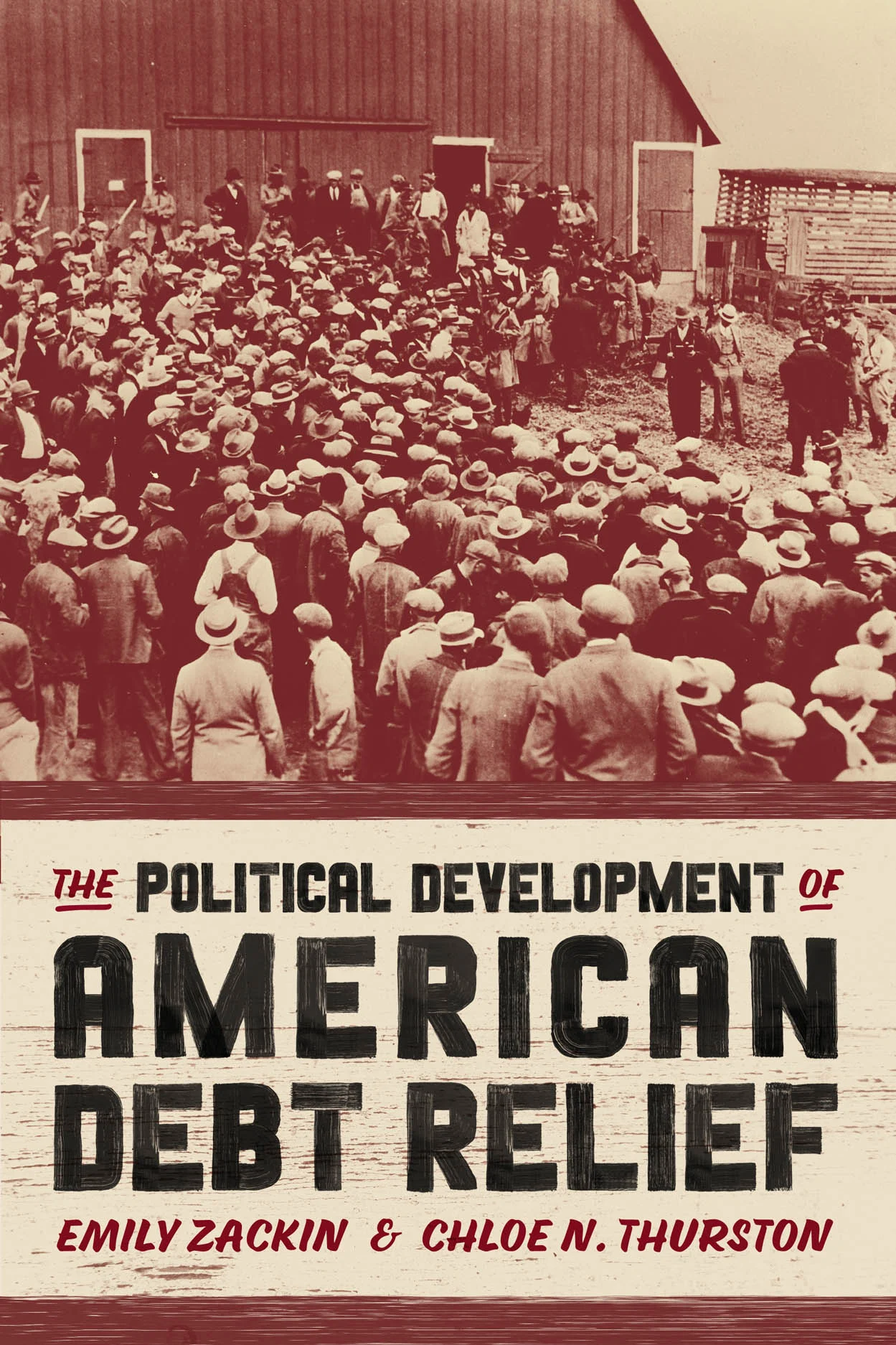
The Political Development of American Debt Relief (Debt Collective)

 As 2024 is coming to an end we wanted to flag a few upcoming calls happening for you to join.


The Political Development of American Debt Relief
8 p.m. ET Thursday, Dec 12

Governments at all levels have begun to experiment with various forms of debt relief, first during the covid-19 pandemic and now in a bid to mobilize Democratic voters. The recent Supreme Court decisions overturning Biden’s student loan forgiveness and rejecting the CDC’s eviction moratorium may suggest that these forays into debt relief were new and perhaps even impermissible, but this form of politics was a regular feature of American life from the Founding through the Great Depression. We will discuss what lessons we can draw from past periods of debtor mobilization, to help us understand when debtors are likely to succeed in shaping the law and understand how new demands for debt relief are impacting politics today.

Join Debt Collective and authors Emily Zackin and Chole N. Thurston for a conversation about their book, The Political Development of American Debt Relief.

Saturday, January 2, 2021

DEBT STRIKE!


Student debt forgiveness is no longer a fringe issue.  In June 2020, 60 groups, including the NAACP, the American Federation of Teachers, and the National Consumer Law Center supported debt relief. By November 2020, more than 230 groups called for Joe Biden to cancel the debt (see list below). However, Biden is reluctant to do an executive order. 

Here are links to some US student debt groups and associated links:

AOC tells progressives to ‘push Biden hard’ on canceling student loan debt (Fox Business)NAACP And 60 Other Groups Call On Congress To Cancel Student Deb (Forbes)Student Loan Justice
ITT Tech Warriors

Student Debt Crisis


Groups Supporting Debt Forgiveness

Asset Funders Network
Action Center on Race and the Economy (ACRE)
Advocates for Youth
Agroecology Research-Action Collective
Alliance for Strong Families and Communities
Alliance for Youth Action
American Academy of Social Work & Social Welfare (AASWSW)
American Association of Colleges for Teacher Education
American Association of University Women (AAUW)
American Economic Liberties Project
American Federation of Teachers
American Medical Student Association
American Psychological Association
Americans for Democratic Action (ADA)
Americans for Financial Reform
Asian Pacific American Labor Alliance, AFL-CIO
Augustus F. Hawkins Foundation
Bayard Rustin Liberation Initiative
Bend the Arc: Jewish Action
Campaign for America’s Future
Center for Justice & Democracy
Center for Law and Social Policy (CLASP)
Center for LGBTQ Economic Advancement & Research
Center for Popular Democracy Action
Center for Responsible Lending
CFPB Union NTEU 335
Children’s Defense Fund
Clearinghouse on Women’s Issues
Coalition on Human Needs
Community Organizing and Family Issues
Community Oriented Correctional Health Services (COCHS)
Consumer Federation of America
Consumer Reports
Council on Social Work Education
Demand Progress
Demos
Disability Rights Education & Defense Fund (DREDF)
Economic Justice Ministries, United Church of Christ
Emgage Foundation Inc
EMPath: Economic Mobility Pathways
Franciscan Action Network
Friends of the Earth U.S.
Generation Progress
Girls Inc.
Greenpeace
Hispanic Federation
In Our Own Voice: National Black Women’s Reproductive Justice Agenda
Indivisible
Insight Center for Community Economic Development
Invest in Women Entrepreneurs
Japanese American Citizens League
Jobs With Justice
Labor Council For Latin American Advancement
League of United Latin American Citizens (LULAC)
Media Voices for Children
Minority Veterans of America
MomsRising
MoveOn
MyPath
NAACP
NACBHDD – National Association of County Behavioral Health and Developmental Disability Directors
NARMH – National Association for Rural Mental Health
National Advocacy Center of the Sisters of the Good Shepherd
National Alliance for Partnerships in Equity (NAPE)
National Association for College Admission Counseling
National Association for Latino Community Asset Builders
National Association of Consumer Advocates
National Association of Consumer Bankruptcy Attorneys (NACBA)
National Association of Social Workers (NASW)
National Center for Law and Economic Justice
National Children’s Campaign
National Community Reinvestment Coalition (NCRC)
National Consumer Law Center (on behalf of its low-income clients)
National Domestic Violence Hotline
National Education Association
National Employment Law Project
National Equality Action Team (NEAT)
National Latino Farmers & Ranchers Trade Association
National Partnership for Women & Families
National Partnership for Women and Families
National Urban League
National WIC Association
National Women’s Law Center
National Young Farmers Coalition
OCA – Asian Pacific American Advocates
Organic Consumers Association
Parents Organized to Win, Educate and Renew – Policy Action Council
People For the American Way
People’s Action
People’s Parity Project
Progressive Change Campaign Committee (BoldProgressives.org)
Progressive Leadership Initiative
Project on Predatory Student Lending
Protect All Children’s Environment
Public Advocacy for Kids (PAK)
Public Citizen
Public Counsel
Public Good Law Center
Rachel Carson Council
Restaurant Opportunities Centers United
Revolving Door Project
School Social Work Association of America
Service Employees International Union (SEIU)
Sikh American Legal Defense and Education Fund (SALDEF)
Social Security Works
Southeast Asia Resource Action Center (SEARAC)
Southern Rural Black Women’s Initiative for Economic and Social Justice
Student Action
Student Borrower Protection Center
Student Debt Crisis
Student Defense
Student Voice
Sunrise Movement
Swipe Out Hunger
Take on Wall Street
Tax March
The Climate Mobilization
The Congress of Essential Workers
The Debt Collective
The Education Trust
Towards Justice
U.S. Federation of Worker Cooperatives
UE, United Electrical, Radio and Machine Workers of America
UnidosUS
United for a Fair Economy
United for Respect
United Parents And Students
United State of Women
United States Student Association
UnKoch My Campus
URGE: Unite for Reproductive & Gender Equity
Voices for Progress
Working Families Party
Young Invincibles

State Groups:

ACTION Tulsa
AFGE Local 3354 (AFL-CIO)
AFGE Local 704
AKPIRG
Arkansas Community Organizations
Bucks County Womens Advocacy Coalition
California LULAC
Cash Campaign of Maryland
Center for Economic Integrity
Center for Popular Democracy
Charlotte Center for Legal Advocacy
Chicago United for Equity
Chicago Urban League
Children’s Defense Fund Southern Regional Office
Children’s Defense Fund-CA
Civil Service Bar Association
Community Legal Services, Inc. of Philadelphia
Community Service Society of New York
Comprehensive Youth Services Inc.
Consumer Federation of California
Convencion Bautista Hispana de Texas
Debt-Free MD, INC.
Delaware Community Reinvestment Action Council, Inc.
Denver Area Labor Federation, AFL-CIO
East Bay Community Law Center
Education Minnesota
Empire Justice Center
Equality North Carolina
Fayetteville Police Accountability Community Taskforce
Friendship of Women, Inc.
Generation Hope
Georgia Watch
Grassroots Action NY
Greenlining Institute
Hildreth Institute
Housing and Economic Rights Advocates
Indivisible San Diego
Inversant
Jacksonville Area Legal Aid, Inc.
Just-A-Start Corporation
Kanawha Valley National Organization for Women
Kentucky Center for Economic Policy
Legal Aid Society of Milwaukee
Legal Services Staff Association, NOLSW/UAW 2320
Long Beach Alliance for Clean Energy
Los Amigos of Orange County
Louisiana Budget Project
LSCNY, Inc.
LULAC of Simi Valley
MAHA
Maine Center for Economic Policy
Maryland Consumer Rights Coalition
Massachusetts Affordable Housing Alliance
Massachusetts Budget and Policy Center
Massachusetts Jobs with Justice
Miami Valley Fair Housing Center, Inc.
Michigan Poverty Law Program
Mission Possible Community Services, Inc.
Mississippi Center for Justice
Mobilization for Justice
Montana Fair Housing
Morgantown Pastoral Counseling Center, Inc.
MS Black Women’s Roundtable and MS Women’s Economic Security Initiative
National Council on Alcoholism and Drug Dependence-Maryland Chapter
NC Climate Justice Collective
New Economics for Women
New Economy Project
New Era Colorado
New Georgia Project
New Jersey Association of Mental Health and Addiction Agencies, Inc.
New Jersey Citizen Action
NextGen California
Ohio Student Association
Olive Hill Community Economic Development Corporation, Inc
Pennsylvania Council of Churches
Piedmont Alliance for the Prevention of Substance Abuse (PAPSA)
Premier Women’s Council
Public Higher Education Network of Massachusetts (PHENOM)
Public Justice Center
Public Law Center
Reinvestment Partners
S.C. Appleseed Legal Justice Center
Save Us Now Inc
SEIU Local 509
Southern Echo Inc.
Southern Maryland Community Network
The Freedom BLOC
The Health, Education and Legal assistance Project: A Medical-Legal Partnership at Widener University Delaware Law School (HELP: MLP)
THE ONE LESS FOUNDATION
The Recovery Council
Triangle Community Foundation
Tzedek DC
United Vision for Idaho
Unity Fellowship of Christ Church NYC
Virginia Organizing
VOCAL-NY
VOICE – OKC
West Virginia Center on Budget and Policy
Wisconsin Faith Voices for Justice
Women Employed
Women’s Rights and Empowerment Network
Women’s Foundation of Arkansas
Women’s Foundation of Minnesota
Women’s Fund of Rhode Island
WV Citizen Action Education Fund
Zero Debt Massachusetts


Friday, February 9, 2024

The Student Loan Mess Updated: Debt as a Form of Social Control and Political Action

[Editor's note: The FY 2023 FSA Annual Report is here.] 

In 2014, the father-son team of Joel Best and Eric Best published The Student Loan Mess: How Good Intentions Created a Trillion Dollar Problem. Their argument was that rising student loan debt posed a major social and economic problem in the United States, exceeding $1 trillion at the time of publication (predicted to reach $2 trillion by 2020). This "mess" resulted from a series of well-intentioned but flawed policies that focused on different aspects of the issue in isolation, ultimately creating unintended consequences.

Key Points of the 2014 book:

History of Federal Involvement: The book explored the evolution of federal student loan programs, highlighting how each policy change created new problems while attempting to address the previous ones.

Cost of College: Rising tuition fees along with readily available loans fueled the debt crisis, as students borrowed more to cope with increasing costs.

Repayment Challenges: The authors delved into the difficulties graduates face repaying their loans, including high interest rates, complex repayment plans, and limited income mobility.

Societal Impacts: The book examined the broader societal consequences of student loan debt, such as delayed homeownership, reduced entrepreneurship, and increased economic inequality.

Beyond the Mess: While acknowledging the complexity of the issue, the authors discussed potential solutions, including loan forgiveness programs, income-based repayment plans, and increased government regulation of for-profit colleges.

Overall, "The Student Loan Mess" provided a critical historical analysis of the factors contributing to the crisis and suggested pathways towards a more sustainable system of higher education financing.

Expansion of Federal Loan Programs (1960s-1990s):

The creation of federal loan programs initially aimed to increase access to higher education.

This led to rising tuition costs as universities saw guaranteed funding, with less pressure to remain affordable.

Loan eligibility expanded, encouraging more borrowing even without clear career prospects for graduates.

Cost Explosion and Predatory Lending (1990s-2000s):

College costs skyrocketed due to various factors, including decreased state funding and increased administrative spending.

Loan limits were raised, further fueling the debt increase.

Private lenders entered the market, offering aggressive marketing and deceptive practices, targeting vulnerable students.

Recession and Repayment Struggles (2008-present):

The Great Recession exacerbated loan burdens as graduates faced limited job opportunities and stagnant wages.

Complex repayment plans and high interest rates created a challenging landscape for borrowers.

The rise of for-profit colleges further complicated the issue, often saddling students with debt for degrees with low earning potential.

Growing Awareness, Advocacy, and Reform (2010s-present):

Public awareness of the student loan crisis grew, leading to increased advocacy and demands for reform.

Issues like predatory lending, debt forgiveness, and income-based repayment gained traction.

In 2010, the Health Care and Education Reconciliation Act made a significant change to the federal student loan system. Previously, the government guaranteed private loans, meaning it reimbursed lenders if borrowers defaulted. In turn, lenders received subsidies for participating. The Act ended these subsidies for private lenders, resulting in over $60 billion saved that could be reinvested in student aid programs.

Debates on the role of government and private lenders in financing higher education continued.


Next Chapters?

Since 2014, almost ten years after the Student Loan Mess was published, several major developments have unfolded concerning student loan debt:

Growth and Persistence:

Debt continues to climb: While the growth rate has slowed somewhat, outstanding student loan debt has surpassed $1.7 trillion and remains a significant burden for millions of borrowers.


Racial and socioeconomic disparities persist: African American and Latinx borrowers disproportionately hold a higher amount of debt compared to white borrowers, exacerbating economic inequalities.

Policy Changes: 

https://x.com/The Biden-Harris administration has provided $136.6 billion in debt relief. 

Expansion of income-driven repayment plans: Options like Income-Based Repayment (IBR) and Pay As You Earn (PAYE) have been expanded, allowing borrowers to adjust their monthly payments based on income.

Public Service Loan Forgiveness (PSLF) challenges: Legal uncertainties and administrative backlogs have plagued PSLF, leaving many public servants struggling to qualify for loan forgiveness.

Temporary pandemic relief: During the COVID-19 pandemic, federal student loan payments were paused and interest rates set to 0%. Payments resumed in 2023.

Debt cancellation debates: Proposals for broad-based student loan forgiveness have gained traction, with several Democratic lawmakers pushing for different cancellation amounts. However, these proposals have faced legal and political hurdles. In 2023, the 9th Circuit Court ruled in favor of mass cancellation of loans from predatory for-profit colleges (Sweet v Cardona). A few months later, the US Supreme Court struck down President Biden's plan for debt relief to more than 30 million Americans.

Increased attention to for-profit colleges and online program managers: Scrutiny of predatory practices and low graduate outcomes at for-profit institutions has intensified. Gainful employment rules have been reestablished, but whether they will be enforced is in question.  


Looking forward:

The future of student loan debt remains uncertain. Key questions include:

Will broad-based loan forgiveness materialize?

Can income-driven repayment plans be made more effective?

How will future administrations address affordability and access to higher education?

What role will the private sector play in financing higher education?

How will declining enrollment numbers and skepticism about the value of higher education affect student loan debt and debt relief?  


Will higher ed institutions be held accountable for the debt of their former students and alumni?

Can higher education reduce consumer costs and provide value to consumers and communities at the same time?  

How will student loan debt affect disability, retirement, and life expectancy among long-term debtors?     

Policy Drivers:

Economic factors: A strong economy could increase government revenue, potentially enabling broader debt forgiveness or increased funding for higher education access initiatives. Conversely, an economic downturn could make policy interventions more challenging.

Elections and political pressure: Public opinion and the results of future elections will influence the political will for reform. Continued activism and pressure from advocacy groups could sway policy decisions.

Legal challenges and court rulings: Lawsuits over debt cancellation programs and loan servicer practices could impact the legal landscape and shape future policy options.

Private sector involvement: Developments in the private student loan market and potential regulations of lending practices could affect access to credit and repayment options.

Consumer Decisions:

Debt burden and economic outlook: The level of outstanding debt and future job prospects will significantly influence borrower behavior. Increased debt loads could incentivize riskier repayment strategies or delaying major life decisions like homeownership.

Awareness and financial literacy: Improved understanding of loan terms, repayment options, and alternative financing methods could empower borrowers to make informed decisions.

Government programs and incentives: Changes to income-driven repayment plans, loan forgiveness programs, and other government initiatives will directly impact consumer choices about managing their debt.

Emerging Trends:

Alternative financing models: Innovations like income-share agreements and skills-based financing could disrupt traditional loan structures and offer new options for students.

Technology and automation: Increased use of technology to streamline loan management and repayment could improve efficiency and transparency.

Focus on affordability and value: As concerns about the value proposition of higher education grow, there might be a shift towards emphasizing affordable options and skills-based learning.


How does student loan debt affect the lives of Americans?

Student loan debt has a profound impact on the lives of millions of Americans in various ways, affecting not just their finances but also their major life decisions and overall well-being. Here's a breakdown of some key areas:

Financial Impact:


Burden of debt: The average graduate has over $40,000 in student loan debt, significantly impacting their monthly budget and disposable income. This can limit savings for retirement, emergencies, and major purchases like a house.

Lower credit scores: Missed payments or delinquencies can negatively affect credit scores, hindering access to future loans and increasing interest rates on other forms of credit.

Delayed milestones: High debt burdens may cause individuals to delay major life milestones like buying a home, getting married, starting a family, or pursuing further education due to financial constraints.

Career Choices:

Job dissatisfaction: To make loan payments, some graduates might feel pressured to stay in high-paying but unfulfilling jobs, sacrificing career satisfaction for financial stability.

Entrepreneurial risk: The fear of financial failure due to debt may discourage individuals from pursuing entrepreneurial ventures, hindering innovation and economic growth.

Limited career mobility: Debt may lock individuals into specific career paths based on earning potential, restricting their ability to pursue desired career changes.

Mental and Emotional Wellbeing:

Stress and anxiety: The constant pressure of debt repayment can lead to significant stress and anxiety, impacting mental and emotional well-being.

Lower self-esteem: Feelings of financial instability and hopelessness can negatively impact self-esteem and overall life satisfaction.

Stigma and discrimination: Some individuals may face social stigma associated with student loan debt, further exacerbating the emotional burden.

Societal Impact:

Economic inequality: Student loan debt disproportionately affects certain groups, like minorities and low-income students, perpetuating and widening economic inequality.

Lower homeownership rates: High debt burdens can hinder homeownership, negatively impacting the housing market and contributing to wealth disparities.

Reduced consumer spending: Debt-burdened individuals have less disposable income, limiting their purchasing power and affecting the overall economy.


Social Class and Student Loan Debt

There's a well-documented and intricate relationship between social class and student loan debt, characterized by significant inequalities and disparities. Here's a breakdown of some key points:

Higher burden on lower classes:

Borrowing rates: Individuals from lower socioeconomic backgrounds are more likely to borrow student loans due to limited family resources and higher college costs compared to their income.

Debt amounts: Borrowers from lower socioeconomic backgrounds often take on larger debt loads due to higher tuition fees and living expenses, often exceeding their earning potential after graduation.

Repayment challenges: They face greater difficulty repaying loans due to lower-paying jobs, making them more susceptible to delinquency and default. This hinders wealth accumulation and upward mobility.

Contributing factors:

Limited financial support: Lack of parental financial support or savings forces students from lower socioeconomic backgrounds to rely heavily on loans for college expenses.

Limited college options: Limited access to affordable, high-quality educational institutions often steers individuals towards for-profit colleges with deceptive practices and low graduation rates, leading to high debt with limited job prospects.

Ongoing Debate


There is ongoing debate on solutions to address the student loan crisis, with proposals ranging from broad-based loan forgiveness to reforms in higher education financing and income-driven repayment plans. The future of student loan debt and its impact on Americans remains uncertain and depends on various factors, including policy decisions, economic trends, and individual financial choices.

The Student Loan Debt Movement

There has been an organized effort for student loan debt relief since the 2010s. This movement, using direct action, lawsuits, and lobbying has had some gains, putting pressure for accountability for schools that use predatory practices--and getting debt relief for hundreds of thousands of debtors.  The most notable organization has been the Debt Collective.  


Image of Ann Bowers, courtesy of the Debt Collective


There have been legal allies too, such as the Harvard Project on Predatory Student Lending (PPSL) and the Student Borrower Protection Center (SBPC).    


Named plaintiffs Theresa Sweet (L) and Alicia Davis (R) outside the federal district court in San Francisco on November 6, 2022, three days before the final approval hearing in Sweet v Cardona (Image credit: Ashley Pizzuti) 

Resistance to Debt Relief

The reasons why some people might not support student loan forgiveness. Some conservatives believe that it is unfair to forgive the debts of those who willingly took out loans, while others believe that it would be a waste of taxpayer money. Additionally, some believe that student loan forgiveness would not address the root causes of the problem, such as the high cost of tuition.

It is important to note that not all conservatives oppose student loan forgiveness. Some support income-based repayment plans or public service loan forgiveness. Additionally, some believe the government should focus on making college more affordable, rather than simply forgiving existing debt.

According to a 2019 poll by the Pew Research Center, 54% of Republicans and Republican-leaning independents opposed forgiving all student loan debt, while 37% supported it.

Student Loan Debt Power Analysis: Who Benefits from Inaction?

There are elites and elite organizations who are (at least on the backstage) against student loan debt relief: student loan servicers (e.g. Maximus, Nelnet, Navient, and Sallie Mae), big banks, large corporations, and the US military. For them, debt serves as a way to get others to do their bidding. Debt is essential as a leverage tool to recruit and retain workers. Debt relief could also create more competition for better, more meaningful jobs, which some elites may not want for their children. States may be unwilling or unable to further subsidize higher education if elites are unwilling to pay. This situation is likely to worsen as Medicaid budgets are used for a growing number of elderly and increasingly disabled Baby Boomers.  


Student Loans and a Brutal Lifetime of Debt (Dahn Shaulis and Glen McGhee)

Tuesday, July 16, 2024

Breaking the Chains of Debt and Contingent Labor (Debt Collective and Higher Education Labor United)

Join us on July 31 as we host a deep dive discussion into two related crises facing higher ed workers and students alike: debt and labor contingency. 

Often presented as both institutionally inevitable and as individually shameful, spiraling debt and rising labor precarity are in fact insidious products of policy decisions, and together they are eroding the conditions that make genuine higher education possible. Yet these widely shared and intersecting chains of debt and labor contingency also have the potential to bring us together: as faculty, students, and workers, in new ways.

How can we grasp the systems of debt and labor precarity that bind today’s academy in a way that can allow us to unleash potential for liberatory education, in the classroom and beyond? And how can our unions and pedagogical strategies help create alliances between students, faculty, and other campus workers—not by shamefully avoiding talk of our “delinquent” debt or “adjunct” status, but by placing them front and center?”

Speakers: Joe Ramsey, Chair of Contingency Task Force, Higher Education Labor United and Faculty at UMASS, Boston; Jeri O’Bryan-Losee, United University Professions (SUNY)

Facilitated by Jason Wozniak, Debt Collective

Co-Sponsored by Higher Education Labor United
 
Related links:


Friday, February 10, 2023

People's Rally for Student Debt Cancellation to be held outside Supreme Court, February 28, 2023

[Update: This event will be livestreamed at https://www.cancelmystudentdebt.org/peoples-rally-livestream

Sign up for the People's Rally for Student Debt Cancellation to be held outside the US Supreme Court, Tuesday morning, February 28, 2023.  And please share this event with people in your network. 

The Supreme Court case involves the constitutionality of President Biden's order to cancel more than $400 billion in student loan debt, that according to the NY Fed would provide a disproportionate amount of relief to low and middle-income families

Supporters of the People's Rally include the Debt Collective, NAACP, National Urban League, American Federation of Teachers, National Education Association, SEIU, the National Consumer Law Center, Young Invincibles, and Move On. Senator Elizabeth Warren will be one of the speakers. 

While there is no substitute for People on the ground, folks can also attend online.  

Before the hearing, the People are invited to use the #CancelItSCOTUS! hashtag and flood Twitter with personal and shared stories of why the cancellation is so vital. Access the toolkit to join the Twitterstorm on 2/28 at 9-11am.

Currently, there are about 45 million Americans carrying student loan debt. Based on our interpretation of the 2022 Financial Student Aid Annual Report, about 40 percent of the federal student loan debt portfolio ($674 Billion of $1.7 Trillion) is unrecoverable.* 

Meanwhile, student loan debt collectors like Maximus receive hundreds of millions of dollars from the US government while sometimes using unethical and predatory business practices. 

Students who attended subprime schools or who had low financial value majors have been hardest hit. And the debt takes its toll on millions of citizens, their families, and their communities--and reduces their opportunities to live the American Dream. 

About 200,000 student debtors who were defrauded by subprime schools are also facing a legal battle in the 9th Circuit Court to have their debt forgiven. Hundreds of thousands more have filed Borrower Defense to Repayment claims and are awaiting for decisions that can take several years, due to  understaffing and an enormous backlog at the US Department of Education.


So far, ED has only approved Borrower Defense to Repayment claims from a handful of closed schools, and it appears that victims of fraud from other subprime schools, like the University of Phoenix, have received blanket denials.  


Pushing back against the debtors, Republican lawmakers are calling for mandatory loan repayments to restart.  

Stay tuned to this post for more information.  #strikedebt 

 *We have asked the US Department of Education press team for a comment, but they have not responded, which is often the case.

Related link: I Went on Strike to Cancel My Student Debt and Won. Every Debtor Deserves the Same. (Ann Bowers*) 

Related link: Assessing the Relative Progressivity of the Biden Administration’s Federal Student Loan Forgiveness Proposal (NY Fed)

Related link:  Federal Student Aid FY 2022 Annual Report 

Related link: Sweet v Cardona (Borrower Defense to Repayment) 

Related link: Maximus, Student Loan Debt, and the Poverty Industrial Complex 

Related link: Borrower Defense to Repayment Loan Forgiveness Data


Friday, November 14, 2025

Generation Z and the Fractured American Dream: Class Divide, Debt, and the Search for a Future

For Generation Z, the old story of social mobility—study hard, go to college, work your way up—has lost its certainty. The class divide that once seemed bridgeable through education now feels entrenched, as debt, precarious work, and economic volatility blur the promise of progress.

The new economy—dominated by artificial intelligence, speculative assets like cryptocurrency, and inflated housing markets—has not delivered stability for most. Instead, it’s widened gaps between those who own and those who owe. Many young Americans feel locked out of wealth-building entirely. Some have turned to riskier bets—digital assets, gig work, or start-ups powered by AI tools—to chase opportunities that traditional institutions no longer provide. Others have succumbed to despair. Suicide rates among young adults have climbed sharply in recent years, correlating with financial stress, debt, and social isolation.

And echoing through this uncertain landscape is a song that first rose from the coalfields of Kentucky during the Great Depression—Florence Reece’s 1931 protest hymn, “Which Side Are You On?”

Come all you good workers,
Good news to you I’ll tell,
Of how the good old union
Has come in here to dwell.

Which side are you on?

Nearly a century later, those verses feel newly urgent—because Gen Z is again being forced to pick a side: between solidarity and survival, between reforming a broken system or resigning themselves to it.


The Class Divide and the Broken Ladder
Despite record levels of education, Gen Z faces limited social mobility. College remains a class marker, not an equalizer. Students from affluent families attend better-funded universities, graduate on time, and often receive help with housing or job placement. Working-class and first-generation students, meanwhile, navigate under-resourced campuses, heavier debt, and weaker professional networks.

The Pew Research Center found that first-generation college graduates have nearly $100,000 less in median wealth than peers whose parents also hold degrees. For many, the degree no longer guarantees a secure foothold in the middle class—it simply delays financial independence.

They say in Harlan County,
There are no neutrals there,
You’ll either be a union man,
Or a thug for J. H. Blair.

The metaphor still fits: there are no neutrals in the modern class struggle over debt, housing, and automation.


Debt, Doubt, and the New Normal
Gen Z borrowers owe an average of around $23,000 in student loans, a figure growing faster than any other generation’s debt load. Over half regret taking on those loans. Many delay buying homes, having children, or even seeking medical care. Those who drop out without degrees are burdened with debt and little to show for it.

The debt-based model has become a defining feature of American life—especially for the working class. The price of entry to a better future is borrowing against one’s own.

Don’t scab for the bosses,
Don’t listen to their lies,
Us poor folks haven’t got a chance
Unless we organize.

If Reece’s song once called miners to unionize against coal barons, its spirit now calls borrowers, renters, adjuncts, and gig workers to collective resistance against financial systems that profit from their precarity.


AI and the Erosion of Work
Artificial intelligence promises efficiency, but it also threatens to hollow out the entry-level job market Gen Z depends on. Automation in journalism, design, law, and customer service cuts off rungs of the career ladder just as young workers reach for them.

While elite graduates may move into roles that supervise or profit from AI, working-class Gen Zers are more likely to face displacement. AI amplifies the class divide: it rewards those who already have capital, coding skills, or connections—and sidelines those who don’t.


Crypto Dreams and Financial Desperation
Locked out of traditional wealth paths, many young people turned to cryptocurrency during the pandemic. Platforms like Robinhood and Coinbase promised quick gains and independence from the “rigged” economy. But when crypto markets crashed in 2022, billions in speculative wealth evaporated. Some who had borrowed or used student loan refunds to invest lost everything.

Online forums chronicled not only the financial losses but also the psychological fallout—stories of panic, shame, and in some tragic cases, suicide. The new “digital gold rush” became another mechanism for transferring wealth upward.


The Real Estate Wall
While digital markets rise and fall, real estate remains the ultimate symbol of exclusion. Home prices have climbed over 40 percent since 2020, while mortgage rates hover near 8 percent. For most of Gen Z, ownership is out of reach.

Older generations built equity through housing; Gen Z rents indefinitely, enriching landlords and institutional investors. Without intergenerational help, the “starter home” has become a myth. In America’s new class order, those who inherit property inherit mobility.


Despair and the Silent Crisis
Behind the data lies a mental health emergency. The CDC reports that suicide among Americans aged 10–24 has risen nearly 60 percent in the past decade. Economic precarity, debt, housing insecurity, and climate anxiety all contribute.

Therapists describe “financial trauma” as a defining condition for Gen Z—chronic anxiety rooted in systemic instability. Universities respond with mindfulness workshops, but few confront the deeper issue: a society that privatized risk and monetized hope.

They say in Harlan County,
There are no neutrals there—
Which side are you on, my people,
Which side are you on?

The question lingers like a challenge to policymakers, educators, and investors alike.


A Two-Tier Future
Today’s economy is splitting into two distinct realities:

  • The secure class, buffered by family wealth, education, AI-driven income, and real estate assets.

  • The precarious class, burdened by loans, high rents, unstable work, and psychological strain.

The supposed democratization of opportunity through technology and education has in practice entrenched a new feudalism—one coded in algorithms and contracts instead of coal and steel.


Repairing the System, Not the Student
For Generation Z, the American Dream has become a high-interest loan. Education, technology, and financial innovation—once tools of liberation—now function as instruments of control.

Reforming higher education is necessary, but not sufficient. The deeper work lies in redistributing power: capping predatory interest rates, investing in affordable housing, curbing speculative bubbles, ensuring that AI’s gains benefit labor as well as capital, and confronting the mental health crisis that shadows all of it.

Florence Reece’s song endures because its question has never been answered—only updated. As Gen Z stands at the intersection of debt and digital capitalism, that question rings louder than ever:

Which side are you on?


Sources

  • Florence Reece, “Which Side Are You On?” (1931).

  • Pew Research Center, “First-Generation College Graduates Lag Behind Their Peers on Key Economic Outcomes,” 2021.

  • DÄ“mos, The Debt Divide: How Student Debt Impacts Opportunities for Black and White Borrowers, 2016.

  • EducationData.org, “Student Loan Debt by Generation,” 2024.

  • Federal Reserve Bank of St. Louis, Gen Z Student Debt and Wealth Data Brief, 2022.

  • CNBC, “Gen Z vs. Their Parents: How the Generations Stack Up Financially,” 2024.

  • WUSF, “Generation Z’s Net Worth Is Being Undercut by College Debt,” 2024.

  • Newsweek, “Student Loan Update: Gen Z Hit with Highest Payments,” 2024.

  • The Kaplan Group, “How Student Debt Is Locking Millennials and Gen Z Out of Homeownership,” 2024.

  • CDC, Suicide Mortality in the United States, 2001–2022, National Center for Health Statistics, 2023.

  • Brookings Institution, “The Impact of AI on Labor Markets: Inequality and Automation,” 2024.

  • CNBC, “Crypto Crash Wipes Out Billions in Investor Wealth, Gen Z Most Exposed,” 2023.

  • Zillow, “U.S. Housing Affordability Reaches Lowest Point Since 1989,” 2024.